What Does Tej Sapru Think of the Evolving Film Industry at Delhi Shabdotsav 2026?

Synopsis
Join Bollywood legend Tej Sapru at Shabdotsav 2026 as he reflects on the shifting landscape of film and the nostalgia of yesteryears. Explore how the industry has transformed while the essence of emotions and music remains a cherished memory.
Key Takeaways
Shabdotsav 2026 serves as a platform for open discussions in the film industry.
Tej Sapru emphasizes the importance of emotional depth in movies.
Changes in distribution have concentrated power in fewer hands.
Small producers face significant challenges in the current market.
The nostalgic charm of classic films and music remains unmatched.
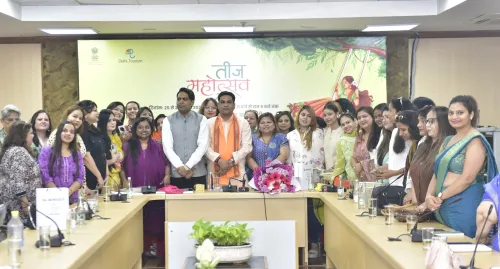
New Delhi, Jan 5 (NationPress) The Shabdotsav 2026 event in Delhi brought together the worlds of film and literature. Bollywood actor Tej Sapru shared his insights on the evolving landscape of the film industry along with his personal experiences.
In an interview with IANS, Tej Sapru stated, "The purpose of Shabdotsav is to engage in open discussions and share diverse opinions. We were invited to delve into the film industry, and we explored our perspectives extensively. Such events are instrumental for the advancement of the film sector."
He elaborated on his extensive journey in cinema, saying, "I began my film career in 1979 and have had the privilege of working alongside many esteemed actors. Even though the film industry has transformed, I cherish memories of the past. Earlier, films were filled with profound emotions. Film distribution was handled differently back then, with cities like Mumbai and Delhi having distinct distributors managing their respective regions."
He continued, "Producers used to recoup their investments first, with any remaining profits shared thereafter. Nowadays, the number of distributors has dwindled significantly, concentrating power in fewer hands."
Sapru also reflected on the evolution of theaters, stating, "There was a time when single-screen theaters were prevalent and films could run for 50 to 75 weeks, with golden jubilee celebrations being common. Several of my films reached golden jubilee status. Currently, even blockbuster films struggle to stay in theaters for more than a month, with those lasting four weeks deemed major successes."
He pointed out the challenges faced by smaller producers today, noting, "In the past, 'A', 'B', and 'C' category producers could independently create and release films, securing their livelihoods. Today, small and newcomer producers grapple to find theaters. Due to rising inflation and elevated ticket prices, audiences often miss out on films."
Tej Sapru also praised the charm of classic films and music, saying, "Back then, films typically featured six songs, all of which became hits. The melodies were so beloved that people can easily recall their lyrics even today. Achieving that impact in modern cinema is quite challenging. The music of today doesn't resonate as deeply as it used to."
He concluded, "When comparing the two eras, it’s evident that something crucial is missing. Today's small artists and filmmakers face hurdles due to the centralized nature of large producers and multiplexes. The personal touch, the long-lasting releases, and the significance of music from earlier times have diminished. While change in the film industry is inevitable, the emotional depth of the past will always be yearned for."
Point of View
It’s crucial to recognize the balance between nostalgia and progress in the film industry. Tej Sapru’s reflections shed light on the ongoing struggles and triumphs of filmmakers today, emphasizing the need for a supportive environment for all artists, regardless of their scale.
NationPress
6 Oct 2026
Frequently Asked Questions
What is Shabdotsav 2026?
Shabdotsav 2026 is an event in Delhi that celebrates the intersection of film and literature, featuring discussions and insights from various industry experts.
What changes has Tej Sapru observed in the film industry?
Tej Sapru has noted significant changes in film distribution, the decline of single-screen theaters, and the challenges faced by small producers in today's centralized system.
How has the music in films changed according to Tej Sapru?
According to Tej Sapru, earlier films had memorable music with multiple hit songs, whereas contemporary films struggle to achieve the same depth and impact.
What does Tej Sapru miss about the old film industry?
Tej Sapru misses the emotional depth, long-running releases, and the significance of music from the earlier era, which he feels are lacking in today’s cinema.