Ashwini Vaishnaw's Take on Nora Fatehi's Song Controversy: Limits of Freedom of Speech

Synopsis
Union Minister Ashwini Vaishnaw responds to backlash over Nora Fatehi's song 'Sarke Chunar Teri Sarke', emphasizing the need for freedom of speech to align with societal values and cultural norms. As the song faces a ban, the tension between creativity and public decency intensifies.
Key Takeaways
Ashwini Vaishnaw emphasizes that freedom of speech comes with conditions.
The song ' Sarke Chunar Teri Sarke ' faced significant backlash for its content.
Legal complaints led to the song being banned.
The government is prepared to act to protect societal norms.
Critics argue the lyrics and choreography are inappropriate.
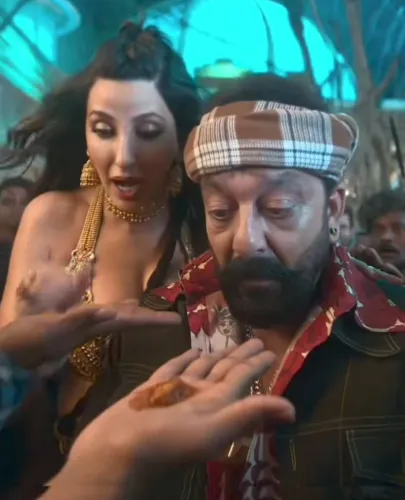
Mumbai, March 18 (NationPress) The Union Minister for Information and Broadcasting, Ashwini Vaishnaw, has addressed the uproar regarding Nora Fatehi's song 'Sarke Chunar Teri Sarke'.
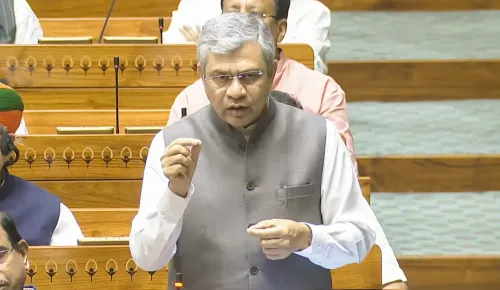
In a statement made during the Lok Sabha session on Wednesday, the Minister articulated that the concept of freedom of speech must be practiced within the boundaries of cultural and societal norms.
He emphasized that freedom of speech is not unconditional and carries specific limitations. “The song referenced by the Member of Parliament has been banned. I want to make it clear to the entire House that with regard to freedom of speech, we must adhere to the reasonable constraints set forth by the framers of the Constitution of India. Freedom of speech cannot be absolute; it needs to be contextualized within society,” he stated.
Furthermore, he added, “It must be viewed through the lens of culture. As we witness rapid dissemination of content through digital platforms, the government is prepared to take stringent actions to safeguard society, especially to protect children, women, and marginalized groups.”
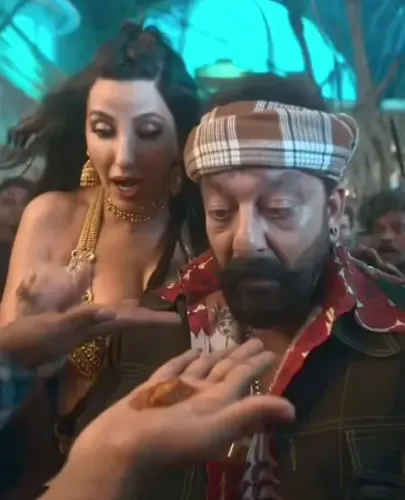
The contention surrounding Nora Fatehi arises from her song 'Sarke Chunar Teri Sarke' from the film 'KD: The Devil'. Following its release, the track faced significant backlash due to its purportedly vulgar lyrics and suggestive choreography. Critics, including singer Armaan Malik, labeled the writing as a “new low,” while social media commentators deemed the material as inappropriate.
The situation escalated with legal complaints demanding a ban, citing concerns about its effects on minors and public decency. Under pressure, the producers reportedly removed the song from YouTube, highlighting the ongoing conflict between creative liberty and societal expectations in contemporary Indian music.
Point of View
The situation surrounding Nora Fatehi's song illustrates a critical intersection between artistic expression and societal norms. Ashwini Vaishnaw's remarks underscore the delicate balance required in upholding freedom of speech while maintaining cultural integrity. This ongoing debate is essential for navigating the complexities of modern media.
NationPress
26 Sept 2026
Frequently Asked Questions
What is the controversy surrounding Nora Fatehi's song?
The controversy involves backlash against the song 'Sarke Chunar Teri Sarke' for allegedly vulgar lyrics and suggestive choreography, leading to legal complaints and its subsequent ban.
What did Ashwini Vaishnaw say about freedom of speech?
Ashwini Vaishnaw stated that freedom of speech is not absolute and must operate within the framework of culture and society, emphasizing reasonable restrictions.
Why was the song banned?
The song was banned due to concerns about its impact on minors and public decency, following widespread criticism.
Who criticized the song?
Critics included singer Armaan Malik, who described the writing as a 'new low'.
What actions is the government willing to take?
The government has expressed readiness to take strict measures to protect societal values, especially concerning children and marginalized groups.