Tom Hanks on Clint Eastwood: 'He treats actors like horses'
Synopsis
A resurfaced video of Tom Hanks explaining why Clint Eastwood tells actors to 'go' instead of shouting 'Action!' has gone viral — and the reason traces back to a very practical problem: horses on the set of Rawhide in the 1950s. It's a small story that reveals a lot about how one of Hollywood's greatest directors built his craft.
Key Takeaways
Tom Hanks described Clint Eastwood's directing style as treating actors 'like horses' — quietly signalling action rather than using theatrical commands.
Eastwood traced the habit to his early TV series Rawhide , where loud 'Action!' calls startled the horses on set.
A resurfaced video of Hanks recounting the anecdote has drawn fresh attention online.
Eastwood's career spans over seven decades , with more than 70 acting credits and over 40 directing credits .
He has won four competitive Academy Awards , including Best Director and Best Picture for both 'Unforgiven' and 'Million Dollar Baby' .
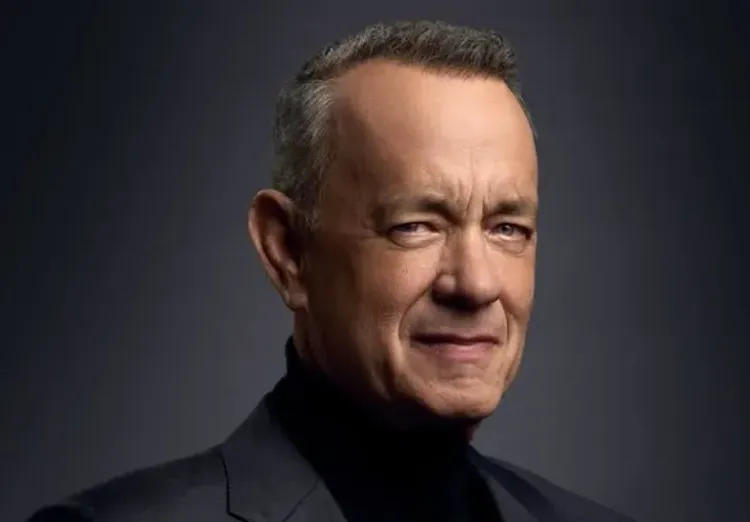
Hollywood legend Tom Hanks once revealed a striking detail about working with Clint Eastwood — that the veteran actor-director runs his sets with the quiet calm of a horse trainer, not the theatrical fanfare of a traditional film director. A resurfaced video of Hanks recounting this observation has drawn fresh attention online, offering a rare window into Eastwood's famously understated directorial method.
What Tom Hanks Said
In the clip, Hanks described the contrast between a conventional film set and an Eastwood production in vivid terms. “He treats actors like horses,” Hanks said. “Other movies, they make a big deal about action. They go like, ‘Rolling! We are rolling, people! Everybody, standby! And action’. Clint goes like this (gestures rolling) and everybody else goes like this. He says, ‘Okay, go ahead’. And then you do it. And maybe he’ll say, ‘Okay, just take that again. Just do it one more time’. And then you do it.”
Hanks added that Eastwood himself explained the origin of this approach. “He says, ‘All right, that’s enough of that’. And that’s it. And I said, Why did that come from? And he said, When he was doing Rawhide, he had all these old movie directors who just loved the megaphones, and that whole build-up to, ‘Action!’ would make the horses go wild. And so one day he said, in his indomitable way, Is there any way that you could just, you know, just tell us to go? He treats us like horses.”
The Method Behind the Minimalism
The anecdote is more than an amusing behind-the-scenes tidbit — it illuminates a philosophy Eastwood has maintained across a career of over seven decades. His approach strips away ceremony to keep performers in a natural, unguarded state. Many actors who have worked with him have noted that his sets are unusually efficient and low-pressure, which often produces spontaneous, lived-in performances.
Notably, this minimalist ethos traces back directly to his early television work on Rawhide in the late 1950s and early 1960s, where the practical demands of working with livestock shaped a habit that Eastwood never abandoned — even when the horses were long gone from his productions.
Eastwood's Career at a Glance
Eastwood first rose to global prominence through director Sergio Leone's 'Dollars Trilogy' westerns before cementing his screen icon status with the 'Dirty Harry' franchise. As a filmmaker, he has assembled one of Hollywood's most decorated bodies of work, including 'Unforgiven', 'Mystic River', 'Million Dollar Baby', 'Letters from Iwo Jima', 'Gran Torino', 'American Sniper', and 'Juror No. 2'.
He has earned four competitive Academy Awards, claiming Best Director and Best Picture for both 'Unforgiven' and 'Million Dollar Baby', alongside the Irving G. Thalberg Memorial Award. His honours also include Golden Globe Awards, the AFI Life Achievement Award, Kennedy Center Honors, the National Medal of Arts, and France's Légion d'honneur. His filmography spans more than 70 acting credits and over 40 directing credits.
Why the Video Is Resonating Now
The resurfaced clip has circulated widely online, drawing renewed appreciation for Eastwood's craft at a time when his legacy is frequently revisited. For cinephiles and industry observers alike, Hanks's account underscores how practical necessity — keeping horses calm on a 1950s TV set — quietly shaped the directorial style of one of Hollywood's most enduring auteurs.
Point of View
Not by vision alone. The directors who shaped cinema most durably often did so by solving a mundane problem and never looking back.
NationPress
2 Jul 2026
Frequently Asked Questions
What did Tom Hanks say about Clint Eastwood's directing style?
Tom Hanks said Eastwood 'treats actors like horses,' meaning he signals the start of a take with a quiet gesture rather than a loud 'Action!' call. Hanks recounted this in a video that has recently resurfaced online.
Why does Clint Eastwood avoid shouting 'Action!' on set?
Eastwood explained to Hanks that during his time on the TV series Rawhide, the traditional loud 'Action!' command would startle the horses on set. To keep things calm, he adopted a quieter approach — and never changed it even after leaving television.
What is Clint Eastwood's directorial legacy?
Eastwood has directed over 40 films, winning Best Director and Best Picture Academy Awards for both 'Unforgiven' and 'Million Dollar Baby'. His body of work also includes 'Mystic River', 'American Sniper', and 'Gran Torino', spanning more than seven decades in Hollywood.
Which TV show shaped Clint Eastwood's directing method?
The Western TV series Rawhide, on which Eastwood appeared in the late 1950s and early 1960s, is where he first developed his minimalist approach to calling action. Working with horses on that set made him prefer calm, understated cues over theatrical commands.
Why has the Tom Hanks video about Clint Eastwood gone viral?
The clip has resurfaced online and resonated widely because it offers a rare, candid glimpse into Eastwood's working method — told with Hanks's characteristic warmth and humour. It has drawn renewed interest in Eastwood's craft and the practical origins of his directorial philosophy.