Piyush Goyal Visits Athens to Deepen India-Greece Ties

Synopsis
Union Commerce Minister Piyush Goyal visited Athens on 2 July 2026, holding talks to strengthen the India-Greece strategic partnership elevated by PM Modi in 2023. The visit aims to convert political commitments into commercial outcomes across trade, defence, and maritime sectors.
Key Takeaways
Union Commerce Minister Piyush Goyal visited Athens, Greece on 2 July 2026 for bilateral engagements.
Goyal described the visit as 'highly productive,' focused on expanding the India-Greece strategic partnership .
The strategic partnership was first elevated during PM Modi's August 2023 Athens visit — the first Indian PM visit to Greece in over four decades.
Key stakeholders include Indian exporters, defence manufacturers, and shipping firms seeking European market access.
Greece is positioned as a southern European gateway relevant to India's broader EU trade diversification strategy.
Potential outcomes to watch include bilateral investment agreements, maritime MoUs, and defence cooperation frameworks.
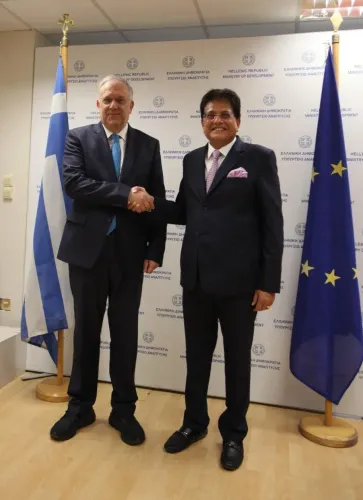
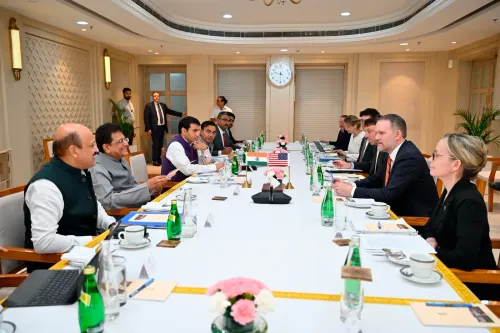
Union Commerce and Industry Minister Piyush Goyal on Thursday, 2 July 2026, shared glimpses from what he described as a 'highly productive' visit to Athens, Greece, reaffirming India's commitment to expanding the bilateral strategic partnership and generating new avenues for shared economic growth.
Context
Goyal posted on X that the Athens engagements involved 'meaningful engagements and constructive discussions' aimed at 'further expanding the India-Greece strategic partnership and creating new opportunities for shared growth.' As Leader of the House in the Rajya Sabha and the minister responsible for India's trade and investment policy, his visit signals a deliberate effort to translate high-level political commitments into commercial outcomes.
The visit comes nearly three years after Prime Minister Narendra Modi's landmark trip to Athens in August 2023 — the first visit by an Indian Prime Minister to Greece in over four decades — which elevated bilateral relations to a formal strategic partnership encompassing defence, trade, and connectivity.
Policy Backdrop
The 2023 India-Greece Strategic Partnership produced a Joint Statement covering defence cooperation, maritime connectivity, and trade facilitation. Greece, as a European Union member state with one of the world's largest shipping registries, occupies a strategic position for Indian goods seeking entry into European markets and for cooperation in ports and emerging defence supply chains.
India has pursued targeted economic diplomacy with select EU states as part of a broader effort to diversify trade partners beyond traditional markets. A Commerce Minister-level visit to Athens fits squarely within this pattern, focusing on converting the political architecture of 2023 into binding commercial and institutional arrangements.
Stakeholders and Impact
Indian exporters, defence manufacturers, and shipping firms stand to benefit most directly from deeper India-Greece engagement. Greece's position as a maritime hub offers Indian logistics and port-services companies a potential European foothold, while Greek defence procurement needs could open doors for India's growing defence export sector.
On the Greek side, access to India's large consumer market and participation in infrastructure projects under frameworks such as the India-Middle East-Europe Economic Corridor (IMEC) are key interests. Athens has consistently sought to position itself as a southern European gateway for Asian trade flows.
What's Next
Observers will watch for any formal outcomes from the Athens meetings — including bilateral trade or investment agreements, maritime memoranda of understanding, or defence cooperation frameworks — that may be announced in the days following the visit. Follow-up visits by Greek officials or Indian business delegations to New Delhi or major Indian commercial centres are likely benchmarks of progress.
As India continues to negotiate a broader Free Trade Agreement with the European Union, ministerial-level engagement with individual EU member states such as Greece helps build political goodwill and technical alignment that can feed into the larger multilateral process.
Point of View
New Delhi is signalling that the strategic partnership is meant to produce tangible trade and defence outcomes, not just diplomatic optics. The visit also reflects India's interest in the IMEC corridor, where Greece could serve as a critical European terminus.
NationPress
2 Jul 2026
Frequently Asked Questions
Why did Piyush Goyal visit Greece in July 2026?
Piyush Goyal visited Athens to advance the India-Greece strategic partnership, focusing on expanding trade, defence, and maritime cooperation following the partnership's elevation during PM Modi's 2023 Athens visit.
What is the India-Greece strategic partnership?
The India-Greece strategic partnership was formalised during PM Narendra Modi's visit to Athens in August 2023 — the first Indian PM visit to Greece in over four decades — covering defence, trade, and connectivity cooperation.
How does Greece fit into India's trade strategy with Europe?
Greece is seen as a southern European gateway for Indian goods entering EU markets and a partner for shipping and port cooperation, fitting India's broader effort to diversify trade partners across the European Union.
What sectors benefit most from India-Greece ties?
Indian exporters, defence manufacturers, and shipping and logistics firms are the primary beneficiaries, given Greece's large maritime registry and its position within the EU single market.
What outcomes are expected from Goyal's Athens visit?
Analysts will watch for bilateral trade or investment agreements, maritime memoranda of understanding, and defence cooperation frameworks, as well as follow-up visits by Greek officials or Indian business delegations.