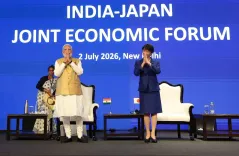
Jal Shakti Minister Paatil Shares Glimpses of PM Modi's Japan Visits

Synopsis
Union Jal Shakti Minister C. R. Paatil shared a video on X on 2 July 2026 revisiting PM Narendra Modi's Japan visits, spotlighting the depth of India-Japan ties built under the Special Strategic and Global Partnership since 2014.
Key Takeaways
Union Jal Shakti Minister C.
Paatil posted a video on 2 July 2026 recapping PM Modi 's visits to Japan .
India and Japan upgraded ties to a Special Strategic and Global Partnership in 2014 , building on the 2006 annual summit mechanism.
Key areas of cooperation include defence technology, high-speed rail, semiconductor supply chains, and Quad collaboration.
Japan is one of India 's largest sources of official development assistance, including for the Mumbai-Ahmedabad High Speed Rail project.
The post reflects a broader BJP ministerial pattern of amplifying the Prime Minister's diplomatic record on social media.
Analysts will watch for the next India-Japan annual summit date and any new cooperation announcements.
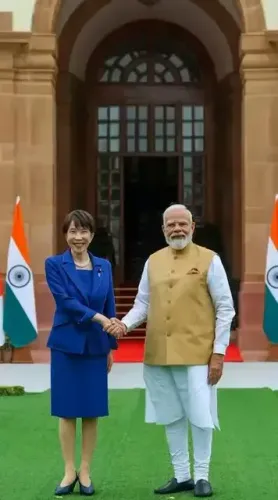
Union Jal Shakti Minister C. R. Paatil on Thursday, 2 July 2026 shared a video on X offering a retrospective look at Prime Minister Narendra Modi's visits to Japan, describing it as 'a glimpse of the honourable Prime Minister Shri Narendra Bhai Modi ji's Japan visits.' The post, carrying no accompanying images but featuring a video, was shared by the senior BJP leader from his official handle.
Context
Paatil's post — 'माननीय प्रधानमंत्री श्री नरेंद्र भाई मोदी जी के जापान दौरों की एक झलक…' ('A glimpse of honourable Prime Minister Shri Narendra Bhai Modi ji's Japan visits…') — presents a curated video look-back at Modi's engagements with Japan. While Paatil's primary mandate is water resources, the post reflects a broader pattern of senior BJP ministers amplifying the Prime Minister's diplomatic record on social media.
The video serves as a commemorative or awareness piece, drawing public attention to the depth and consistency of India-Japan bilateral ties as cultivated under Modi's leadership since 2014.
Policy Backdrop
India and Japan upgraded their relationship to a Special Strategic and Global Partnership in 2014 during Modi's first official visit, building on an annual summit mechanism established in 2006. Since then, the partnership has expanded to cover defence technology, high-speed rail, semiconductor supply chains, and Quad cooperation under the Indo-Pacific framework.
Multiple Modi visits to Tokyo have produced joint statements on economic security and infrastructure investment, with Japan remaining one of India's largest sources of official development assistance, particularly for flagship projects such as the Mumbai-Ahmedabad High Speed Rail corridor.
Stakeholders and Impact
The India-Japan bilateral relationship touches a wide range of stakeholders: diplomatic officials managing the annual summit calendar, infrastructure investors tracking Japanese ODA flows into Indian projects, and defence establishments monitoring technology-transfer agreements. The Quad grouping — comprising India, Japan, Australia, and the United States — has added a multilateral security dimension to what was once a primarily economic partnership.
For domestic audiences, posts such as Paatil's serve to reinforce the government's foreign-policy narrative ahead of any upcoming diplomatic engagement, positioning Modi's consistent outreach to Tokyo as a pillar of India's Act East policy.
What's Next
Observers will watch for the scheduling of the next India-Japan annual summit, which typically alternates between the two capitals. Any fresh joint statements on water management, river technology, or environmental cooperation could also draw Paatil's Jal Shakti ministry into the bilateral frame more directly. The broader Indo-Pacific agenda — including supply chain resilience and critical minerals — is expected to remain central to future engagements between New Delhi and Tokyo.
Point of View
Underscoring how senior BJP ministers routinely function as amplifiers of the Prime Minister's diplomatic brand on social media. The choice to highlight Japan is strategically coherent: the India-Japan partnership is one of the most tangible foreign-policy achievements the ruling dispensation can point to, encompassing infrastructure finance, defence ties, and Quad multilateralism. By circulating a retrospective video, the party reinforces a narrative of sustained, results-oriented diplomacy at a time when India's Indo-Pacific posture is under close international scrutiny. The post also quietly signals that India-Japan engagement is a whole-of-government priority, not merely a foreign ministry concern.
NationPress
2 Jul 2026
Frequently Asked Questions
How many times has PM Modi visited Japan?
PM Modi has made multiple official visits to Japan since taking office in 2014, with each visit typically producing joint statements on economic, defence, and strategic cooperation. Specific visit counts beyond verified public record are not confirmed in this report.
What is the India-Japan Special Strategic and Global Partnership?
The Special Strategic and Global Partnership is the highest level of bilateral relationship between India and Japan, established during PM Modi's first visit to Tokyo in 2014. It covers defence, infrastructure, technology, and multilateral cooperation including the Quad.
Why did Jal Shakti Minister C. R. Paatil post about Japan?
C. R. Paatil shared a video retrospective of PM Modi's Japan visits as a commemorative or awareness post. Senior BJP ministers frequently amplify the Prime Minister's foreign policy record on social media, even when the subject falls outside their direct portfolio.
What is India's Act East policy and how does Japan fit in?
India's Act East policy prioritises deepening ties with East and Southeast Asian nations. Japan is a central pillar of this approach, with cooperation spanning high-speed rail, defence technology, and the Quad security grouping.
What major projects link India and Japan?
The most prominent is the Mumbai-Ahmedabad High Speed Rail corridor, financed significantly through Japanese official development assistance. Defence technology transfers and semiconductor supply chain agreements are also key pillars of the bilateral relationship.