AIIMS Rajkot doctors remove metal pin from girl's intestine via endoscopy
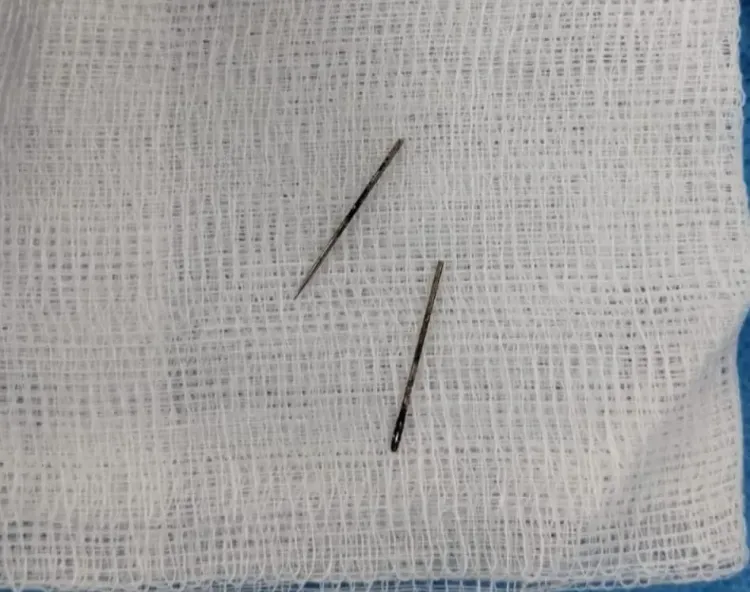
Synopsis
A 12-year-old from Junagadh accidentally swallowed a sharp metal pin that lodged in her duodenum — the trickiest stretch of the small intestine. AIIMS Rajkot doctors pulled it out through endoscopy, no incision needed, and discharged her the next day. The case is a reminder that swallowed sharp objects in children can be deceptively silent before turning dangerous.
Key Takeaways
AIIMS Rajkot doctors removed a sharp metal pin from the duodenum of a 12-year-old girl from Junagadh district, Gujarat on 16 October 2026 .
The pin was extracted via endoscopy , with no abdominal incision or major surgery required.
The girl was started on a liquid diet six hours post-procedure and discharged the following day with no complications.
She had initially been assessed at Junagadh Civil Hospital and a private facility before referral to AIIMS Rajkot.
Doctors advised parents never to induce vomiting or attempt home removal of swallowed objects, and to seek immediate medical attention instead.
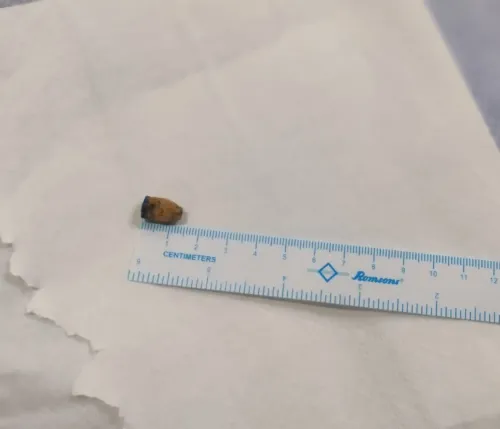
Doctors at the All India Institute of Medical Sciences (AIIMS), Rajkot, successfully removed a sharp metal pin lodged in the small intestine of a 12-year-old girl through endoscopy on 16 October 2026, avoiding the need for open abdominal surgery. The child, a resident of Junagadh district in Gujarat, was discharged the day after the minimally invasive procedure with no reported complications.
How the Pin Was Discovered
The girl had accidentally swallowed the metal pin a few days before her family sought hospital care. She was initially taken to Junagadh Civil Hospital and subsequently to a private facility, where an X-ray revealed a metallic foreign body in the upper abdomen. Doctors at both earlier facilities referred the family to AIIMS Rajkot for specialised treatment.
At AIIMS Rajkot, the girl was assessed at the General Surgery outpatient department. Further imaging confirmed that the sharp metal pin had migrated to the duodenum — specifically the junction of its second and third portions, the first segment of the small intestine beyond the stomach. The location raised concern: prolonged retention of a sharp object at that site risked internal injury and serious complications.
The Endoscopy Procedure
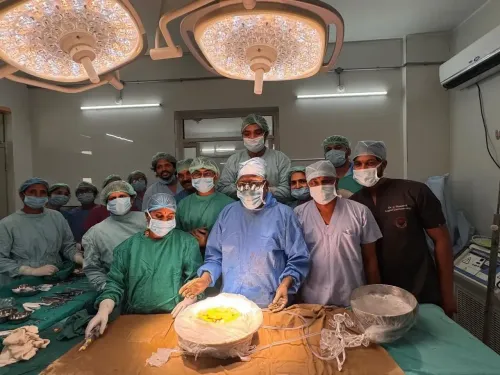
A senior surgical team, supported by the hospital's anaesthesia unit, performed the endoscopy to retrieve the pin without making any abdominal incision. During the procedure, the medical team located the object and extracted it safely from the duodenum. The girl remained stable throughout, and no surgical cut was required.
Six hours after the procedure was completed, the child was placed on a liquid diet, which was gradually advanced to normal food as her recovery progressed. She was discharged the following day, with doctors confirming no post-procedure complications.
Medical Advice for Parents
Doctors at AIIMS Rajkot used the case to issue a broader advisory for parents. They cautioned that children frequently swallow small objects — including pins, coins, and toy parts — often without showing immediate symptoms, and that such incidents should never be dismissed as harmless.
Crucially, doctors warned against attempting to induce vomiting or trying to remove a swallowed object at home. Parents should seek prompt medical attention so that clinicians can determine the object's precise location through imaging and decide on the appropriate course of treatment.
AIIMS Rajkot confirmed that the hospital has dedicated endoscopy facilities capable of managing foreign-body ingestion cases, with treatment decisions made on the basis of each patient's clinical condition and specialist assessment.
Why Endoscopy Matters Here
Foreign-body ingestion in children is a relatively common paediatric emergency across India, but outcomes depend heavily on the speed of diagnosis and access to endoscopic intervention. Sharp metallic objects lodged in the duodenum carry elevated risk of perforation compared with blunt objects or those that clear the stomach. The successful non-surgical retrieval at AIIMS Rajkot underscores the growing role of advanced endoscopy in avoiding open procedures — particularly in paediatric cases where surgical risk is a significant concern. This case also highlights the value of tertiary-care referral networks in rural and semi-urban Gujarat, where local hospitals appropriately escalated care rather than attempting high-risk removal without specialised equipment.
Point of View
But the broader point is systemic — access to paediatric endoscopy outside metro centres remains patchy across India, and referral pathways like the one that brought this child from Junagadh to Rajkot are not universally available. The doctors' public advisory on not inducing vomiting is particularly valuable: it directly counters a dangerous home-remedy instinct that can turn a manageable situation into a surgical emergency.
NationPress
16 Oct 2026
Frequently Asked Questions
What happened to the 12-year-old girl at AIIMS Rajkot?
A 12-year-old girl from Junagadh district, Gujarat, accidentally swallowed a sharp metal pin that lodged in her duodenum. Doctors at AIIMS Rajkot removed it through endoscopy on 16 October 2026, without any surgery, and she was discharged the following day in stable condition.
What is the duodenum and why was the pin's location dangerous?
The duodenum is the first portion of the small intestine, located just beyond the stomach. A sharp object lodged at the junction of its second and third portions — as in this case — carries a significant risk of puncturing the intestinal wall, which can cause internal bleeding or infection if not treated promptly.
Why was endoscopy used instead of surgery?
Endoscopy allowed doctors to locate and retrieve the sharp metal pin through a flexible camera inserted internally, without making any abdominal incision. This approach reduces recovery time, lowers surgical risk, and avoids complications associated with open surgery — particularly important for a child.
What should parents do if a child swallows a foreign object?
Doctors at AIIMS Rajkot advise parents to seek immediate medical attention rather than attempting to induce vomiting or remove the object themselves. Even if the child shows no immediate symptoms, a swallowed sharp object such as a pin can cause serious internal injury and must be located through imaging before any treatment decision is made.
What objects are children most at risk of swallowing?
According to the AIIMS Rajkot medical team, common objects accidentally swallowed by children include pins, coins, and small toy parts. Sharp objects pose the greatest risk of internal injury and require urgent medical evaluation, even when the child appears well initially.