Assam's ₹546-crore AAHII to build MRI scanners, robotic arms indigenously
Synopsis
Assam is betting ₹546 crore on a single idea: what if surgeons and engineers worked in the same building? The AAHII — opening December 2027 — aims to indigenously develop robotic surgical arms, affordable MRI scanners, and insulin pumps, with IIT Guwahati as a core partner. If it delivers, it could reshape medical technology access across India's Northeast.
Key Takeaways
Assam will establish the Advanced Healthcare Innovation Institute (AAHII) with a ₹546-crore outlay, announced on 11 November 2026 .
Chief Minister Himanta Biswa Sarma shared the details via social media platform X ; the institute is scheduled to open in December 2027 .
The project includes a six-storeyed R&D building and a 410-bed multi-speciality postgraduate teaching and research hospital .
Focus areas include robotic surgical systems , affordable MRI scanners , and indigenously manufactured insulin pumps .
IIT Guwahati will be a key institutional partner, supplying research and engineering expertise to the innovation pipeline.
The initiative aims to reduce Assam's — and the Northeast's — dependence on costly imported medical equipment.
Assam is set to establish the Advanced Healthcare Innovation Institute (AAHII) — a first-of-its-kind facility in Guwahati — with a ₹546-crore outlay aimed at developing affordable, indigenous medical technologies by bringing doctors, engineers, and scientists under a single roof. Chief Minister Himanta Biswa Sarma announced the project on 11 November 2026, with the institute scheduled to open in December 2027.
What the Institute Will Build
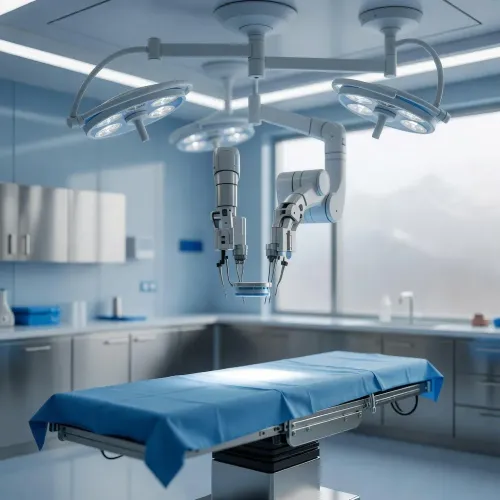
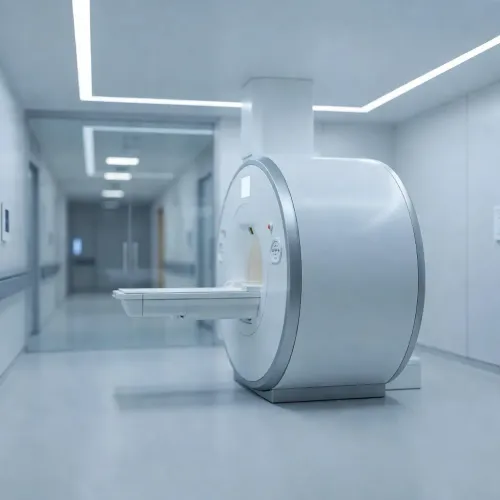
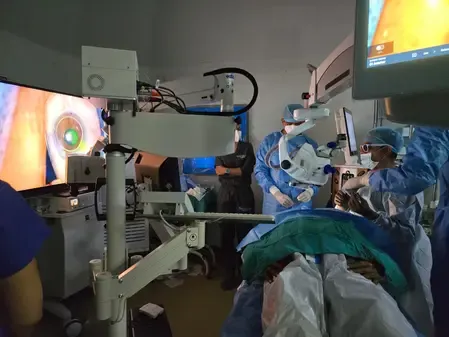
The AAHII's research agenda targets some of the most cost-intensive gaps in Indian healthcare. The institute will work on robotic surgical systems, affordable MRI scanners accessible to smaller hospitals, and insulin pumps manufactured entirely in India. The Chief Minister framed the vision succinctly: 'What happens when a surgeon and an engineer share a corridor? A robotic surgical arm. An MRI scanner small hospitals can afford. An insulin pump made in India.'
Two Interconnected Facilities
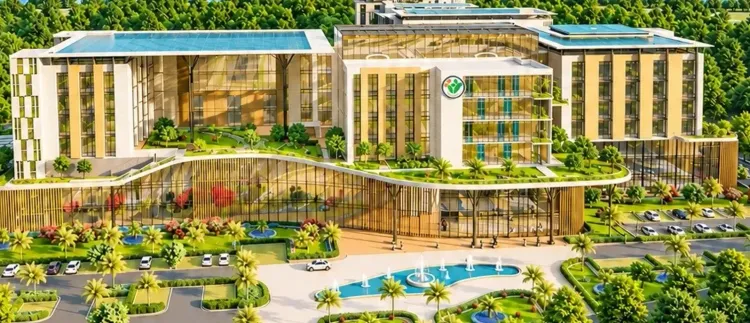
The ₹546-crore project will comprise two linked structures. The first is a six-storeyed Research and Development Building housing specialised health-technology innovation labs and a collaborative ecosystem that will bring together IIT Guwahati, clinicians, and industry partners. The second is a 410-bed multi-speciality postgraduate teaching and research hospital that will offer clinical care alongside postgraduate training.
Notably, the hospital is designed to serve as a real-world testing ground for medical devices and technologies developed within the R&D facility — a 'bench-to-bedside' model rarely attempted at this scale in India's Northeast.
Why This Matters for the Northeast
India's dependence on imported medical equipment — particularly high-end imaging and surgical systems — has long constrained healthcare delivery in Tier-2 and Tier-3 cities. The AAHII directly targets that bottleneck. By manufacturing MRI scanners and surgical robotics domestically, the initiative could lower procurement costs for district and sub-district hospitals across Assam and potentially the broader Northeast region.
This comes amid a wider national push to indigenise medical technology under the Make in India framework. AAHII positions Assam as a potential anchor for biomedical manufacturing in the region, a role that has historically been dominated by facilities in Bengaluru, Hyderabad, and Pune.
IIT Guwahati's Role
The inclusion of IIT Guwahati as a formal institutional partner is significant. The institute has an established track record in biomedical engineering research, and its proximity to the AAHII campus is expected to accelerate the translation of laboratory findings into deployable medical solutions. According to details shared by the Chief Minister, the R&D building is specifically designed to host thematic research programmes in collaboration with the IIT.
What Comes Next
With a targeted opening of December 2027, project timelines are tight. Detailed project approvals, land allocation, and procurement processes will need to move in parallel. Industry bodies and healthcare advocates have broadly welcomed the announcement, though experts note that the success of innovation institutes hinges on sustained operational funding beyond initial capital outlay. As construction begins, all eyes will be on whether Assam can convert a bold blueprint into the Northeast's most consequential healthcare infrastructure project.
Point of View
But the Northeast has seen infrastructure promises before — the credibility test will come at groundbreaking, not at a social media post. The IIT Guwahati partnership is the most substantive detail here: if the R&D-to-hospital pipeline is genuinely integrated, this could be a replicable model for state-level biomedical innovation. What the announcement does not address is recurrent funding — capital outlay builds walls; operational grants keep researchers. India's public innovation institutes have a consistent pattern of strong launches followed by under-resourced operations. Chief Minister Sarma would do well to announce the operational funding mechanism before December 2027, not after.
NationPress
11 Nov 2026
Frequently Asked Questions
What is the Assam Advanced Healthcare Innovation Institute (AAHII)?
The AAHII is a ₹546-crore first-of-its-kind institute being established in Guwahati, Assam, to develop affordable and indigenous medical technologies such as robotic surgical systems, MRI scanners, and insulin pumps. It is scheduled to open in December 2027 and will bring together doctors, engineers, and scientists under one roof.
What will the AAHII's two facilities include?
The project comprises a six-storeyed Research and Development Building for health-technology innovation and a 410-bed multi-speciality postgraduate teaching and research hospital. The hospital will also serve as a real-world testing site for technologies developed in the R&D wing.
How is IIT Guwahati involved in the AAHII project?
IIT Guwahati is a core institutional partner, expected to collaborate with clinicians and industry partners within the R&D building. The institute's biomedical engineering expertise is intended to accelerate the translation of research into deployable medical products.
Why is the AAHII significant for Northeast India?
The Northeast has historically had limited access to advanced medical equipment due to high import costs. By manufacturing devices like MRI scanners and surgical robots indigenously, the AAHII could reduce procurement costs for smaller hospitals across the region and position Assam as a medical technology hub.
When is the AAHII expected to open?
Chief Minister Himanta Biswa Sarma has stated that the institute is scheduled to open in December 2027. Construction and procurement processes are expected to proceed in parallel to meet that timeline.