Have Dutch authorities found bird flu antibodies in a cow without detecting the active H5N1 virus?
Synopsis
Discover the latest news from the Netherlands where authorities have detected antibodies of the bird flu virus in a dairy cow, raising questions about the H5N1 avian influenza. Despite this finding, officials assure the public that the risk to human health remains very low. Stay informed on this evolving situation!
Key Takeaways
Bird flu antibodies found in a dairy cow in the Netherlands.
No active H5N1 virus detected in the cow or other cattle.
Risk to humans is very low, according to health authorities.
Authorities are monitoring the situation closely.
Consumption of pasteurized milk is considered safe.
New Delhi, Jan 24 (NationPress) Authorities in the Netherlands have detected antibodies related to the bird flu in a dairy cow. However, the risk of the H5N1 avian influenza virus transmitting from animals to humans is considered minimal, as stated by Dutch officials.
The Minister of Agriculture of the Netherlands informed parliament in a comprehensive letter that the H5N1 virus was previously found in a deceased cat last month.
Subsequently, the Netherlands Food and Consumer Product Safety Authority (NVWA) took blood and milk samples from the farm's cattle on January 15.
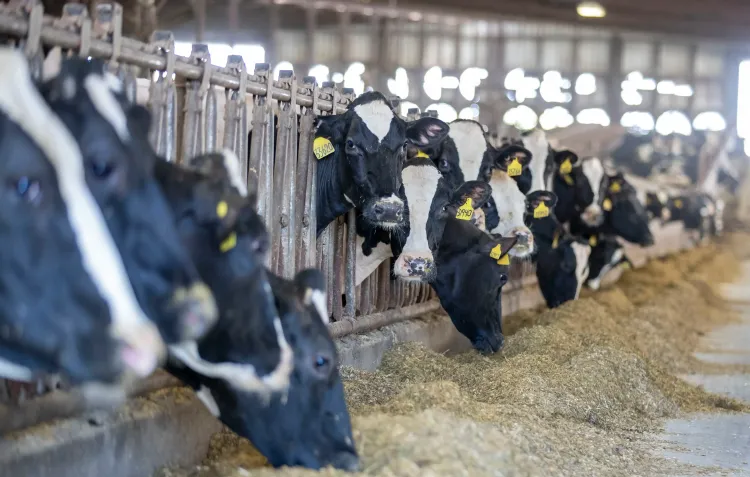
Results indicated that one cow had antibodies in its milk, suggesting a past infection. Importantly, no active virus was detected, and no additional spread was reported.
This marks the first instance of the deadly avian influenza moving to cattle outside the United States. Notably, antibodies against avian influenza had not previously been documented in European dairy cattle.
In the letter, it was confirmed, “Avian influenza antibodies have been identified in a dairy cow located in the municipality of Noardeast-Fryslân, province of Friesland. There is no indication of active viral circulation among the dairy cows on this farm, and there are no signs of the virus spreading to other farms.”
A news article in a science journal revealed that the affected cow experienced mastitis—a painful condition of breast tissue—and respiratory issues in December, with its milk remaining unprocessed.
As the milk from this farm is pasteurized, eliminating any potential virus, it is highly unlikely that the disease has transmitted to humans.
The minister emphasized, “There is very little chance that the virus from the infected cow has entered the milk for human consumption.”
Nonetheless, the origins of the virus at the farm remain uncertain, as do the infection routes for both the cat and cow.
Veterinary authorities revisited the farm on January 22, collecting blood and milk samples from all cattle present. These tests confirmed the absence of the avian influenza virus. Results of the antibody tests are anticipated next week.
“This will reveal if more animals have interacted with the virus. Other mammals on the farm, including dogs, cats, and horses, have displayed no symptoms. The farm personnel and veterinarian are undergoing tests by the Municipal Health Service (GGD),” stated the Minister in his letter.
While the likelihood of humans contracting avian influenza from consuming chicken, eggs, beef, or dairy products is very low, the Minister advised against the consumption of raw dairy products.
“The avian influenza situation in the Netherlands remains concerning. Continuous monitoring is in place, and all stakeholders are urged to stay alert for any potential signs,” the Minister concluded.
Point of View
Our commitment lies in delivering factual and unbiased news. The recent findings in the Netherlands regarding bird flu antibodies in a cow highlight the importance of ongoing surveillance and public awareness. While the immediate risk to human health remains low, we urge our audience to stay informed and heed guidance from health authorities.
NationPress
25 Sept 2026
Frequently Asked Questions
What were the findings regarding the cow in the Netherlands?
Antibodies related to the bird flu virus were found in a dairy cow, indicating a past infection. However, no active H5N1 virus was detected, and the risk to humans is considered minimal.
Is there a risk of H5N1 spreading to humans?
According to Dutch authorities, the risk of the H5N1 avian influenza virus spreading from animals to humans is very low.
What measures are being taken following these findings?
Authorities have conducted further testing of all cattle on the farm, and veterinary officials are closely monitoring the situation.
Should people be concerned about consuming dairy products?
The Minister advised against consuming raw dairy products but emphasized that pasteurization eliminates any potential virus.
What is the historical significance of this finding?
This is the first reported case of bird flu antibodies in cattle outside the United States, marking a notable event in veterinary public health.