Is Burning Firewood at Home in Winters Contributing to Air Pollution and Premature Deaths?
Synopsis
A recent study highlights the alarming connection between burning firewood at home during winter and its role in escalating air pollution and premature deaths. The research urges a shift towards cleaner heating alternatives to mitigate these health risks.
Key Takeaways
Residential wood burning contributes significantly to winter air pollution.
It is linked to approximately 8,600 premature deaths annually in the US.
Transitioning to cleaner heating sources can improve air quality.
Wood burning emissions are problematic in urban areas due to population density.
Meteorological conditions affect the dispersal of wood burning emissions.
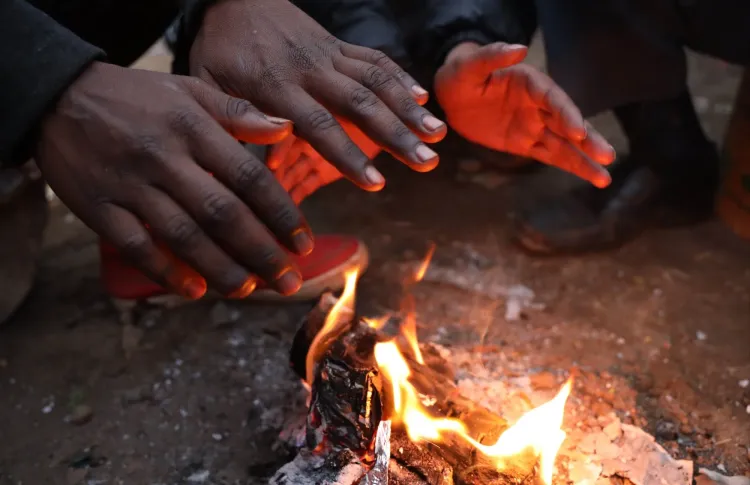
New Delhi, Jan 24 (NationPress) - A recent study reveals that burning firewood indoors during the winter months significantly contributes to air pollution and is linked to premature deaths. The research, featured in the journal Science Advances, indicates that residential wood burning accounts for approximately 22 percent of PM2.5 pollution in winter, making it a primary source of fine particulate matter during colder months.
Conducted by researchers from Northwestern University, the study estimates that residential wood burning is responsible for around 8,600 premature fatalities annually in the United States.
The researchers recommend transitioning to alternative heating sources, which could greatly reduce fine particulate matter in the air and lower the risk of cardiovascular diseases.
“While we often discuss the health risks of wildfire smoke, the dangers associated with burning wood for home heating are frequently overlooked,” stated Daniel Horton, Associate Professor of Earth Sciences at the university.
He emphasized that since only a limited number of households use wood for heating, promoting a shift to cleaner heating appliances could lead to significant improvements in air quality.
The focus of the study encompasses various forms of wood burning in homes, such as emissions from wood-burning stoves, fireplaces, and furnaces.
Using a high-resolution atmospheric model, the team simulated the movement of pollution through the atmosphere, accounting for factors like weather, wind patterns, temperature, terrain, and atmospheric chemistry to evaluate air quality over time.
“Wood burning emissions enter the atmosphere where they are influenced by meteorological conditions,” Horton noted. “Some emissions are classified as primary pollutants, like black carbon, while others interact with the atmosphere and can create additional, secondary forms of particulate matter pollution.”
The research highlighted that particulate matter resulting from wood burning poses a significant problem in urban and suburban areas due to the interplay of population density and emission levels.
In many urban environments, smoke from nearby suburbs can drift into more densely populated areas, which typically have lower wood-burning emissions. Even cities that are not generally associated with wood burning, particularly those in warmer climates, may feel the effects during cold snaps or due to recreational burning and atmospheric transport.
Point of View
It is essential to highlight the serious implications of residential wood burning during the winter months. This study underscores the need for heightened awareness and action towards cleaner heating alternatives to protect public health and improve air quality across urban and suburban areas.
NationPress
20 Oct 2026
Frequently Asked Questions
What is the main finding of the study?
The study found that burning firewood at home during winter is a significant contributor to air pollution, accounting for about 22% of PM2.5 pollution, and is linked to approximately 8,600 premature deaths annually in the US.
What alternatives are suggested for heating homes?
The researchers recommend transitioning to cleaner heating appliances that do not involve burning wood, which can significantly reduce fine particulate matter in the air.
How does wood burning affect air quality?
Wood burning releases emissions that contribute to fine particulate matter pollution, which can have serious health impacts, particularly in densely populated urban areas.
Why is wood burning particularly problematic in cities?
Cities often face compounded pollution issues as smoke from surrounding suburbs can drift into urban cores, exacerbating air quality problems, especially during cold weather.
What role does meteorology play in wood burning emissions?
Meteorological conditions influence how wood burning emissions disperse in the atmosphere, with factors like temperature, wind, and weather patterns affecting air quality.