Lumpy Skin Disease in J&K: Central team inspects affected villages, collects samples
Synopsis
A Union government team led by a senior livestock health official landed in Jammu and Kashmir on 15 October to inspect villages hit by the Lumpy Skin Disease outbreak — distributing supplies, conducting awareness drives, and collecting diagnostic samples from Samba, Kathua, and Jammu districts. The visit underlines growing central concern over an infection that is squeezing milk yields and threatening the livelihoods of cattle farmers across the UT.
Key Takeaways
A central expert team headed by Dr Sudam Bagh visited LSD-affected areas in Jammu and Kashmir on 15 October 2026 .
Samples were collected from LSD-affected cattle in Samba , Kathua , and Jammu districts for laboratory analysis.
Farmers received mineral mixtures, wound-dressing materials, and disinfectants as immediate support.
Lumpy Skin Disease is caused by the Capripoxvirus and spreads through blood-feeding insects; it does not infect humans.
Key symptoms include fever above 41°C , skin nodules of 2–5 cm , reduced milk yield, and infertility in bulls.
A review meeting at the Directorate of Animal Husbandry, Jammu stressed the need for coordinated surveillance and sustained farmer awareness.
A central government expert team on Thursday, 15 October 2026, visited Lumpy Skin Disease (LSD)-affected areas across Jammu and Kashmir, reviewing ground-level containment measures and assessing the threat to livestock farmers in the Union Territory. The visit signals heightened federal attention to an outbreak that is disrupting dairy livelihoods and cattle health across the region.
Key Developments During the Visit
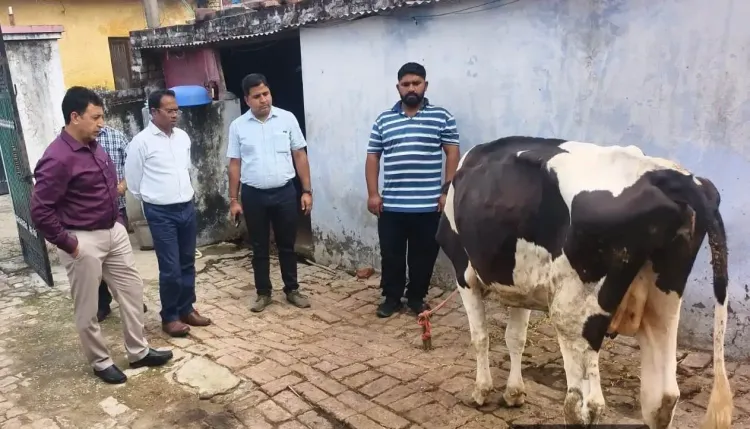
The team was headed by Dr Sudam Bagh, Deputy Commissioner (Livestock Health), Department of Animal Husbandry and Dairying under the Union Ministry of Fisheries. He was accompanied by Dr Sandeep Pandita, Technical Assistant at the M S Institute of Animal Health and Biological Production, R S Pura, Jammu. The delegation inspected several LSD-affected villages, assessed the challenges faced by livestock farmers, and engaged with officials of the Animal Husbandry Department of Jammu and Kashmir.
As part of the outreach, mineral mixtures, wound-dressing materials, and disinfectants were distributed among farmers. Awareness and sensitisation programmes were also held to educate farmers on disease prevention, biosecurity measures, hygiene practices, and appropriate livestock management.
Sample Collection Across Affected Districts
Parallel to the inspection, disease surveillance teams carried out sample collection from LSD-affected cattle across multiple districts. A team from the Deputy Director, Research and Production (DDR&P), led by Dr Abhimanyu Chauhan, Lab Officer, collected samples from cattle in Samba and Kathua districts. A separate team from the District Investigation Office (DIO), Jammu, led by Dr Ravinder Singh Thakur, Lab Officer, gathered samples from affected cattle in Jammu district. Dr Muddassir Nazar, Livestock Development Officer, R S Pura, accompanied the visiting officer during the field tour.
These samples are intended to facilitate laboratory investigations and support a comprehensive assessment of the disease's spread and severity.
What Is Lumpy Skin Disease
Lumpy Skin Disease is a contagious viral infection of cattle and water buffalo caused by the Lumpy skin disease virus (Capripoxvirus). It spreads primarily through blood-feeding insects such as mosquitoes, biting flies, and ticks, as well as through the movement of infected livestock or contaminated feed and water. The disease does not affect humans.
Symptoms include high fever (often above 41°C), firm and painful skin nodules of 2–5 cm across the body, swollen lymph nodes, leg oedema, a sharp drop in milk production, significant weight loss, and temporary or permanent infertility in bulls. It causes major economic losses for dairy and beef producers through damaged hides, reduced milk yield, and trade restrictions.
Control Measures and Coordination
Control efforts rely on mass vaccination using live-attenuated vaccines, vector and insect control, quarantine protocols, and movement restrictions on livestock. A review meeting was convened at the Directorate of Animal Husbandry, Jammu, bringing together district-level officers to discuss field interventions, disease surveillance strategies, and the importance of sustained farmer awareness.
Officials emphasised that close coordination between the Centre and J&K's Animal Husbandry Department remains essential to containing the outbreak and protecting both livestock health and the livelihoods of farmers dependent on cattle and dairy. With samples now in laboratory analysis, the results are expected to inform the next phase of the government's response.
Point of View
But a single inspection tour should not be mistaken for a sustained containment strategy. Lumpy Skin Disease has a documented pattern of resurgence when vaccination coverage is patchy, as India saw in the devastating 2022 outbreak that killed thousands of cattle across Rajasthan and Gujarat. J&K's geography — fragmented terrain, seasonal transhumance, and large numbers of unregistered small holders — makes vector control and cattle movement restrictions especially difficult to enforce. The sample-collection drive is a positive step, but its value depends entirely on how quickly results translate into targeted vaccination orders. Without a publicly disclosed timeline and district-wise vaccination coverage data, the risk is that this visit remains a signal of concern rather than a driver of outcomes.
NationPress
15 Oct 2026
Frequently Asked Questions
What is Lumpy Skin Disease and does it affect humans?
Lumpy Skin Disease is a contagious viral infection of cattle and water buffalo caused by the Lumpy skin disease virus (Capripoxvirus). It does not infect humans. It spreads through blood-feeding insects such as mosquitoes, biting flies, and ticks, as well as through movement of infected animals or contaminated feed and water.
Why has the Centre sent a team to Jammu and Kashmir for LSD?
The central team was deployed to assess the ground situation in LSD-affected villages in Jammu and Kashmir, review containment measures, distribute farmer supplies, and collect diagnostic samples. The visit underscores federal concern about the disease's spread and its impact on livestock livelihoods in the Union Territory.
Which districts in J&K are affected by the LSD outbreak?
According to officials, LSD-affected cattle have been identified in Samba, Kathua, and Jammu districts, from which diagnostic samples were collected on 15 October 2026. The full extent of the outbreak across J&K is being assessed through laboratory investigations.
What are the symptoms of Lumpy Skin Disease in cattle?
Symptoms include high fever (often above 41°C), firm and painful skin nodules of 2–5 cm across the body, swollen lymph nodes, leg oedema, a sharp drop in milk production, significant weight loss, and temporary or permanent infertility in bulls.
How is Lumpy Skin Disease controlled and prevented?
Control measures include mass vaccination using live-attenuated vaccines, vector and insect control, quarantine of affected animals, and restrictions on livestock movement. Awareness programmes on biosecurity, hygiene, and farm management practices are also used to reduce spread.