Gorakhpur's BRD Medical College becomes model for childhood cancer care in UP
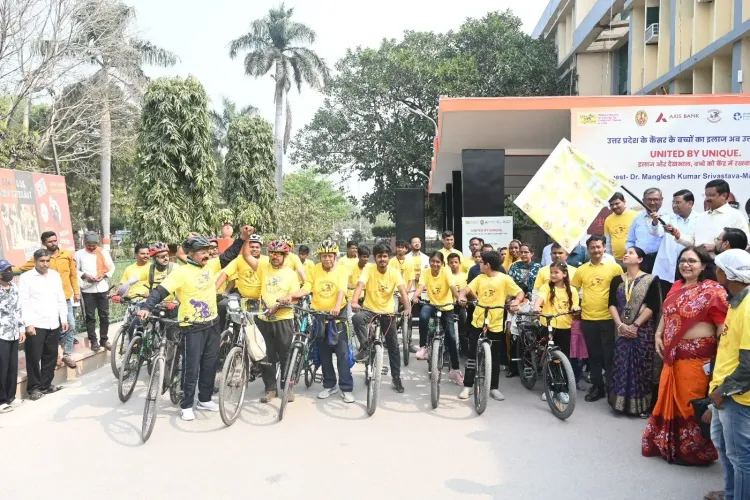
Synopsis
A 30-bed paediatric oncology ward at BRD Medical College in Gorakhpur has treated over 100 children since 2023 — drawing patients from Bihar and Nepal — cutting the need for exhausting treks to Delhi or Mumbai. With UP recording 14,700 new childhood cancer cases a year and a study showing median travel times of 161 minutes to specialist care, Gorakhpur is being positioned as the blueprint for decentralised childhood cancer treatment across India.
Key Takeaways
BRD Medical College in Gorakhpur has treated more than 100 childhood cancer patients since 2023 , with a 30-bed paediatric oncology ward serving families from UP, Bihar and Nepal .
A September 2026 study in the Journal of Cancer Policy found a median travel time of 161 minutes for children to reach specialist cancer centres in Delhi and Chennai .
Uttar Pradesh records an estimated 14,700 new childhood cancer cases annually among those aged 0–19 .
The state model is built around four proposed Childhood Cancer District Divisions (CCDDs) using a hub-and-spoke network of government hospitals.
Project Suddridh , launched in 2022 , and a May 2023 MoU between CanKids and UP's National Health Mission underpin the capacity-building effort.
India's 2030 goals target 100% access to care, 100% financial protection, and at least 60% survival for childhood cancer patients.
Baba Raghav Das (BRD) Medical College in Gorakhpur, Uttar Pradesh, is emerging as a regional model for decentralised childhood cancer treatment, with a dedicated paediatric oncology ward serving over 100 patients since 2023 and reducing the need for families to travel hundreds of kilometres to metro hospitals. The development underscores a broader state-level push to bring specialised cancer care closer to where children live.
The Distance Problem in Childhood Cancer
A study published in the Journal of Cancer Policy in September 2026, titled 'Motorised travel time to access childhood cancer care in India: A multi-centre geospatial analysis', examined 22,328 children receiving treatment at three major cancer centres in Delhi and Chennai. It found a median estimated travel time of 161 minutes, with nearly three-quarters of children travelling more than an hour to reach treatment. The findings make a compelling case for expanding paediatric oncology services well beyond metropolitan centres.
For families affected by childhood cancer, the burden extends far beyond travel costs. Accommodation, food, lost wages, disrupted schooling, and prolonged separation from family support systems compound the financial and emotional toll on households — particularly in lower-income regions like North Purvanchal.
What BRD Medical College Is Doing
Dr Kuldeep Singh, Assistant Professor of Paediatrics at BRD Medical College, said the centre has treated more than 100 childhood cancer patients since 2023. The 30-bed paediatric oncology ward — equipped for chemotherapy, medicines, and patient-family support — is drawing families not only from neighbouring districts but also from Bihar and Nepal.
'As India marks Children's Day on November 14, the findings of the travel-time study serve as a reminder that the location of treatment services can impact a child's journey through cancer,' Dr Singh said.
The ward's development builds on Project Suddridh, a paediatric oncology capacity-building initiative launched in the Gorakhpur region in 2022, and a May 2023 Memorandum of Understanding between national society CanKids and the Uttar Pradesh government's National Health Mission.
Real Families, Real Impact
The human cost of distance is evident in documented cases. In 2016, Shaila and Pramod Giri travelled from Gorakhpur to AIIMS, Delhi, after their daughter Anshika was diagnosed with blood cancer. They made more than 20 trips and faced significant livelihood disruption before Anshika completed treatment. Today, her parents work as care coordinators in Gorakhpur, supporting other cancer-affected children and families.
In another case, Sanskriti and her family travelled from Siwan in Bihar to AIIMS, Delhi, for their daughter's surgery. With care coordination support, subsequent chemotherapy was administered at BRD Medical College, allowing her father to return to work while treatment continued closer to home. These cases, officials say, illustrate the value of coordinated referrals and shared-care arrangements between specialist institutions and regional hospitals.
The UP Model: Hub-and-Spoke Across Four Divisions
Uttar Pradesh records an estimated 14,700 new childhood cancer cases annually among children and adolescents aged 0–19, making it a priority state for policymakers. The state's integrated approach is organised around four proposed Childhood Cancer District Divisions (CCDDs), connecting designated government medical colleges and tertiary hospitals as regional hubs to district hospitals and community health services through a structured hub-and-spoke network.
Poonam Bagai, founder of CanKids, Member of the ICMR Central Ethics Committee on Human Research, and Childhood Cancer International's WHO South East Asia Region Representative, described Uttar Pradesh as 'our demonstration model for how this can be achieved through sustained partnership with government and all concerned stakeholders.' She added that the approach is being replicated in other states as well.
Bagai stressed that improving geographic access must be paired with financial protection: 'Bringing treatment closer to home must go hand in hand with financial protection.' She cited India's 2030 goals — 100 per cent access to care, 100 per cent financial protection, and at least 60 per cent survival — aligned with the UNGA80 call, the WHO Global Initiative for Childhood Cancer, and Universal Health Coverage.
What Comes Next
The Uttar Pradesh model envisages improved mapping of treatment facilities, patient registration, referral tracking, financial protection monitoring, and outcome measurement to guide expansion across the state. With Children's Day on 14 November 2026 serving as a backdrop, advocates are calling on other states to adopt similar decentralised frameworks — viewing Gorakhpur not as an endpoint but as a replicable starting point for equitable childhood cancer care across India.
Point of View
Not scale. Uttar Pradesh's 14,700 annual childhood cancer cases demand a network, not a flagship. The real test of the CCDD framework will be whether referral tracking and financial protection mechanisms are actually operationalised — or whether, as with many health schemes before it, the architecture exists on paper while families still board overnight trains to Delhi. Poonam Bagai's honest caveat — that geographic access alone is insufficient without financial protection — is the most important line in this story, and the one least likely to get a budget line.
NationPress
14 Nov 2026
Frequently Asked Questions
What is happening at BRD Medical College in Gorakhpur for childhood cancer?
BRD Medical College in Gorakhpur has established a dedicated 30-bed paediatric oncology ward that has treated more than 100 childhood cancer patients since 2023. It offers chemotherapy, medicines, and patient-family support, and serves families from neighbouring districts, Bihar, and Nepal, reducing the need for long trips to Delhi or Mumbai.
What did the 2026 study on childhood cancer travel times find?
A study published in the Journal of Cancer Policy in September 2026 analysed 22,328 children treated at major cancer centres in Delhi and Chennai. It found a median estimated travel time of 161 minutes, with nearly three-quarters of children travelling more than an hour to reach treatment — highlighting a critical gap in regional access.
What is Project Suddridh and how is it connected to this initiative?
Project Suddridh is a paediatric oncology capacity-building initiative launched in the Gorakhpur region in 2022. It laid the groundwork for the BRD Medical College ward and was further strengthened by a May 2023 MoU between CanKids and the Uttar Pradesh government's National Health Mission.
How many childhood cancer cases does Uttar Pradesh record each year?
Uttar Pradesh records an estimated 14,700 new childhood cancer cases annually among children and adolescents aged 0 to 19, making it a priority state for policymakers developing integrated childhood cancer control programmes.
What are India's 2030 goals for childhood cancer?
India's 2030 goals — aligned with the UNGA80 call and the WHO Global Initiative for Childhood Cancer — target 100 per cent access to care, 100 per cent financial protection, and at least 60 per cent survival for childhood cancer patients. The Uttar Pradesh model is being developed as a demonstration for achieving these targets.