Government Launches 'Suraksha Sankalp Karyashala' to Boost HIV Response at District Level

Synopsis
On March 20, the Ministry of Health and Family Welfare initiated the 'Suraksha Sankalp Karyashala' in New Delhi, aimed at enhancing the district-level response to HIV/AIDS, particularly in Haryana and Delhi. This workshop focuses on collaboration and actionable strategies to improve treatment and stigma reduction.
Key Takeaways
'Suraksha Sankalp Karyashala' aims to strengthen the local HIV response.
Focus on collaboration among national, state, and district stakeholders.
Emphasis on early diagnosis and timely treatment.
Targeting vulnerable populations for outreach.
Addressing stigma and discrimination remains a priority.
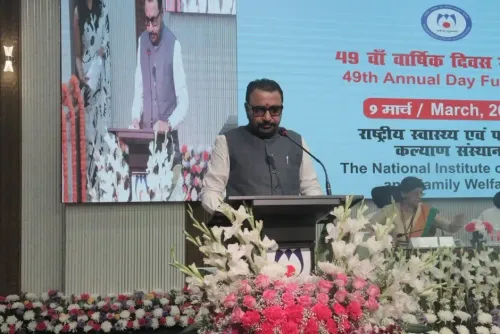
New Delhi, March 20 (NationPress) The Ministry of Health and Family Welfare has organized the 'Suraksha Sankalp Karyashala' in an effort to bolster the district-level response to HIV/AIDS, with a particular focus on Haryana and Delhi, as stated in an official announcement on Friday.
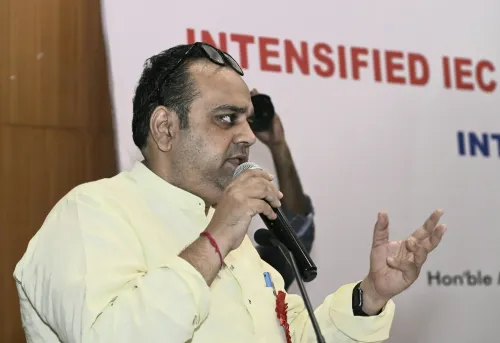
This workshop, hosted by the National AIDS Control Organisation, gathered district program teams to showcase achievements, discuss operational hurdles, and formulate action plans aimed at enhancing the HIV response at the community level, according to the Ministry of Health and Family Welfare.
The 'Suraksha Sankalp Karyashala' serves as a collaborative platform for national, state, and district stakeholders to enhance treatment linkage and retention, improve viral load suppression among individuals living with HIV, and broaden targeted outreach to vulnerable and key populations.
According to the statement, discussions during the workshop focused on improving program execution through better inter-sectoral cooperation, skills enhancement, and effective monitoring systems, particularly emphasizing early diagnosis, timely treatment initiation, consistent adherence to ART, and the eradication of stigma and discrimination.
Rakesh Gupta, Additional Secretary and Director General of NACO, highlighted the globally recognized '95:95:95 targets', which aim for 95% of individuals living with HIV to know their status, 95% of those diagnosed to be on sustained Anti-Retroviral Therapy (ART), and 95% of those on treatment to achieve viral suppression, thus significantly lowering transmission rates and enhancing health results.
Haryana has reached a commendable ratio of approximately 81:83:95, indicating positive progress, but also signaling the necessity for intensified efforts to enhance diagnosis and treatment linkage.
Gupta pointed out that Delhi still encounters significant gaps, with only about 70% of identified individuals currently linked to or receiving treatment, underscoring the pressing need to accelerate treatment coverage and retention.
He emphasized that AIDS remains a critical public health concern, requiring ongoing vigilance, innovative solutions, and coordinated actions across all levels of governance.
The ministry reported that 219 districts nationwide have been designated as priority areas for intensified interventions, including 11 in Haryana and seven in Delhi.
As for current statistics, Delhi has an adult HIV prevalence of 0.33%, with approximately 59,079 individuals living with HIV, while Haryana's adult HIV prevalence stands at 0.24%, with an estimated 59,642 people living with HIV.
aar/na
Point of View
The government is taking a significant step toward improving health outcomes in affected regions.
NationPress
23 Sept 2026
Frequently Asked Questions
What is the purpose of the 'Suraksha Sankalp Karyashala'?
The purpose of the 'Suraksha Sankalp Karyashala' is to strengthen the district-level response to HIV/AIDS, particularly in Haryana and Delhi, by facilitating collaboration among stakeholders and developing actionable strategies.
What are the '95:95:95 targets'?
'95:95:95 targets' are global goals aimed at ensuring that 95% of individuals living with HIV are aware of their status, 95% of those diagnosed are on sustained Anti-Retroviral Therapy (ART), and 95% of those on treatment achieve viral suppression.
What is the current HIV prevalence in Delhi and Haryana?
Delhi has an adult HIV prevalence of 0.33% with approximately 59,079 individuals living with HIV, while Haryana has a prevalence of 0.24% with an estimated 59,642 people living with HIV.
How many districts have been identified for intensified HIV interventions?
A total of 219 districts across the country have been identified as priority areas for intensified interventions in the fight against HIV/AIDS.
What challenges are faced in the HIV response in Delhi?
Delhi currently faces critical gaps, with only around 70% of identified individuals linked to or receiving treatment, indicating a pressing need to improve treatment coverage and retention.