Piyush Goyal's 5-point plan to take India's medical tourism to 10 million patients
Synopsis
Commerce Minister Piyush Goyal has put a number on India's medical tourism ambition — 10 million patients a year — nearly three times current levels. His five-point plan, unveiled at Bharat Health Global Expo 2026, ties hospital accreditation, digital health integration, and tier 2 city expansion into a single framework, and explicitly links it to India's FTA negotiations abroad.
Key Takeaways
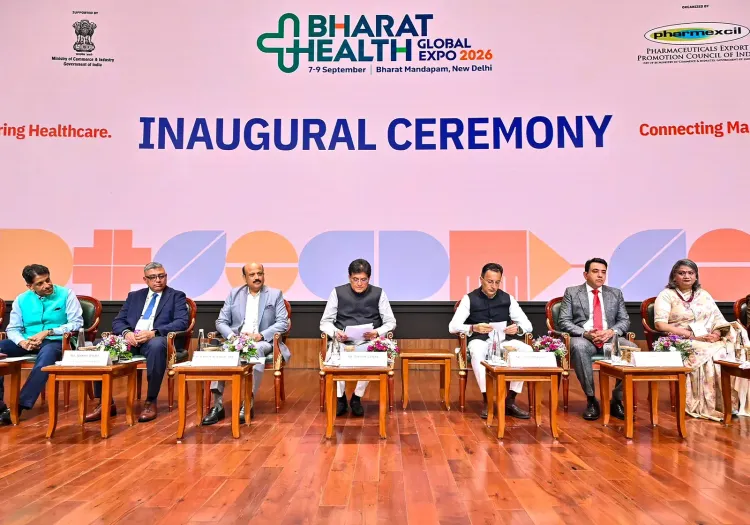
Piyush Goyal unveiled a five-point action plan for India's medical value tourism at Bharat Health Global Expo 2026 on 7 September .
India targets 10 million medical tourists per year , up from 3.5 million over the past seven years.
Only NABH -accredited hospitals will be permitted to treat international patients under the proposed framework.
India's healthcare costs are 60–80 per cent lower than in developed economies, giving it a structural price advantage.
The plan calls for expanding medical tourism beyond metros to tier 2 and tier 3 cities to generate jobs and infrastructure.
A dedicated interpreter pool and deeper telemedicine integration are proposed to improve patient experience for foreign visitors.
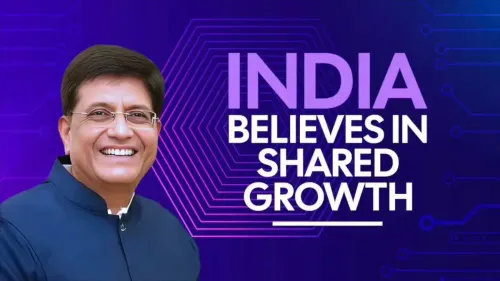
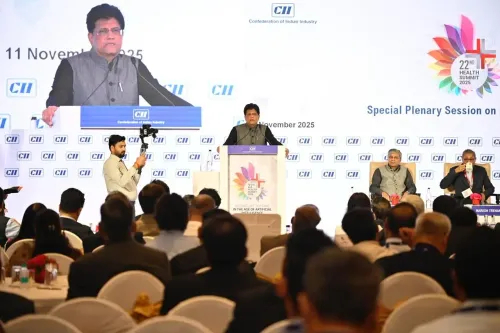
Union Minister of Commerce and Industry Piyush Goyal on Monday, 7 September unveiled a five-point action plan to scale India's medical value tourism ecosystem, setting an ambitious target of 10 million international patients per year — nearly three times the 3.5 million who have used Indian healthcare facilities over the past seven years. The minister spoke at the inaugural session of 'Sanjeevani 2026', held as part of the Bharat Health Global Expo 2026 in New Delhi.
The Five-Point Framework
Goyal's first priority centres on training and certifying caregivers to build a skilled workforce capable of meeting international healthcare standards. The second calls on more hospitals to join the government's 'Heal in India' gateway and commit to publishing honest, transparent treatment packages — with the minister warning that ethical lapses could cost India its global credibility in healthcare.
The third point urges insurers and health-tech companies to develop seamless patient-journey platforms, ensuring timely reimbursements, wider cashless payment options, and the integration of teleconsultations and telemedicine as an entry point into the medical value tourism experience. The fourth calls for organising global exhibitions and building facilitator networks, while mandating that only National Accreditation Board for Hospitals and Healthcare Providers (NABH)-accredited, verified hospitals be permitted to treat international patients. Goyal stressed that NABH must uphold the highest standards with zero compromise.
The fifth point asks state governments to improve quality across hospitals and wellness centres, enhance global visibility of facilities, and extend medical value tourism beyond metropolitan cities to tier 2 and tier 3 cities — a move Goyal said would generate jobs, build infrastructure, and simultaneously upgrade healthcare access for Indian patients.
Scale of Opportunity and India's Competitive Edge
Goyal highlighted that India's healthcare costs are 60–80 per cent lower than those in developed economies, complemented by clinical excellence and advanced medical technologies. He said countries with which India is negotiating Free Trade Agreements (FTAs) are actively seeking high-quality Indian pharmaceuticals, doctors, technicians, nurses, and caregivers in large numbers — signalling that medical value tourism is increasingly intertwined with India's broader trade diplomacy.
The minister also proposed creating a dedicated pool of interpreters to assist patients arriving from different linguistic backgrounds, arguing that language access is critical to patient confidence and care quality.
Quality Parity: Same Standards for All Patients
Goyal was emphatic that healthcare quality must not be a two-tiered system. 'India must ensure that every Indian patient receives the same high-quality healthcare as anyone coming from across the world,' he said, underscoring that the push for international standards should benefit domestic patients equally.
He also acknowledged the dedication of medical professionals across the country — from small nursing homes and clinics to large municipal, private, and government hospitals — often working under considerable resource constraints.
What Comes Next
The Bharat Health Global Expo 2026 serves as a platform to translate these priorities into actionable industry commitments. With India's medical value tourism sector already attracting global attention, the push to expand into smaller cities and integrate digital health tools could reshape how international patients engage with Indian healthcare over the next decade. Whether states and private players align quickly enough to meet the 10 million patient target will be the defining test of this blueprint.
Point of View
But the gap between aspiration and execution in Indian health policy is well-documented. The plan's most consequential element is not the headline number — it is the insistence on NABH accreditation as a non-negotiable gateway, which, if enforced, could finally impose quality discipline on a sector prone to uneven standards. The push into tier 2 and tier 3 cities is equally significant: it acknowledges that medical tourism capacity concentrated in a handful of metros is a structural bottleneck. What the plan does not yet address is a credible monitoring mechanism — without independent outcome tracking, the 10 million figure risks becoming another aspirational benchmark with no accountability attached.
NationPress
24 Oct 2026
Frequently Asked Questions
What is Piyush Goyal's five-point plan for medical value tourism?
It is a framework announced at Bharat Health Global Expo 2026 on 7 September, covering caregiver training, expansion of the 'Heal in India' gateway, seamless insurance and telemedicine integration, NABH-only hospital accreditation for international patients, and state-level quality upgrades extending to tier 2 and tier 3 cities. The plan targets 10 million international medical tourists per year.
How many medical tourists does India currently receive?
According to Goyal, India's medical value tourism ecosystem has served 3.5 million patients over the past seven years. The government's new target is 10 million patients annually.
Why is NABH accreditation central to the plan?
Goyal stressed that only NABH-accredited, verified hospitals should be permitted to treat international patients, to ensure zero compromise on quality standards. He warned that a single ethical lapse could damage India's global credibility in healthcare.
How does India's healthcare cost compare globally?
India's healthcare costs are 60–80 per cent lower than those in developed economies, according to Goyal. This price advantage, combined with clinical excellence and advanced technologies, is central to India's pitch as a medical value tourism destination.
Will the medical tourism push benefit Indian patients too?
Goyal explicitly said healthcare quality must be equal for Indian and international patients. He argued that expanding high-standard facilities to tier 2 and tier 3 cities would upgrade healthcare access for domestic patients while also creating jobs and infrastructure.