Ayushman Bharat driving healthcare shift, says Health Secretary at JIPMER convocation
Synopsis
At JIPMER's 12th convocation in Puducherry, Union Health Secretary Punya Salila Srivastava revealed that over 64,000 public health facilities have achieved NQAS certification and more than two lakh are under assessment — framing Ayushman Bharat's four pillars as India's most ambitious structural health overhaul yet, with one lakh new healthcare professionals to be nurtured over five years.
Key Takeaways
Union Health Secretary Punya Salila Srivastava addressed the 12th Convocation at JIPMER, Puducherry on 14 May , conferring degrees on 320 graduates .
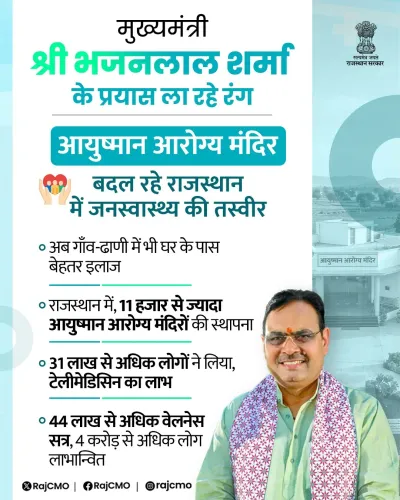
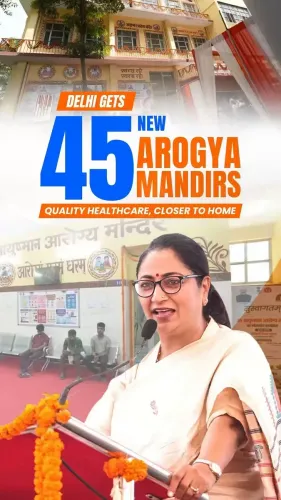
Ayushman Bharat 's 1.18 lakh Ayushman Arogya Mandirs represent a shift from reproductive health to NCD screening and management.
More than two lakh public health facilities are being assessed; 64,000 have already achieved NQAS certification .
The government has established 157 nursing colleges co-located with medical colleges and aims to nurture one lakh healthcare professionals in five years.
Key legislative reforms include the National Nursing and Midwifery Commission Act and the National Commission for Allied and Healthcare Professions Act .
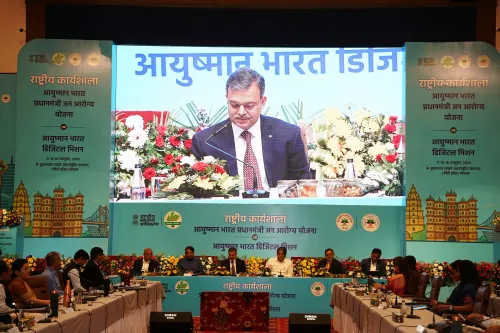
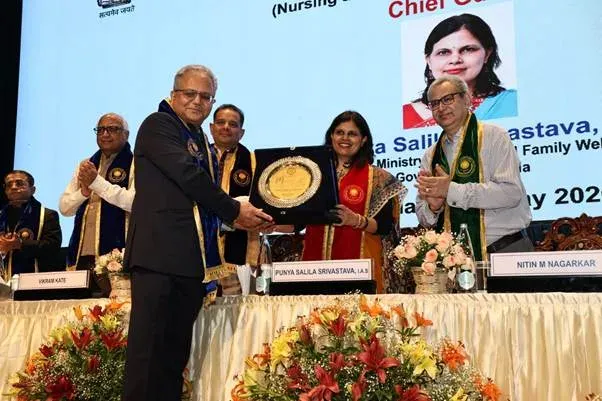
Union Health Secretary Punya Salila Srivastava on 14 May highlighted the transformative reach of Ayushman Bharat and its 1.18 lakh Ayushman Arogya Mandirs while addressing the 12th Convocation of Nursing and Allied Health Sciences courses at the Jawaharlal Institute of Postgraduate Medical Education and Research (JIPMER) in Puducherry. Degrees were conferred on 320 graduates across nursing and allied health disciplines.
Four Pillars of Ayushman Bharat
Srivastava elaborated on the four foundational pillars of Ayushman Bharat, describing the programme as a paradigm shift — moving beyond a primary focus on reproductive and child health toward a broader emphasis on screening, early detection, and management of non-communicable diseases (NCDs). She outlined each pillar in detail for the graduating cohort.
The pillars include the Ayushman Bharat Pradhan Mantri Jan Arogya Yojana (AB PM-JAY), which provides financial protection and health assurance to beneficiaries; the Ayushman Bharat Digital Mission (ABDM), which enables creation of ABHA accounts for seamless digital health records and data-driven care; and the Pradhan Mantri Ayushman Bharat Health Infrastructure Mission (PM-ABHIM), which is strengthening health infrastructure through critical care blocks and expansion of the Viral Research and Diagnostic Laboratories (VRDL) network.
Quality Standards and Infrastructure Assessment
Emphasising quality in healthcare delivery, Srivastava spoke about the importance of Indian Public Health Standards (IPHS) and the National Quality Assurance Standards (NQAS). She noted that more than two lakh public health facilities — including Ayushman Arogya Mandirs, Community Health Centres, and District Hospitals — are currently being assessed for infrastructure and service gaps.
Of these, approximately 64,000 public health facilities have already achieved NQAS certification. She encouraged the graduates to actively contribute to quality improvement in the institutions they join.
Legislative Reforms and Capacity Building
Srivastava highlighted key legislative reforms, including the enactment of the National Nursing and Midwifery Commission Act and the National Commission for Allied and Healthcare Professions Act, aimed at strengthening education, regulation, and professional standards across these sectors.
She also pointed to significant capacity-building measures, including the establishment of 157 nursing colleges co-located with medical colleges, and the Union government's commitment to nurture one lakh healthcare professionals over the next five years. Nursing and allied healthcare professionals, she said, form the backbone of India's healthcare system.
Message to Graduates
The Health Secretary described the convocation as a defining milestone for the graduating students, urging them to dedicate their professional journeys to service, compassion, and nation-building. She noted that as graduates of the prestigious JIPMER, they carry forward a legacy of commitment, competence, and ethical service that must be upheld throughout their careers.
With India's public health architecture undergoing its most ambitious structural expansion in decades, the next generation of nursing and allied health professionals will be central to whether these reforms translate from policy into patient outcomes.
Point of View
000 facilities out of two lakh assessed — is notable, but the more telling number is the gap: over 1.36 lakh facilities have yet to meet the standard. Ayushman Bharat's ambition is not in question; its execution depth is. The push to co-locate 157 nursing colleges with medical colleges is structurally sound, but one lakh professionals over five years remains modest against India's estimated shortfall of several million health workers. What is missing from this narrative is an accountability mechanism — how will the Centre track whether NQAS-certified facilities actually deliver better outcomes, or whether the new nursing graduates are absorbed into public rather than private systems?
NationPress
27 Sept 2026
Frequently Asked Questions
What is Ayushman Bharat and its four pillars?
Ayushman Bharat is India's flagship public health programme built on four pillars: the 1.18 lakh Ayushman Arogya Mandirs for primary care, AB PM-JAY for financial health protection, the Ayushman Bharat Digital Mission (ABDM) for digital health records via ABHA accounts, and PM-ABHIM for strengthening health infrastructure including critical care blocks and VRDL network expansion.
What was announced at the JIPMER convocation on 14 May?
Union Health Secretary Punya Salila Srivastava addressed the 12th Convocation at JIPMER in Puducherry, where degrees were conferred on 320 nursing and allied health graduates. She highlighted Ayushman Bharat's progress, quality certification milestones, and the government's plan to nurture one lakh healthcare professionals over five years.
How many public health facilities have received NQAS certification?
Approximately 64,000 public health facilities across India have achieved National Quality Assurance Standards (NQAS) certification. More than two lakh facilities — including Ayushman Arogya Mandirs, Community Health Centres, and District Hospitals — are currently being assessed for infrastructure and service gaps.
What legislative reforms have been made for nursing professionals in India?
The government has enacted the National Nursing and Midwifery Commission Act and the National Commission for Allied and Healthcare Professions Act, both aimed at strengthening education, regulation, and professional standards in nursing and allied health sectors.
How is India expanding nursing education capacity?
The Union government has established 157 nursing colleges co-located with medical colleges and has committed to nurturing one lakh healthcare professionals over the next five years, according to Health Secretary Srivastava's address at JIPMER.