PM Modi to inaugurate PGI Chandigarh's ₹1,200 crore healthcare projects on July 17
Synopsis
On July 17, PM Modi will dedicate two 300-bed speciality centres and lay the foundation of a critical care block at PGIMER Chandigarh — a ₹1,200 crore investment that includes a ₹147 crore Infosys Foundation contribution and promises to handle over 6,000 high-risk deliveries a year. It is the biggest single infrastructure push in the institute's recent history.
Key Takeaways
PM Narendra Modi will visit PGIMER, Chandigarh on 17 July to inaugurate two landmark healthcare facilities.
The Advanced Mother and Child Centre (₹505 crore, 300 beds) will handle over 6,000 high-risk deliveries annually ; the Infosys Foundation contributed ₹147 crore for medical equipment.
The Advanced Neurosciences Centre (300 beds, 61 ICU beds ) integrates neurology, neurosurgery, neuroradiology, and rehabilitation under one roof.
Modi will also lay the foundation stone of a 150-bed Critical Care Hospital Block (₹244 crore) under PM-ABHIM , conceived post-COVID-19.
Total investment across all three projects stands at nearly ₹1,200 crore .
Prime Minister Narendra Modi will inaugurate two landmark healthcare facilities at the Postgraduate Institute of Medical Education and Research (PGIMER), Chandigarh, on 17 July, in a visit that will also see him lay the foundation stone of a new critical care block. The three projects together represent a combined investment of nearly ₹1,200 crore and are set to substantially expand tertiary healthcare, medical education, and advanced research capacity across northern India.
What Modi Will Inaugurate
The Prime Minister will formally dedicate two new 300-bed speciality centres to the nation: the Advanced Mother and Child Centre and the Advanced Neurosciences Centre. Both facilities consolidate highly specialised services under a single roof, a model PGIMER says will reduce treatment delays and improve patient outcomes for populations across the region.
He will also lay the foundation stone of the 150-bed Critical Care Hospital Block, being developed at an estimated cost of ₹244 crore under the Pradhan Mantri Ayushman Bharat Health Infrastructure Mission (PM-ABHIM). That block was conceived directly in response to gaps exposed by the COVID-19 pandemic and is designed to strengthen emergency preparedness and multidisciplinary critical care.
Advanced Mother and Child Centre: Key Details
Built at a cost of ₹505 crore, the Advanced Mother and Child Centre brings advanced neonatal intensive care units, modular operation theatres, and comprehensive maternal and neonatal services together in one facility. The centre is expected to bolster PGIMER's capacity to manage more than 6,000 high-risk deliveries annually.
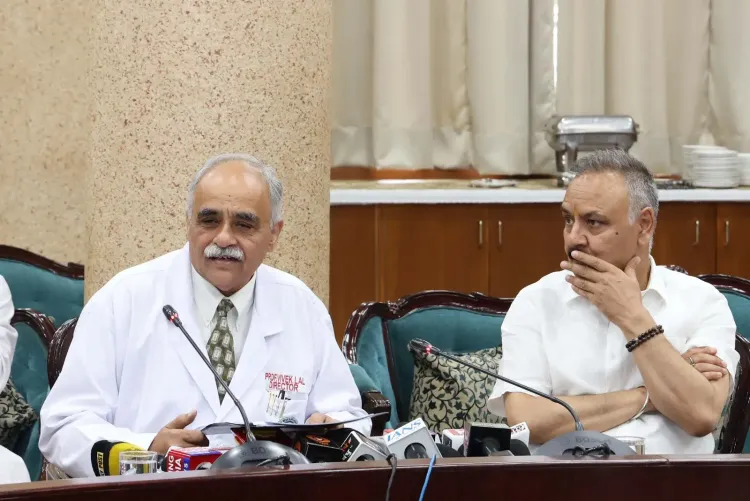
Notably, the Infosys Foundation contributed ₹147 crore toward advanced medical equipment for the centre. PGIMER Director Prof. Vivek Lal described the partnership as an 'exemplary public-private collaboration' that 'will benefit patients for generations to come.'
Advanced Neurosciences Centre: Scope and Significance
The Advanced Neurosciences Centre integrates neurology, neurosurgery, neuroradiology, neuroanaesthesia, neurocritical care, and rehabilitation services. It is equipped with 61 intensive care beds and modular operating theatres alongside advanced diagnostic infrastructure. According to Prof. Lal, the centre will 'substantially reduce treatment delays, improve survival and long-term neurological outcomes,' and position PGIMER as a leading national hub for neuroscience education, research, and clinical care.
What the PGIMER Director Said
Prof. Lal framed the Prime Minister's visit as a turning point for the institution. 'The forthcoming visit of the Prime Minister marks a defining milestone in PGIMER's journey. These centres are not merely new buildings; they represent a transformational leap in our ability to deliver advanced, accessible and affordable healthcare to millions of patients across northern India,' he said.
On the institute's broader philosophy, he added: 'Our guiding principle has always been simple — patient care, patient care and patient care. Every new facility we create is designed to strengthen that commitment and ensure that patients receive world-class treatment with dignity, compassion and the latest medical technology.'
Addressing concerns about rising patient load, Prof. Lal said the growing footfall at PGIMER is 'a reflection of the trust people place in this institution,' and reiterated the institute's commitment to continuous infrastructure expansion so that 'no patient is deprived of quality healthcare.'
What Comes Next
With all three projects either commissioned or set to break ground on 17 July, PGIMER's total bed and speciality capacity will see a significant step-up. The Critical Care Hospital Block, once complete, will add a dedicated emergency and critical care tier that the institute currently lacks at this scale. The full operational timeline for the new block has not yet been announced.
Point of View
200 crore push at PGIMER is significant not just for its scale but for its structure — a public-private model where the Infosys Foundation's ₹147 crore equipment contribution signals growing corporate appetite for healthcare philanthropy. Yet the harder question is whether new buildings translate into accessible care: PGIMER's patient load is already straining existing capacity, and adding beds without proportional staffing and specialist recruitment risks replicating the bottlenecks these centres are meant to solve. The Critical Care Hospital Block, conceived after COVID-19 exposed systemic gaps, is the most consequential of the three — but its impact will depend entirely on how fast it is operationalised and whether PM-ABHIM funding flows on schedule.
NationPress
13 Jul 2026
Frequently Asked Questions
What will PM Modi inaugurate at PGIMER Chandigarh on July 17?
PM Modi will inaugurate the Advanced Mother and Child Centre and the Advanced Neurosciences Centre at PGIMER, Chandigarh, on 17 July. He will also lay the foundation stone of a 150-bed Critical Care Hospital Block under the Pradhan Mantri Ayushman Bharat Health Infrastructure Mission. Together, the three projects represent an investment of nearly ₹1,200 crore.
What is the Advanced Mother and Child Centre at PGIMER?
It is a 300-bed facility built at a cost of ₹505 crore, equipped with advanced neonatal intensive care units, modular operation theatres, and comprehensive maternal and neonatal services under one roof. The centre is expected to handle over 6,000 high-risk deliveries annually. The Infosys Foundation contributed ₹147 crore toward its medical equipment.
What services will the Advanced Neurosciences Centre provide?
The Advanced Neurosciences Centre is a 300-bed facility with 61 intensive care beds that integrates neurology, neurosurgery, neuroradiology, neuroanaesthesia, neurocritical care, and rehabilitation services. It is designed to reduce treatment delays and improve outcomes for complex neurological conditions, and will position PGIMER as a national hub for neuroscience care and research.
What is the Critical Care Hospital Block being built at PGIMER?
It is a proposed 150-bed facility to be built at an estimated cost of ₹244 crore under the Pradhan Mantri Ayushman Bharat Health Infrastructure Mission. Conceived in response to gaps exposed by the COVID-19 pandemic, it will enhance emergency preparedness and multidisciplinary critical care services at PGIMER.
What is the Infosys Foundation's role in the PGIMER projects?
The Infosys Foundation contributed ₹147 crore toward advanced medical equipment for the Advanced Mother and Child Centre. PGIMER Director Prof. Vivek Lal described it as an 'exemplary public-private partnership' that will strengthen the institute's capacity to deliver cutting-edge healthcare for generations.