Tamil Nadu third-child maternity leave: Congress, DMK question population policy
Synopsis
Tamil Nadu's move to extend third-child maternity leave to a full year has cracked open a rare fault line within the ruling alliance — Congress allies are questioning whether the policy contradicts the state's celebrated family planning record, while the DMK accuses the TVK government of quietly abandoning population control. The debate lands at a nationally sensitive moment, with southern states already anxious about delimitation and demographic shifts.
Key Takeaways
Tamil Nadu announced on 19 August that maternity leave for women government employees having a third child will be extended from 12 weeks to 365 days .
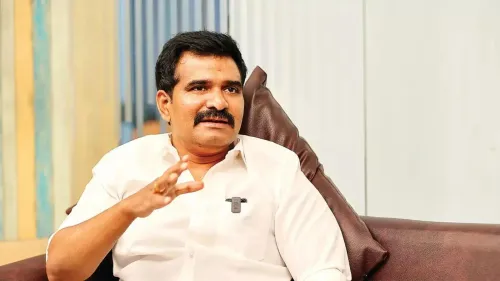
The change was announced by Human Resources Management Minister D.
Sarathkumar in the state Assembly.
Congress MPs Karti P.
Chidambaram and Manickam Tagore , allies of the ruling TVK, questioned whether the policy encourages a third child against family planning norms.
DMK spokesperson T.K.S.
Elangovan accused the TVK government of abandoning population control principles.
Shiv Sena spokesperson Shaina N.C. welcomed the women-centric intent while acknowledging questions about the government's motive.
Tamil Nadu has historically been a model for voluntary family planning, having achieved replacement-level fertility well ahead of most Indian states.
A sharp political debate has broken out in Tamil Nadu after the state government announced plans to extend maternity leave for women government employees having a third child from 12 weeks to 365 days — bringing it on par with the benefit currently available for the first two children. The move, disclosed in the state Assembly on 19 August, has drawn both praise and pointed questions from allies and opposition parties alike over its implications for family planning.
What the Policy Change Entails
Under existing Tamil Nadu government rules, married women employees with fewer than two children are entitled to 365 days of maternity leave. Those who already have two or more children are currently limited to 12 weeks. Tamil Nadu Human Resources Management Minister D. Sarathkumar announced the proposed extension while responding to the demand for grants for his department in the Assembly. The change effectively removes the leave disparity between second and third births for government employees.
Congress Allies Raise Family Planning Concerns
The announcement has created an unusual moment of friction within the ruling alliance. Congress MP Karti P. Chidambaram, in a post on X, said he welcomed maternity leave in principle but questioned the rationale of extending the benefit to a third child. 'While maternity leave is most welcome, paternity leave should also be considered, but the government should not be encouraging a third child in families. Do families have the resources to support a 3rd child?' he wrote.
Congress MP Manickam Tagore echoed similar concerns while speaking to reporters. 'Maternity leave is a very important step towards giving women more support and space. Considering the time and the challenges a mother goes through during this period, we welcome the decision of the Tamil Nadu Government. But the question is about the third child. Whether the Tamil Nadu Government has thought through this aspect is important,' he said. Tagore further noted: 'Moving from the two-child norm to the third-child norm is a huge step, especially because Tamil Nadu is a state where family planning has been managed in an organised manner, and because of this, we have succeeded in many areas.'
DMK and Opposition Weigh In
The principal opposition Dravida Munnetra Kazhagam (DMK) also criticised the government's position, arguing it signals a retreat from population control. DMK spokesperson T.K.S. Elangovan said: 'That is actually the policy of the government, which is only two children. But for the third child, we have reduced it because we don't want a third child in any house. That is, of course, to control the population, that's all. Beyond that, there is nothing. But this government does not want to control the population; that's all.' He took a swipe at the ruling TVK administration, adding: 'They have no new schemes at all. If we had given 365 days earlier, they would have given 365 days for the fourth child. That is the TVK.'
Shiv Sena Offers Qualified Support
Shiv Sena spokesperson Shaina N.C. offered a more measured response, acknowledging the controversy while supporting the women-centric intent. 'Questions will certainly be raised about the objective and motive behind the Tamil Nadu government's decision. However, they are taking moral responsibility to provide greater provisions for women, because maternity leave is necessary. We welcome this women-centric decision,' she said.
Broader Context: Tamil Nadu's Demographic Record
Tamil Nadu has long been cited as a model for voluntary family planning in India, having achieved replacement-level fertility well ahead of most other states. Critics argue that extending full maternity benefits to a third child could send a conflicting signal at a time when southern states — including Tamil Nadu — are also raising concerns about demographic imbalance relative to northern states ahead of the next delimitation exercise. Notably, the debate surfaces at a moment of national sensitivity around population policy, making the state government's rationale for the change a subject of close scrutiny. The government has not yet publicly detailed the reasoning beyond the Assembly announcement.
Point of View
The government needs to say so clearly and quickly. The timing is also telling: southern states are acutely aware of delimitation arithmetic, and any signal — however unintended — that the state is softening its two-child norm will be scrutinised far beyond Chennai. The real question mainstream coverage is missing is whether this is a standalone HR measure or the first step in a broader demographic strategy the TVK has not yet made public.
NationPress
5 Oct 2026
Frequently Asked Questions
What is the Tamil Nadu third-child maternity leave policy change?
The Tamil Nadu government has proposed extending maternity leave for women government employees having a third child from 12 weeks to 365 days, bringing it in line with the leave available for the first two children. The change was announced in the state Assembly on 19 August by Human Resources Management Minister D. Sarathkumar.
Why are Congress leaders opposing the Tamil Nadu maternity leave extension?
Congress MPs Karti P. Chidambaram and Manickam Tagore have questioned whether extending full maternity benefits to a third child implicitly encourages larger families, which they argue conflicts with Tamil Nadu's long-standing family planning success. They have not opposed maternity leave itself, only its application to the third child.
What does the DMK say about the policy?
DMK spokesperson T.K.S. Elangovan said the party's own policy is a two-child norm and that the reduced leave for third children was deliberately designed to discourage a third birth. He accused the ruling TVK government of not wanting to control population growth.
Who is affected by this maternity leave change in Tamil Nadu?
The change applies specifically to married women employed in the Tamil Nadu state government sector who are having their third child. Currently, such employees receive only 12 weeks of maternity leave; the proposed policy would extend this to a full year.
Why does this debate matter beyond Tamil Nadu?
Tamil Nadu has been a model for voluntary family planning in India, achieving replacement-level fertility well ahead of most states. Any perceived shift in its population policy carries national significance, particularly amid ongoing concerns among southern states about demographic imbalance ahead of the next delimitation exercise.