Tibet earthquake: 7.0-magnitude quake kills 16, injures 32 near Lhasa
Synopsis
A 7.0-magnitude earthquake has struck Tibet, killing 16 and collapsing over 300 homes near Lhasa — the region's most powerful quake since a 6.8 tremor killed 120 in January 2025. With floods, avalanches and now another major quake battering the Qinghai-Tibet Plateau in quick succession, experts warn this high-altitude region is caught in an accelerating cycle of compounding disasters.
Key Takeaways
A 7.0-magnitude earthquake struck Tibet on 23 October 2026 , killing 16 people and injuring 32 others .
11 of the injured are in serious condition; more than 300 houses have collapsed.
Over 300 police officers and 347 fire and rescue personnel have been deployed to the epicentre.
The epicentre was approximately 400 km from Lhasa , at a depth of 173 km , according to India's National Centre for Seismology .
A 6.8-magnitude quake in January 2025 killed more than 120 people in the same region.
Experts warn that climate change is compounding natural disaster risks across the Qinghai-Tibet Plateau .
A 7.0-magnitude earthquake struck Tibet on Thursday, 23 October 2026, killing 16 people and injuring 32 others, according to the city's emergency management bureau. The epicentre was approximately 400 kilometres from Lhasa, the Tibetan capital, at a depth of 173 kilometres below the Earth's surface, according to India's National Centre for Seismology (NCS).
Scale of Damage
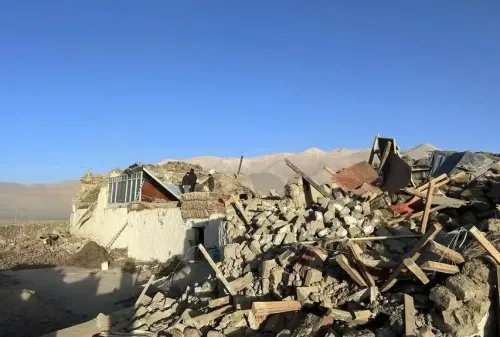
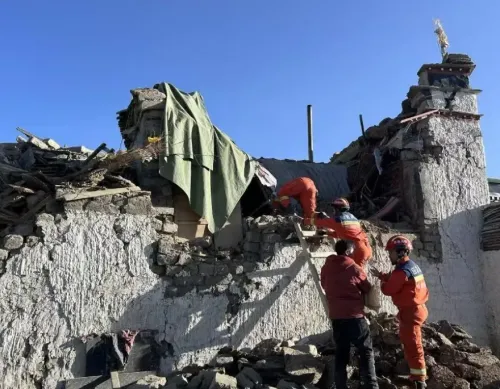
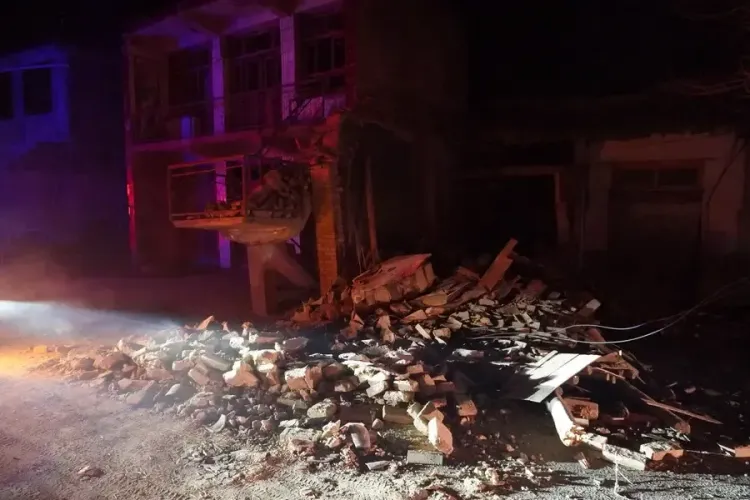
As of 2:25 am Friday, 11 of the injured were in serious condition while 21 sustained minor injuries. More than 300 houses collapsed in the affected areas. The full extent of the damage is still being assessed, with disaster relief work actively underway.
Emergency Response
Authorities have mobilised a large-scale response to the disaster zone. More than 300 police officers have been dispatched to the epicentre, while the regional fire and rescue corps deployed 347 personnel to the affected areas. Disaster relief operations are continuing as rescue teams work to reach those trapped or displaced by the quake.
A Region Under Repeated Seismic Stress
This is not an isolated event for the region. The latest quake follows a magnitude 5.0 earthquake that struck Tibet on 3 September at a depth of approximately 14 kilometres. More significantly, in January 2025, a 6.8-magnitude earthquake — recorded by the China Earthquake Networks Centre — killed more than 120 people and injured hundreds across the same plateau. The recurrence of seismic events underscores the structural vulnerability of the Qinghai-Tibet Plateau to tectonic activity.
Compounding Crises: Floods, Avalanches and Climate Risks
The earthquake arrives amid a cascade of natural disasters in the broader region. An ice-rock avalanche near the Nepal-Tibet border on 26 August triggered catastrophic flash floods that swept away homes, roads and bridges, damaged hydropower projects, and left thousands missing. Separately, devastating flash floods earlier in August killed over 1,400 people in the Nepal-Tibet border region.
Notably, experts have warned that rising temperatures, retreating glaciers, and increasingly extreme weather events are heightening natural disaster risks across the Qinghai-Tibet Plateau. Scientists argue the region's communities are caught between growing seismic risk and climate-driven environmental instability — a combination that makes recovery increasingly difficult between events.
What Comes Next
Authorities say damage evaluation is ongoing and relief operations are being scaled up. With dozens still seriously injured and hundreds rendered homeless, the immediate priority is search, rescue, and medical assistance. The broader question of long-term resilience planning for one of the world's most disaster-prone high-altitude regions remains urgent.
Point of View
A region already reeling from deadly floods and an ice-rock avalanche in August alone. What mainstream coverage tends to underreport is the compounding effect: communities here are not recovering between disasters, they are absorbing the next one before the last has passed. The climate dimension — retreating glaciers destabilising hillsides and amplifying flood risk — adds a structural layer that seismic preparedness alone cannot address. The January 2025 quake killed over 120; this one has killed 16 so far, but with 11 still in serious condition and hundreds displaced, the final toll and displacement numbers may tell a harder story.
NationPress
23 Oct 2026
Frequently Asked Questions
How strong was the Tibet earthquake on 23 October 2026?
The earthquake measured 7.0 magnitude and struck Tibet on 23 October 2026 , with its epicentre approximately 400 kilometres from Lhasa at a depth of 173 kilometres , according to India's National Centre for Seismology.
How many people were killed and injured in the Tibet earthquake?
As of early Friday, 16 people were killed and 32 others were injured — 11 in serious condition and 21 with minor injuries. More than 300 houses also collapsed.
What is the history of earthquakes in Tibet?
Tibet lies on the seismically active Qinghai-Tibet Plateau. A 6.8-magnitude earthquake in January 2025 killed over 120 people and injured hundreds, while a magnitude 5.0 tremor was recorded on 3 September 2026 . The region experiences frequent seismic activity due to ongoing tectonic movement.
What relief operations are underway after the Tibet quake?
More than 300 police officers have been dispatched to the epicentre, and the regional fire and rescue corps has mobilised 347 personnel . Disaster relief work is ongoing and damage assessment is still being carried out by authorities.
Why is the Qinghai-Tibet Plateau increasingly at risk from natural disasters?
Experts warn that rising temperatures and retreating glaciers are amplifying natural disaster risks in the region. Combined with high seismic activity, these climate-driven changes — including destabilised slopes and increased flood risk — make the plateau particularly vulnerable to compounding disasters.