Over 2,000 Afghans return from Pakistan, Iran in a single day
Synopsis
More than 2,199 Afghans crossed back into their country in a single day through four border crossings — a snapshot of a mass movement that Amnesty International warns is being driven by unlawful expulsions. With UNHCR and IOM calling for safe returns and rights groups documenting violations upon re-entry, the numbers reveal a humanitarian crisis playing out at Afghanistan's borders in real time.
Key Takeaways
2,199 Afghans across 431 families returned to Afghanistan in a single day on 27 July .
The largest share — 1,769 people — entered via the Torkham crossing from Pakistan.
Additional returnees crossed through Spin Boldak , Pul-i-Abrisham , and Islam Qala ; 294 individual travellers also entered.
Amnesty International has called for an end to what it terms unlawful expulsions of Afghan refugees from host nations.
UNHCR and IOM have repeatedly urged that all returns be voluntary, safe, and dignified, with greater international support for returnees.
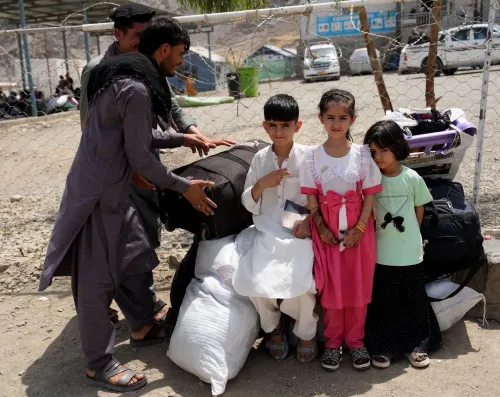
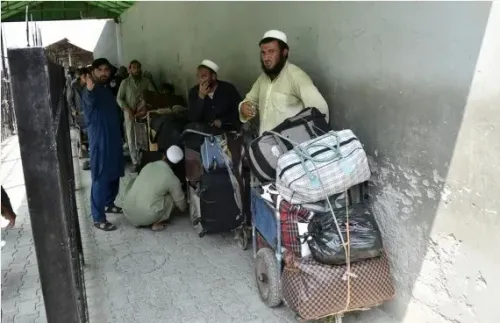
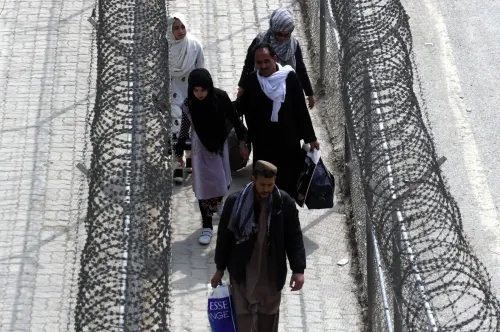
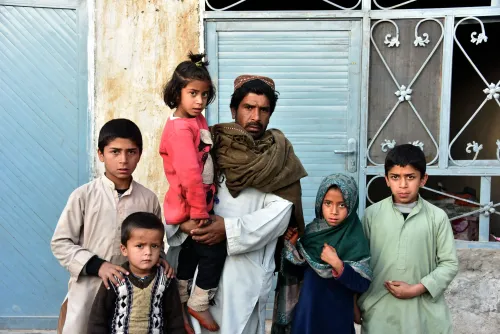
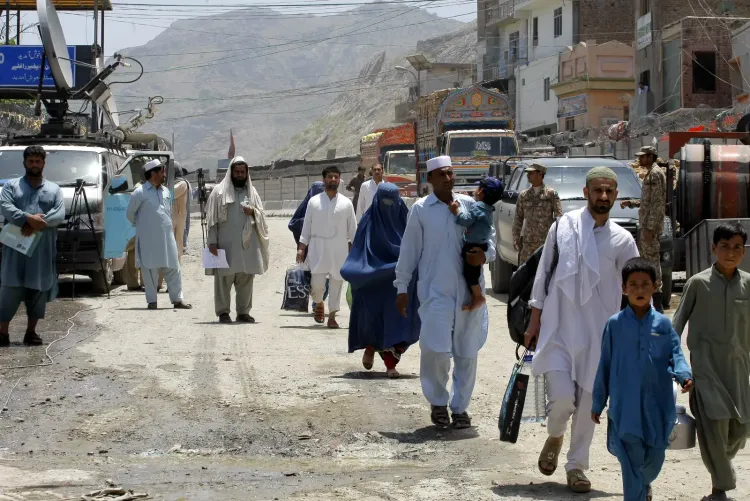
More than 2,199 Afghans — spread across 431 families — returned to Afghanistan from Iran and Pakistan in a single day, according to a daily report released on Monday, 27 July by the High Commission for Addressing Migrants' Problems. The figures, shared by Taliban deputy spokesman Mullah Hamdullah Fitrat, underscore the accelerating pace of Afghan refugee returns amid mounting pressure from neighbouring host nations.
Crossing-by-Crossing Breakdown
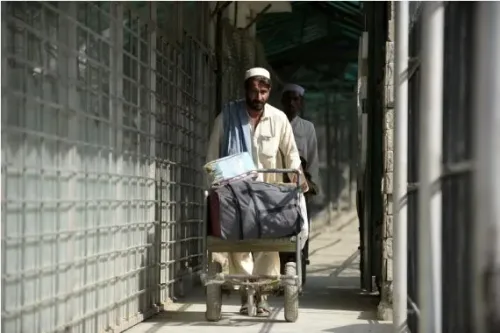
The bulk of returnees — 337 families comprising 1,769 people — crossed back into Afghanistan via the Torkham border crossing, according to Afghan media outlet Pajhwok Afghan News. A further 39 families (213 people) entered through the Spin Boldak crossing, while 42 families (167 people) came home via the Pul-i-Abrisham crossing. An additional 294 individual travellers also entered the country. Separately, 13 families comprising 50 people returned through the Islam Qala crossing on the Iran border.
Rights Groups Sound the Alarm
The single-day return figures arrive against a backdrop of deepening concern from international human rights organisations. Amnesty International last month urged the global community to halt what it described as the unlawful expulsion of Afghan refugees, calling for protections in line with international human rights law.
'Millions of Afghan refugees are being expelled across the globe, and that number keeps climbing day by day. In host countries, they are facing arbitrary arrests and family separations; upon return, they are facing human rights violations amidst one of the most severe humanitarian crises in the world,' Amnesty International said in a post on X.
'The unlawful expulsions of Afghan people must stop, and people with international protection needs must be safeguarded as per international human rights law,' the organisation added.
UN Agencies Call for Safe, Dignified Returns
The United Nations High Commissioner for Refugees (UNHCR) and the International Organisation for Migration (IOM) have both repeatedly stated that any return of Afghan refugees must be voluntary, safe, and dignified, and have called on the international community to provide greater support for those coming back. Their appeals follow a documented uptick in deportations from both Pakistan and Iran, which together host millions of Afghan nationals.
The Broader Context
Afghanistan remains in the grip of one of the world's most acute humanitarian emergencies, with the Taliban administration facing international isolation and limited access to development financing. Rights groups have documented cases of returnees facing arbitrary detention, restricted movement, and curtailed rights — particularly for women and girls — upon re-entry. This is not an isolated single-day surge; international agencies report that the overall volume of Afghan returns has been climbing steadily through 2025.
As pressure on host nations mounts and deportation figures rise, the coming weeks will test whether the international community moves beyond statements to concrete support for returning Afghan families.
Point of View
000 Afghans is a data point in a much larger forced displacement story that the international community has been slow to confront. Pakistan and Iran are under domestic pressure to reduce their Afghan populations, and deportation rates have been climbing — yet neither country has faced meaningful diplomatic consequence. Amnesty International's warning about arbitrary arrests and family separations in host nations sits alongside documented rights violations inside Afghanistan itself, leaving returnees caught between two hostile environments. UNHCR and IOM calls for 'safe and dignified' returns ring hollow without enforcement mechanisms or adequate resettlement funding. The real question is not how many Afghans are crossing the border each day, but what they are returning to — and who is accountable for what happens next.
NationPress
26 Oct 2026
Frequently Asked Questions
How many Afghans returned home on 27 July 2025?
According to the High Commission for Addressing Migrants' Problems' daily report, 2,199 Afghans across 431 families returned to Afghanistan in a single day on 27 July, crossing via four border points from Pakistan and Iran.
Which border crossings were used by returning Afghan families?
Returnees entered Afghanistan through four crossings: Torkham (1,769 people), Spin Boldak (213 people), Pul-i-Abrisham (167 people), and Islam Qala (50 people). An additional 294 individual travellers also entered the country.
What has Amnesty International said about Afghan refugee expulsions?
Amnesty International has urged the international community to halt what it calls unlawful expulsions of Afghan refugees. The organisation stated that refugees face arbitrary arrests and family separations in host countries, and human rights violations upon return to Afghanistan.
What is the UNHCR's position on Afghan refugee returns?
The United Nations High Commissioner for Refugees (UNHCR), along with the International Organisation for Migration (IOM), has repeatedly called for Afghan returns to be voluntary, safe, and dignified. Both agencies have also urged greater international support for returnees.
Why are Afghan refugees being expelled from Pakistan and Iran?
International agencies report an increase in deportations of Afghan nationals from both Pakistan and Iran, driven by domestic pressure in those countries to reduce their Afghan populations. The exact policy drivers vary by country, but the overall trend has been a steady rise in forced returns through 2025.