Second US judge blocks $100,000 H-1B fee, setback for Trump policy
Synopsis
Two federal judges have now blocked Trump's $100,000 H-1B fee — and the second ruling lands with extra force given that 71% of approved H-1B petitions go to Indian-born professionals. With the administration's appeal still alive and a September 2026 extension also frozen, this legal fight is shaping up as the defining battle over US skilled-worker immigration policy.
Key Takeaways
US District Judge Haywood S.
Gilliam Jr. of the Northern District of California blocked the $100,000 H-1B fee on 1 October 2026 .
The court found agencies violated the Administrative Procedure Act by skipping mandatory notice-and-comment rulemaking.
The order covers both the original 19 September 2025 proclamation and its September 2026 extension.
71 per cent of approved H-1B petitions in fiscal 2024 were for beneficiaries born in India , making this the second blocking order to directly benefit Indian professionals.
A first block was issued in June by a Massachusetts judge; the First Circuit on 24 July refused to stay that ruling while the government's appeal proceeds.
The H-1B programme provides 65,000 annual visas plus 20,000 for US advanced-degree holders.
A second US federal judge has blocked the Trump administration from enforcing its $100,000 fee on certain H-1B visa petitions, delivering another legal blow to a policy with far-reaching consequences for Indian professionals who dominate the programme. The ruling was issued on Wednesday, 1 October 2026 by US District Judge Haywood S. Gilliam Jr. of the Northern District of California.
What the Court Ruled
Judge Gilliam found that federal agencies failed to follow required rulemaking procedures when rolling out the fee, which was originally introduced through a presidential proclamation on 19 September 2025 and extended in September 2026. His order bars relevant agencies from enforcing or implementing policies issued under both the original proclamation and its extension, while the agencies comply with requirements under the Administrative Procedure Act (APA).
The case, Global Nurse Force et al. v. Trump et al., was brought by a coalition of health care providers, educational institutions, manufacturing companies, labour organisations, and individual workers. The court found that the plaintiffs had demonstrated they were likely to succeed on the argument that agencies violated federal administrative law by bypassing the mandatory notice-and-comment rulemaking process.
Why Indians Are Disproportionately Affected
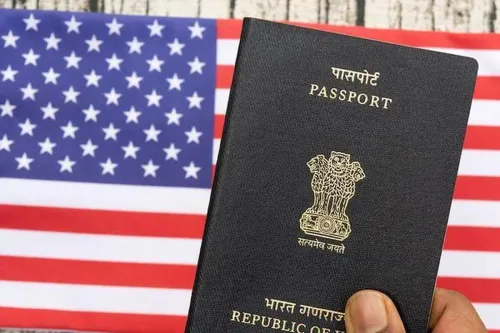
The ruling carries particular weight for Indian nationals, who account for the overwhelming majority of H-1B beneficiaries. Data from US Citizenship and Immigration Services (USCIS) show that 71 per cent of approved H-1B petitions in fiscal year 2024 were for beneficiaries born in India. China was a distant second at approximately 12 per cent.
Kalpana V. Peddibhotla, executive director of the South Asian American Justice Collaborative — one of the organisations involved in the legal challenge — said: 'Indian nationals bore a disproportionate share of the harm from this USD 100,000 fee, which put employment opportunities and families' futures at risk and left employers unable to afford the workers they needed.'
This Is Not the First Judicial Block
Wednesday's order is the second time a federal court has halted enforcement of the fee. In June, US District Judge Leo Sorokin in Massachusetts ruled in a separate challenge brought by 20 states that policies implementing the payment violated federal law. The government appealed that decision.
On 24 July, the US Court of Appeals for the First Circuit rejected the administration's request to stay that ruling while the appeal proceeded, affirming that the Department of Homeland Security and Department of State actions to implement the presidential proclamation had been vacated.
The Administration's Position and What the H-1B Programme Covers
The Trump administration has argued that restrictions on the H-1B programme are necessary to protect American workers and prevent misuse of the visa system. The programme allows US employers to temporarily hire foreign workers in speciality occupations — roles typically requiring specialised knowledge and at least a bachelor's degree — and is widely used across technology, engineering, health care, and research sectors.
Federal law makes 65,000 new H-1B visas available annually, with an additional 20,000 slots reserved for applicants holding advanced degrees from US institutions. Indian professionals have for years constituted the single largest group of H-1B beneficiaries, making any changes to the programme closely watched in India and across the Indian-American professional community.
With two blocking orders now in place and a government appeal still pending before the First Circuit, the legal battle over the $100,000 fee is far from over — and its final resolution could reshape how the H-1B programme operates for years to come.
Point of View
It is a foundational legal error. Yet the administration continues to appeal, betting that a higher court may yet restore the fee on national-interest grounds. For India, the stakes are outsized: with 71% of H-1B approvals flowing to Indian nationals, any durable reinstatement of a $100,000 barrier would effectively function as a targeted tax on Indian tech and healthcare labour entering the US market. What mainstream coverage underplays is the second-order corporate risk — US employers in healthcare and manufacturing, not just Indian workers, brought this lawsuit, suggesting the fee's blowback is domestic as well as geopolitical.
NationPress
2 Oct 2026
Frequently Asked Questions
What did the second US judge rule on the H-1B $100,000 fee?
US District Judge Haywood S. Gilliam Jr. of the Northern District of California ruled on 1 October 2026 that federal agencies violated the Administrative Procedure Act by implementing the $100,000 H-1B fee without following required notice-and-comment rulemaking procedures. His order blocks enforcement of policies stemming from both the original September 2025 proclamation and its September 2026 extension.
Why does this ruling matter for Indian professionals?
Indian nationals accounted for 71 per cent of approved H-1B petitions in fiscal year 2024, making them by far the largest group affected by the fee. A $100,000 charge per petition placed significant financial strain on employers and workers alike, and the South Asian American Justice Collaborative noted that Indian nationals bore a disproportionate share of the harm.
Has a US court blocked this fee before?
Yes. In June, US District Judge Leo Sorokin in Massachusetts blocked the fee in a separate case brought by 20 states. On 24 July, the US Court of Appeals for the First Circuit refused to stay that ruling while the government's appeal proceeds, leaving the earlier block in place alongside this new order.
Who brought the case that led to this second ruling?
The case, Global Nurse Force et al. v. Trump et al., was filed by a coalition that includes health care providers, educational institutions, manufacturing companies, labour organisations, and individual workers. It challenged both the administration's authority to impose the fee and the process federal agencies used to implement it.
What is the H-1B visa programme and how many visas are issued annually?
The H-1B programme allows US employers to temporarily hire foreign workers in speciality occupations requiring at least a bachelor's degree and specialised knowledge. Federal law makes 65,000 new H-1B visas available each year, with an additional 20,000 slots for applicants holding advanced degrees from US institutions. It is heavily used in technology, engineering, health care, and research sectors.