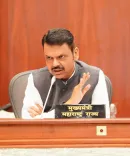
CM Rekha Gupta Lays Out Delhi's 365-Day Green Vision

Synopsis
Delhi CM Rekha Gupta, speaking at a Republic Bharat green-city event, declared her government's anti-pollution drive now runs 365 days a year — citing 70 lakh saplings, a new EV policy, accelerated public-transport electrification, and recovery of over 100 acres from landfills.
Key Takeaways
365-day anti-pollution commitment: CM Rekha Gupta says Delhi's fight against pollution is no longer confined to the winter season.
Early Winter Action Plan: Preparations for the Winter Action Plan began in June 2026 , months ahead of the smog season.
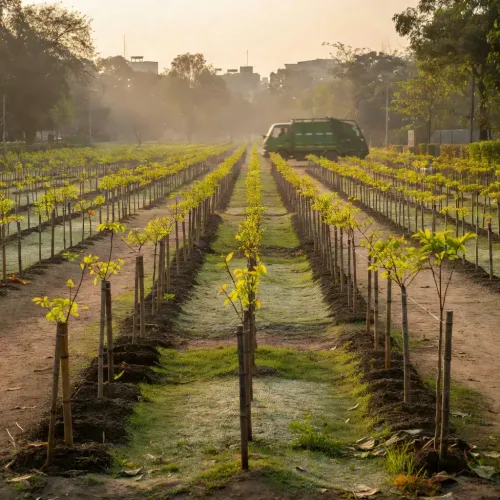
70 lakh saplings planted: The government claims more than seven million trees have been planted across Delhi.
New EV Policy and fleet switch: A new Electric Vehicle policy is in place, with public transport being rapidly converted to electric.
100+ acres reclaimed from landfills: Dust mitigation and landfill recovery have freed over 100 acres of land.
Viksit Delhi framing: The agenda is explicitly tied to PM Narendra Modi's vision of a clean, green, and developed Delhi.
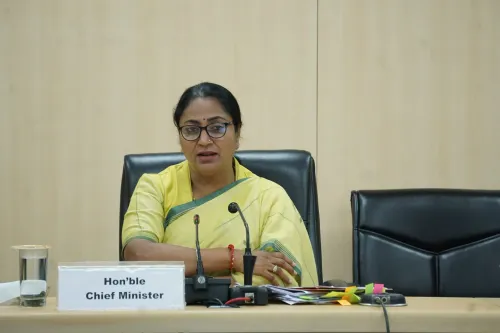
Delhi's war on pollution is no longer a winter ritual — it's a year-round campaign. Speaking at the Republic Bharat 'Hariyali aur Khushhali – Green Capital of India' event on Thursday, October 1, 2026, Delhi Chief Minister Rekha Gupta detailed a sweeping anti-pollution agenda that her government says is now operational across all four seasons.
A Winter Action Plan That Started in June
The headline claim is a shift in timing: preparations for the Winter Action Plan began as early as June — months before smog typically blankets the capital. Gupta framed this as a structural break from the past, when pollution responses were largely reactive and season-specific. 'दिल्ली में पहली बार प्रदूषण के विरुद्ध लड़ाई किसी एक मौसम तक सीमित नहीं है' — ('For the first time in Delhi, the fight against pollution is not limited to one season') — she said, signalling that the current administration intends to own the issue as a 365-day governance priority.
Seven Million Saplings, New EV Rules, and 100 Acres Reclaimed
Gupta listed several concrete milestones her government claims to have delivered on the ground. More than 70 lakh (seven million) saplings have been planted across Delhi. A new Electric Vehicle (EV) Policy has been put in place, accompanied by an accelerated push to convert the public transport fleet to electric. On the solid-waste front, the government says it has recovered more than 100 acres of land from landfill sites — a figure, if verified, that would represent a significant step in Delhi's long-running battle with its three overflowing garbage mountains. Dust mitigation measures round out the package of steps the Chief Minister described as 'big moves now on the ground.'
Modi's Mandate and the 'Viksit Delhi' Frame
Gupta explicitly anchored the agenda in Prime Minister Narendra Modi's guidance, invoking the goal of a 'clean, green, and developed Delhi' — framing local environmental action within the broader #ViksitDelhi narrative that the BJP has been building ahead of the next electoral cycle. The choice of a prime-time television platform to make these announcements underlines how central the green-city identity has become to the party's Delhi playbook. Air quality is no longer just a public-health emergency; it is a political battleground, and the BJP is planting its flag early.
If the numbers hold up to scrutiny — seven million trees planted, a hundred acres freed from landfill — Delhi's green transformation could become the most powerful proof-of-concept the party has ahead of the next assembly vote. The clock on that proof is already ticking.
Point of View
100 reclaimed acres — survive independent scrutiny will determine whether this narrative sticks or becomes a liability.
NationPress
2 Oct 2026
Frequently Asked Questions
What is Delhi's new Winter Action Plan for 2026?
Delhi CM Rekha Gupta has said preparations for the Winter Action Plan 2026 began as early as June, making it the first time the anti-pollution drive was launched before the smog season rather than in response to it.
How many trees has the Delhi government planted in 2026?
According to CM Rekha Gupta, the Delhi government has planted more than 70 lakh (seven million) saplings as part of its green-city initiative.
What is Delhi's new EV Policy about?
The Delhi government has introduced a new Electric Vehicle (EV) Policy aimed at accelerating the switch of the public transport fleet to electric vehicles to reduce tailpipe emissions in the capital.
How much landfill land has Delhi reclaimed?
CM Rekha Gupta stated that the government has recovered more than 100 acres of land from Delhi's landfill sites as part of its dust mitigation and waste-management push.
What is Viksit Delhi?
#ViksitDelhi is a BJP-backed vision for a 'developed Delhi,' framing local governance and infrastructure goals — including the green-city agenda — within PM Narendra Modi's broader national development narrative.