Afghanistan road crash kills 4 including child in Wardak province
Synopsis
A mini-bus overturning in Wardak killed a mother, her child, and two other women — the latest in a string of deadly road crashes across Afghanistan. Weeks earlier, 18 people including 10 children died on the Kabul–Jalalabad highway. The pattern points to a deepening road safety crisis with no credible government response in sight.
Key Takeaways
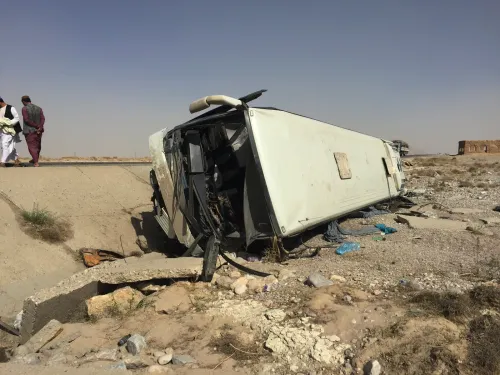
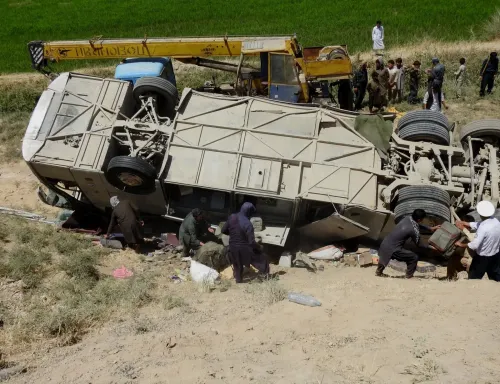
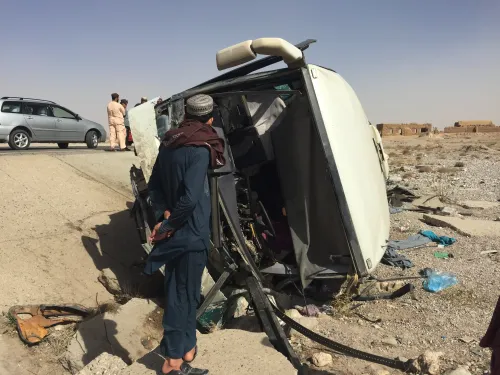
A mini-bus overturned in Saydabad district, Wardak province on Monday, 16 June , killing four people including a mother and her child.
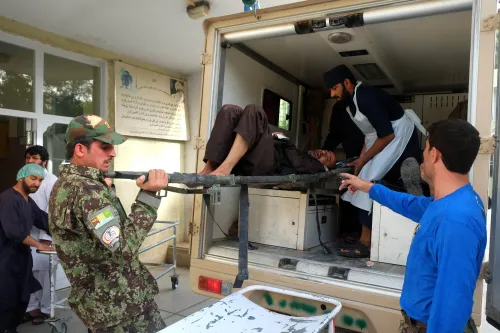
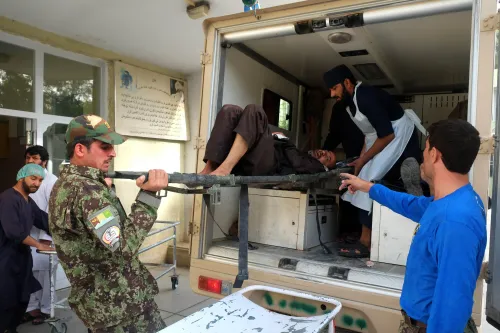
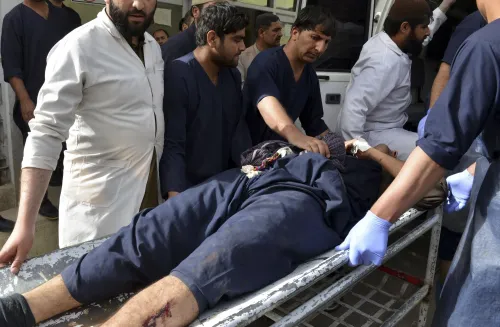
Four survivors were hospitalised, with some in critical condition, according to Provincial Police Spokesman Mohammad Yusuf Israr .
A separate crash in Kunar province on the same day killed one and injured four others.
On 30 May , 18 people — including 10 children and 5 women — were killed when a truck carrying returning migrants overturned on the Kabul–Jalalabad highway in Laghman province .
On 3 May , three commuters died in a vehicle-truck collision in Andkhoy district, Faryab province .
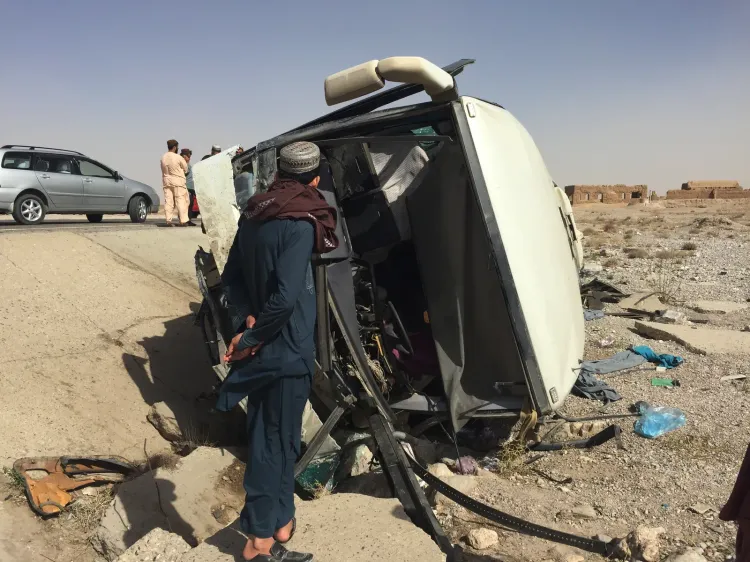
Four travellers, including a child and her mother, were killed and four others injured after a mini-bus overturned in Wardak province, eastern Afghanistan, on Monday, 16 June. Provincial Police Spokesman Mohammad Yusuf Israr confirmed the fatalities on Tuesday, identifying the victims as a mother, her child, and two other women.
How the Accident Unfolded
The crash occurred in Saydabad district on Monday afternoon when the mini-bus turned turtle, killing all four passengers at the scene. Four survivors were hospitalised, with some reported to be in critical condition, according to the police spokesman.
Separately, a road accident in Kunar province earlier the same day left one person dead and four others injured, underscoring the scale of Afghanistan's road safety crisis.
A Pattern of Deadly Road Crashes
Monday's tragedy is the latest in a series of fatal road accidents across Afghanistan in recent weeks. On 30 May, at least 18 people were killed — including 10 children and 5 women — and dozens more injured when a truck carrying Afghan migrants who had recently returned from Pakistan overturned on the main Kabul–Jalalabad highway in Laghman province.
According to Habibullah Mubarez, the Taliban's traffic director in Laghman, the truck overturned near the Surkhkanu intersection in Qarghayi district. A statement from the Taliban governor's office in Laghman confirmed: '18 people were killed, and 35 others were injured in the crash. The wounded were transferred to medical facilities in Nangarhar for treatment.' Taliban disaster management officials in neighbouring Nangarhar said the passengers had been temporarily settled in Kunar province and were being transported to Kabul at the time.
Earlier, on 3 May, at least three commuters died in a high-speed collision between a passenger vehicle and a truck on the outskirts of Andkhoy district in Faryab province, northern Afghanistan. Provincial police confirmed an investigation was initiated, though no further details were released.
Afghanistan's Road Safety Crisis
Road accidents remain one of the leading causes of preventable death in Afghanistan, where highway infrastructure is severely degraded after decades of conflict. Overloaded vehicles, poor road conditions, and inadequate traffic enforcement compound the risk, particularly on inter-provincial routes. The Kabul–Jalalabad highway, where the May truck crash occurred, is among the most accident-prone corridors in the country.
Authorities have not announced any specific road safety measures in response to the recent spate of accidents. With migrant returns from Pakistan continuing at scale, the pressure on Afghanistan's transport network — and the risks to passengers — is unlikely to ease in the near term.
Point of View
Laghman, Wardak — form a pattern that deserves more than incident-by-incident reporting. The 30 May Laghman disaster, which killed 18 including 10 children on a single highway, should have been a policy inflection point. It was not. The Taliban administration has issued statements but no structural road safety response. With large-scale migrant returns from Pakistan loading more passengers onto degraded highways in overloaded vehicles, the death toll from road accidents risks becoming as routine — and as invisible — as the conflict casualties that preceded them.
NationPress
15 Sept 2026
Frequently Asked Questions
What happened in the Wardak province road accident on 16 June?
A mini-bus overturned in Saydabad district of Wardak province, eastern Afghanistan, on Monday, 16 June, killing four people — a mother, her child, and two other women — and injuring four others, some critically. Provincial Police Spokesman Mohammad Yusuf Israr confirmed the deaths on Tuesday.
How many people died in the Laghman highway truck crash on 30 May?
At least 18 people were killed — including 10 children and 5 women — and 35 others were injured when a truck overturned on the Kabul–Jalalabad highway near Surkhkanu intersection in Qarghayi district, Laghman province. All victims were Afghan migrants who had recently returned from Pakistan.
Who were the passengers in the Laghman truck that overturned?
All passengers were Afghan migrants who had recently returned from Pakistan. They had been temporarily settled in Kunar province and were being transported to Kabul when the vehicle overturned, according to Taliban disaster management officials in Nangarhar.
What caused the Faryab road accident on 3 May?
At least three commuters were killed in a high-speed collision between a passenger vehicle and a truck on the outskirts of Andkhoy district in Faryab province, northern Afghanistan. Provincial police confirmed an investigation was launched but provided no further details.
Why are road accidents so frequent in Afghanistan?
Afghanistan's road accident crisis is driven by severely degraded highway infrastructure, overloaded vehicles, poor traffic enforcement, and decades of underinvestment following prolonged conflict. High-traffic corridors such as the Kabul–Jalalabad highway are particularly dangerous.