49th ASEAN Summit opens in Manila with digital economy pact, Timor-Leste debut
Synopsis
The 49th ASEAN Summit in Manila isn't just another biannual gathering — it formally cements Timor-Leste's place in the bloc with a new emblem, and delivers the ASEAN Digital Economy Framework Agreement, a pact years in the making that is set to reshape regional trade by 2027. With Canada and Brazil at the opening ceremony, ASEAN is signalling it wants a bigger seat at the global table.
Key Takeaways
The 49th ASEAN Summit opened on 15 November 2026 in Manila, Philippines , running through 17 November .
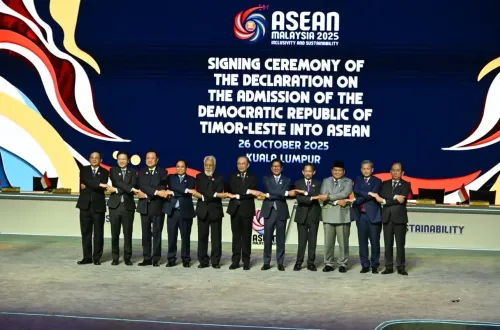
An updated ASEAN emblem was unveiled, reflecting the full membership of Timor-Leste , which joined at the 47th Summit in October 2025.
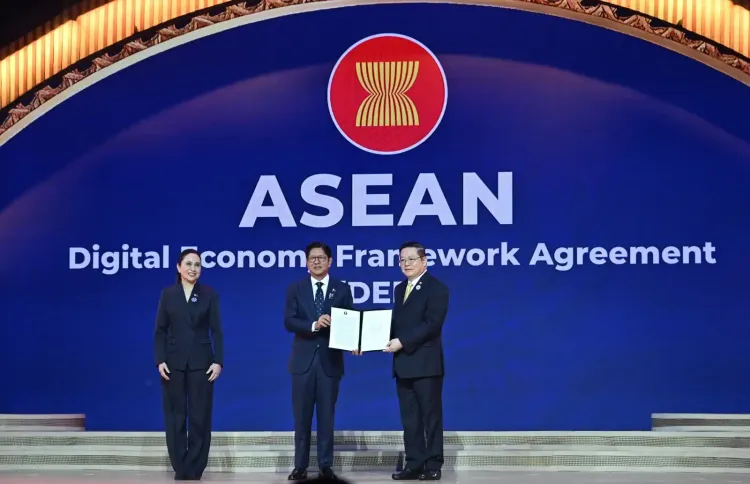
Philippine President Ferdinand Marcos Jr. , as ASEAN 2026 chair, handed over the ASEAN Digital Economy Framework Agreement to Secretary-General Kao Kim Hourn ; the pact is expected to take effect in early 2027 .
Agenda topics include energy security , food security , and economic cooperation .
Canadian PM Mark Carney and Brazilian President Luiz Inácio Lula da Silva attended as guests of the Chair.
The ASEAN Senior Officials' Meeting was held on 13 November in Manila to prepare the summit agenda.
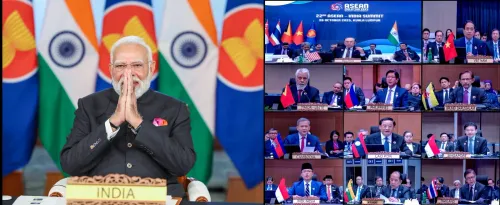
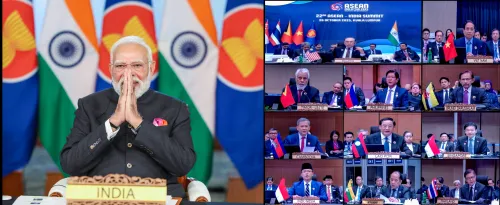
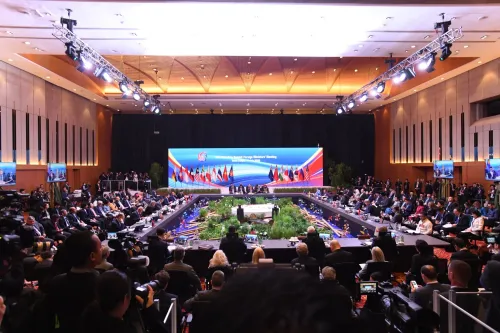
The 49th ASEAN Summit and Related Summits opened on 15 November 2026 in Manila, the Philippines, bringing together leaders from across Southeast Asia to deliberate on energy security, food security, and economic cooperation. The three-day conclave, running through 17 November, marks a pivotal moment for the bloc as it formally integrates a new member and advances a landmark digital trade framework.
Timor-Leste's Entry and a New ASEAN Emblem
One of the most visible symbols of change at this summit was the unveiling of an updated ASEAN emblem, reflecting the full membership of Timor-Leste. The young nation formally joined the regional grouping at the 47th ASEAN Summit held in Malaysia in October 2025, and its inclusion in the emblem signals its complete integration into the bloc's institutional identity. ASEAN was established in 1967 and now comprises 11 member states: Brunei, Cambodia, Indonesia, Laos, Malaysia, Myanmar, the Philippines, Singapore, Thailand, Vietnam, and Timor-Leste.
Digital Economy Framework Agreement Handed Over
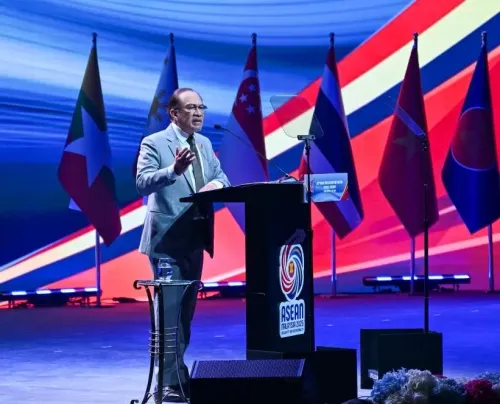
Philippine President Ferdinand Romualdez Marcos Jr., serving as chair of ASEAN 2026, handed over the ASEAN Digital Economy Framework Agreement to ASEAN Secretary-General Kao Kim Hourn during the opening ceremony. The agreement had been signed on Saturday, 14 November by ministers from ASEAN member states.
According to the ASEAN Secretariat, the pact represents a major milestone in ASEAN's digital transformation drive, aimed at building an open, secure, interoperable, competitive, and inclusive regional digital economy. The agreement is expected to enter into force in early 2027.
Global Guests and a Call for Collective Action
Canadian Prime Minister Mark Carney and Brazilian President Luiz Inácio Lula da Silva attended the opening ceremony as guests of the Chair — a signal of the summit's growing geopolitical footprint beyond the immediate region. President Marcos used the occasion to call on ASEAN to 'partner up with the world to craft a coherent and organised response to global challenges,' underscoring the bloc's intent to position itself as a constructive multilateral actor amid intensifying global economic and security pressures.
Preparatory Groundwork and Institutional Momentum
Ahead of the summit, the ASEAN Senior Officials' Meeting (SOM) convened on 13 November in Manila to advance preparations and lay the groundwork for key agenda items. Participants exchanged views on ASEAN community-building priorities and the bloc's external relations. The meeting was attended by ASEAN SOM Leaders or their representatives, alongside Deputy Secretary-General of ASEAN for the ASEAN Political-Security Community, H.E. Dato' Astanah Abdul Aziz.
The summit follows the standard twice-yearly cadence — ASEAN typically convenes once in the first half and once in the second half of each year. As the Philippines holds the chairmanship for 2026, Manila's hosting of the 49th summit places it at the centre of Southeast Asian diplomacy at a time when the region is navigating trade realignments, digital governance frameworks, and shifting great-power dynamics.
The outcomes of this summit, particularly around the digital economy agreement and energy security commitments, are expected to shape ASEAN's policy agenda well into 2027.
Point of View
But its real significance lies in the timeline: entry into force in early 2027 means implementation pressure falls squarely on the next round of domestic legislative calendars across 11 very different economies. Timor-Leste's symbolic emblem debut is long overdue — the country has effectively been in a holding pattern since its observer status began in 2002. What mainstream coverage tends to underweight is the presence of Canada and Brazil at the opening: ASEAN's invitation of non-traditional partners signals a deliberate hedging strategy as regional powers recalibrate trade dependencies. Whether the digital economy pact produces binding enforcement or remains aspirational, like several predecessor ASEAN frameworks, will be the defining question for this chairmanship's legacy.
NationPress
15 Nov 2026
Frequently Asked Questions
What is the 49th ASEAN Summit about?
The 49th ASEAN Summit, held from 15 to 17 November 2026 in Manila, Philippines, focuses on energy security, food security, and economic cooperation. A key deliverable is the ASEAN Digital Economy Framework Agreement, signed by member ministers and expected to take effect in early 2027.
Why was a new ASEAN emblem unveiled at the 49th summit?
The updated emblem reflects the formal integration of Timor-Leste, which became ASEAN's 11th member at the 47th Summit in Malaysia in October 2025. The emblem change is a symbolic acknowledgement of Timor-Leste's full membership status.
What is the ASEAN Digital Economy Framework Agreement?
It is a regional agreement signed by ASEAN ministers on 14 November 2026, aimed at creating an open, secure, interoperable, and inclusive digital economy across Southeast Asia. According to the ASEAN Secretariat, it marks a major milestone in ASEAN's digital transformation and is expected to enter into force in early 2027.
Who attended the 49th ASEAN Summit as special guests?
Canadian Prime Minister Mark Carney and Brazilian President Luiz Inácio Lula da Silva attended the opening ceremony as guests of the Chair, Philippine President Ferdinand Marcos Jr. Their presence signals ASEAN's intent to broaden its global partnerships beyond the immediate region.
When did Timor-Leste join ASEAN?
Timor-Leste joined ASEAN at the 47th ASEAN Summit held in Malaysia in October 2025, making it the bloc's 11th member. Its inclusion was formally recognised at the 49th Summit through the unveiling of an updated ASEAN emblem.