Balochistan earthquake: 5.9-magnitude tremor kills one in Khuzdar district
Synopsis
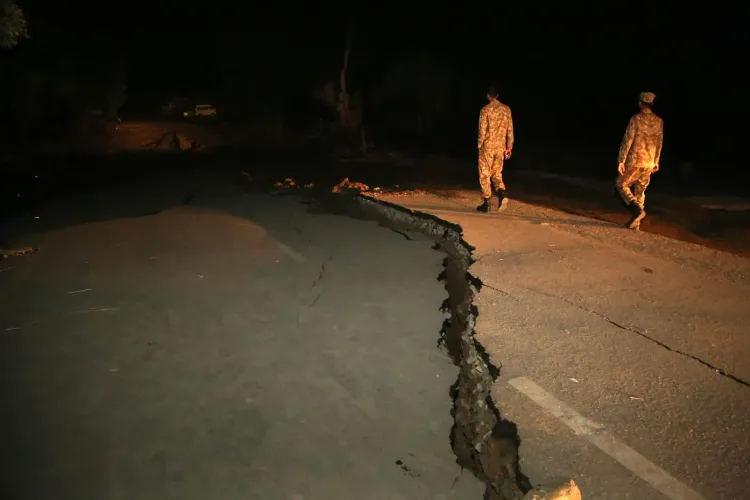
A 5.9-magnitude earthquake hit Khuzdar in Pakistan's Balochistan on Saturday, killing one man when a mountain rock crushed him in the Naal area. With mud houses severely damaged and the region sitting on one of the world's most active tectonic boundaries, the quake is the latest reminder of Pakistan's chronic seismic exposure — and the human cost of low-resilience construction in vulnerable provinces.
Key Takeaways
A 5.9-magnitude earthquake struck Khuzdar district , Balochistan , Pakistan, on 18 October 2025 at 10:07 am local time .
Abdul Rahim , a resident of Wadh , was killed when a falling rock struck him in the Naal area — the only confirmed fatality.
The epicentre was 48 km northwest of Khuzdar at a depth of 25 km , per Pakistan's PMD National Seismic Monitoring Centre .
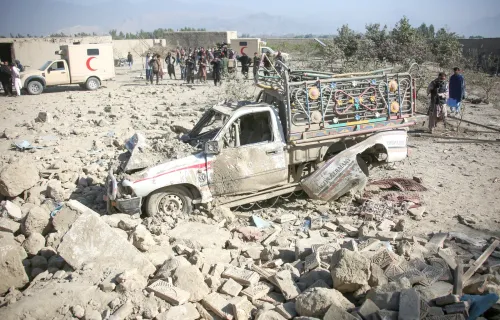
Several traditional mud houses were severely damaged; a full damage assessment is pending.
Pakistan has recorded multiple quakes in 2025, including a 5.4-magnitude tremor on 27 June and a 5.5-magnitude Hindu Kush quake in April .
Pakistan lies on the boundary of the Indian and Eurasian tectonic plates , making it among the world's most seismically active countries.
A 5.9-magnitude earthquake struck Khuzdar district and surrounding areas of Balochistan, Pakistan, on Saturday, 18 October 2025, killing one person and severely damaging several traditional mud houses. The tremors, which hit at 10:07 am local time, forced residents to flee their homes and gather in open spaces, according to local media reports.
How the fatality occurred
The sole casualty was confirmed in the Naal area of Balochistan. According to officials, a large rock dislodged from a mountain in Anari, in the Besar area of Naal, and struck Abdul Rahim, a resident of Wadh, who died on the spot. No other casualties were immediately reported, though structural damage to mud-brick homes was described as severe.
Epicentre and technical details
The epicentre was located 48 kilometres northwest of Khuzdar at a depth of 25 kilometres, according to the Pakistan Meteorological Department's (PMD) National Seismic Monitoring Centre in Islamabad. The relatively shallow depth is consistent with the intense surface shaking that caused widespread structural damage to traditional construction in the region.
Pakistan's recurring seismic vulnerability
The earthquake is the latest in a series of tremors to rattle Pakistan in 2025. On 27 June, a 5.4-magnitude quake struck Pakistan, though no casualties or structural damage were reported at the time. In April, a 5.5-magnitude tremor originating in the Hindu Kush region of Afghanistan sent shockwaves across Islamabad, Peshawar, and parts of Khyber Pakhtunkhwa, including Swat, Hangu, North Waziristan, and Chitral; residents of Rawalpindi also reported shaking.
Pakistan's exposure to seismic risk is structural: the country sits along the convergence zone of the Indian and Eurasian tectonic plates, making it one of the most earthquake-prone nations on earth. Balochistan, in particular, is repeatedly affected given its position on active fault lines.
Impact and what to watch
Authorities have yet to release a comprehensive damage assessment. The destruction of mud houses — the predominant construction style in rural Balochistan — underscores the region's vulnerability, where building standards often cannot withstand even moderate seismic events. Relief and rescue teams were reportedly mobilised following the quake. A full accounting of structural losses and any additional injuries is expected in the coming days.
Point of View
But because mud-brick construction and limited disaster-preparedness infrastructure mean even moderate tremors turn lethal. Pakistan's repeated seismic events in 2025 have not yet prompted a visible national push to retrofit or replace high-risk housing stock in its most vulnerable provinces. The shallow 25-kilometre depth of this quake amplified surface impact — a factor that emergency planners in the region should be pricing into preparedness models. Until construction standards and early-warning dissemination improve in Balochistan, each new tremor will carry the same grim potential.
NationPress
18 Oct 2026
Frequently Asked Questions
Where did the earthquake in Pakistan on 18 October 2025 strike?
The earthquake struck Khuzdar district and surrounding areas of Balochistan, Pakistan. Its epicentre was 48 kilometres northwest of Khuzdar at a depth of 25 kilometres, according to Pakistan's PMD National Seismic Monitoring Centre.
How many people were killed in the Khuzdar earthquake?
One person was killed. Abdul Rahim, a resident of Wadh, died on the spot after a large rock fell from a mountain in the Anari area of Naal and struck him. No other fatalities were immediately confirmed.
What magnitude was the Balochistan earthquake?
The earthquake measured 5.9 in magnitude. It struck at 10:07 am local time on Saturday, 18 October 2025, causing severe damage to several traditional mud houses in the region.
Why is Pakistan so vulnerable to earthquakes?
Pakistan lies along the convergence zone of the Indian and Eurasian tectonic plates, making it one of the most seismically active countries in the world. Balochistan is especially exposed due to its position on active fault lines and the prevalence of mud-brick construction that cannot withstand strong tremors.
Have there been other earthquakes in Pakistan in 2025?
Yes. A 5.4-magnitude quake struck Pakistan on 27 June 2025 with no reported casualties, and a 5.5-magnitude tremor in the Hindu Kush region of Afghanistan in April 2025 sent shockwaves across Islamabad, Peshawar, and parts of Khyber Pakhtunkhwa, also without immediate casualties.