Afghanistan burns 14 tonnes of drugs in Daykundi in major crackdown
Synopsis
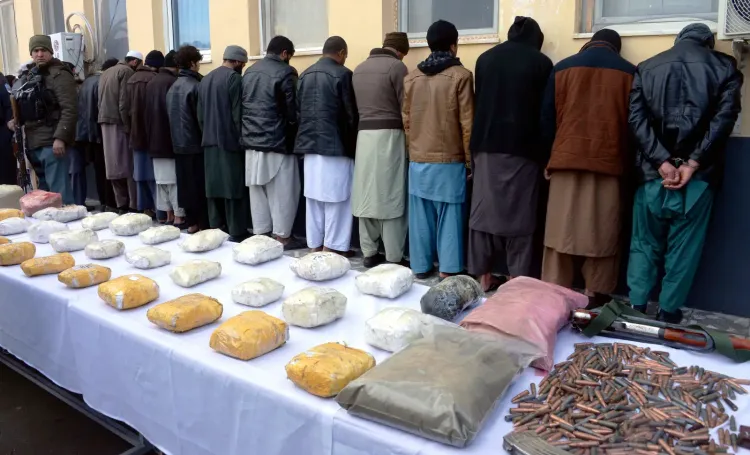
Afghan police publicly burned more than 14 tonnes of narcotics — including opium, heroin, and methamphetamine — in Daykundi province on 31 July, capping a month of intensifying counter-narcotics operations that stretched from Faryab in the north to Paktika in the east. The scale and public nature of the destruction signals an effort to project enforcement authority, even as the long-term policy picture remains contested.
Key Takeaways
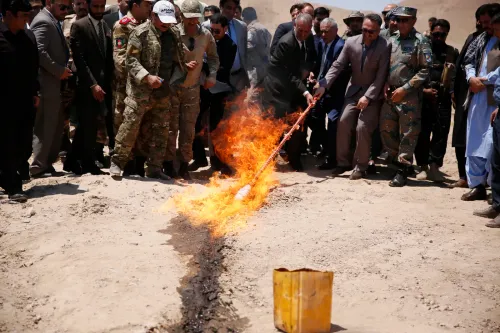
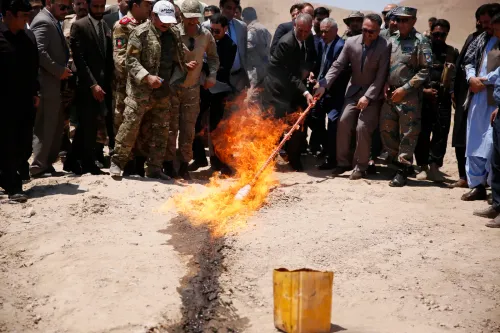
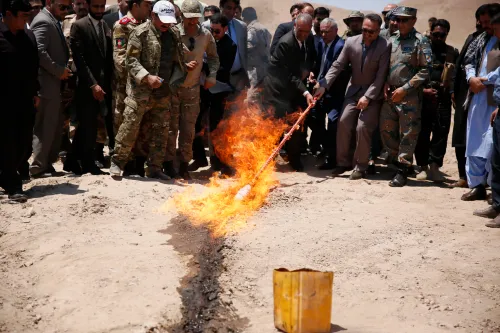
Afghan police burned more than 14 tonnes of illegal substances in Daykundi province on 31 July 2025 .
Destroyed materials included opium, methamphetamine, heroin, hashish, cannabis , stimulant tablets, and chemical precursors.
Provincial spokesman Ghulam Ali Jawed confirmed the cache was collected over the past year and warned of stern action against producers and smugglers.
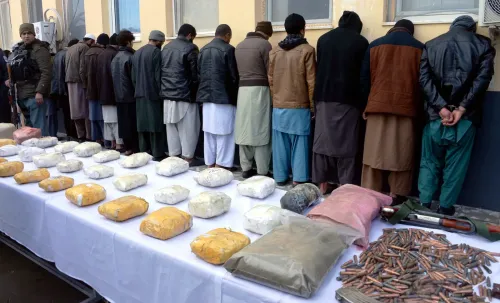
Separate operations in Paktika and Logar provinces yielded 25 kg of opium and the arrest of eight suspected traffickers .
On 26 July , counter-narcotics police seized 42 kg of methamphetamine in Faryab province , with one suspect arrested.
More than 100 drug-addicted individuals were sent to rehabilitation in Daykundi; 78 have already recovered and returned to their families.
Afghan police publicly incinerated more than 14 tonnes of illegal substances in central Afghanistan's Daykundi province on Thursday, 31 July 2025, in one of the largest single drug-destruction events recorded in the region this year. Provincial police spokesman Ghulam Ali Jawed confirmed the operation on Friday, stating that the contraband had been gathered over the preceding twelve months.
What Was Destroyed
The cache burned at a public ceremony — attended by local government officials — included opium, methamphetamine, heroin, hashish, cannabis, stimulant tablets, and chemical substances such as acid used in the manufacture of illicit drugs. Jawed warned that police would take stern action against anyone found producing or smuggling narcotics in the province.
Wider Counter-Narcotics Operations
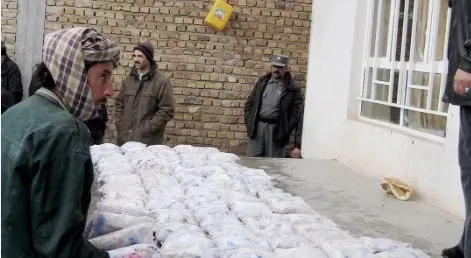
The Daykundi destruction is part of a broader nationwide crackdown. On Tuesday, authorities in eastern Afghanistan reported that police had seized 25 kilograms of opium and detained eight suspected drug traffickers across separate operations in Paktika and Logar provinces. Six suspects were arrested in Paktika after 25 kg of opium was recovered during a series of raids, while two more were detained in Logar following the confiscation of a large quantity of hashish and narcotic tablets.
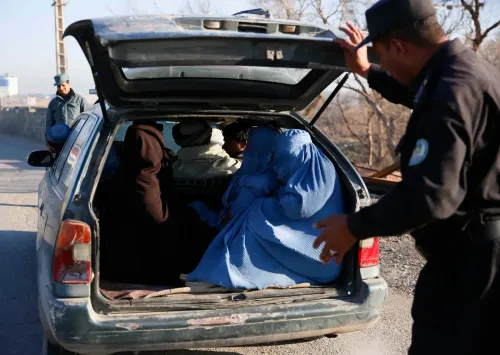
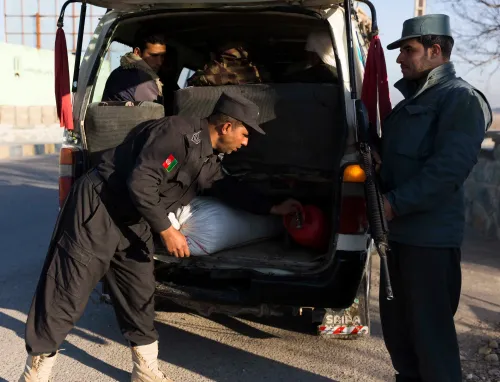
Earlier, on 26 July, Afghanistan's Ministry of Interior Affairs announced that counter-narcotics police had seized 42 kg of methamphetamine during an intelligence-led operation in northern Faryab province. The drugs, reportedly originating from western Herat province, were found concealed inside a vehicle en route to Balkh province. One suspect was arrested and the case is expected to be referred to judicial officials.
Rehabilitation Efforts Running Parallel
On 19 July, the Ministry of Interior Affairs reported that police had rounded up more than 100 drug-addicted individuals in Daykundi province and transferred them to a rehabilitation centre. Authorities noted that 78 of those individuals had already completed recovery and been reunited with their families — indicating that enforcement is being paired, at least in part, with treatment efforts.
Context and Significance
Afghanistan has historically been the world's largest producer of opium, though production figures have shifted significantly in recent years following policy changes by the Taliban administration. The sustained tempo of counter-narcotics operations — spanning Daykundi, Paktika, Logar, Faryab, and Herat in a single month — suggests a concerted push to demonstrate enforcement capacity. Whether these operations reflect a structural shift in drug policy or are primarily symbolic remains a subject of scrutiny among international observers.
Point of View
But the more telling data point is the breadth of operations — Faryab, Paktika, Logar, Herat, Balkh — all within a single month. Afghanistan's counter-narcotics record has long been measured by seizure headlines rather than sustained production declines. The parallel rehabilitation push in Daykundi, where 78 people have already been discharged, is worth watching: enforcement without treatment has historically failed to reduce consumption. International observers will want to see whether this tempo is institutionalised or driven by near-term political signalling.
NationPress
14 Sept 2026
Frequently Asked Questions
What drugs were destroyed in the Daykundi burning on 31 July 2025?
Afghan police burned over 14 tonnes of illegal substances including opium, methamphetamine, heroin, hashish, cannabis, stimulant tablets, and chemical precursors such as acid used in drug manufacturing. The contraband was collected over the past year before being publicly incinerated at a ceremony attended by local government officials.
Who confirmed the drug destruction in Daykundi?
Provincial police spokesman Ghulam Ali Jawed confirmed the operation on Friday, 1 August. He stated that police would take stern action against anyone involved in producing or smuggling illegal drugs in the province.
What other counter-narcotics operations took place in Afghanistan in July 2025?
Afghan police seized 25 kg of opium and arrested eight suspected traffickers in Paktika and Logar provinces. On 26 July, counter-narcotics forces seized 42 kg of methamphetamine in Faryab province, with one suspect arrested. On 19 July, over 100 drug-addicted individuals were sent to rehabilitation in Daykundi.
Are Afghan authorities also addressing drug addiction alongside enforcement?
Yes. Alongside enforcement operations, authorities in Daykundi rounded up more than 100 drug-addicted individuals and transferred them to a rehabilitation centre. Of these, 78 have already completed recovery and been reunited with their families, according to the Ministry of Interior Affairs.
Why is Afghanistan significant in the global drug trade?
Afghanistan has historically been the world's largest producer of opium and a major source of heroin and methamphetamine. The country's drug output has been a persistent concern for regional and international security agencies, making the current enforcement push a closely watched development.