Is AI a New Threat to the US Financial System?

Synopsis
In a recent congressional hearing, Treasury Secretary Scott Bessent emphasized that artificial intelligence is now a key risk factor for the US financial system. With regulators intensifying oversight, the implications for financial stability are significant. Read more to find out how this technology is shaping the future of finance.
Key Takeaways
AI poses new risks for the US financial system.
Regulators are increasing oversight on AI usage.
Collaboration between public and private sectors is crucial.
Cybersecurity threats are escalating alongside AI concerns.
Proactive risk management is essential for financial stability.
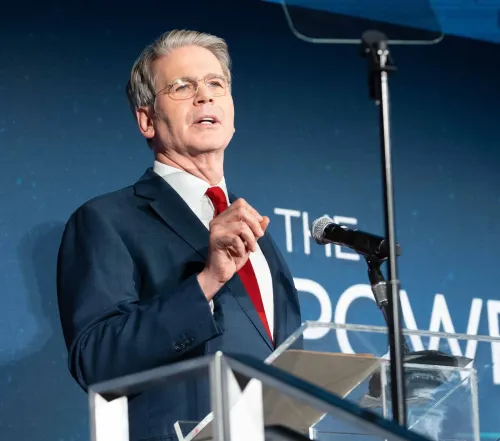
Washington, Feb 6 (NationPress) Artificial intelligence has become a significant risk factor for the US financial system, as Treasury Secretary Scott Bessent informed Congress that regulatory bodies are intensifying their scrutiny of AI applications across various markets and financial institutions.
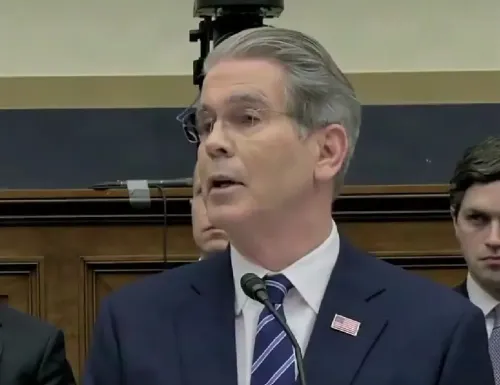
During his testimony before the Senate Banking Committee, Bessent pointed out that AI is one of the four primary focus areas highlighted in the Financial Stability Oversight Council’s 2025 annual report. “The council is prioritizing the responsible deployment of artificial intelligence to enhance financial stability,” he stated.
He noted that AI is increasingly utilized in compliance, fraud detection, and risk management, but he also cautioned about emerging vulnerabilities. “AI can serve as a remarkable asset, yet it also poses risks from both state and non-state actors,” Bessent remarked.
The FSOC is collaborating with public and private entities, including international partners, to monitor these emerging risks, he continued. “We are working alongside both sectors to bolster system resilience while keeping a close watch on new threats,” Bessent added.
Republican lawmakers welcomed the emphasis on innovation, with Senator Mike Rounds inquiring if regulatory hurdles were hindering the responsible adoption of AI. Bessent affirmed that agencies are adopting a “gradual” approach to implementation.
The report also emphasizes cybersecurity as an escalating threat alongside AI. Bessent mentioned that nation-state actors and criminal organizations are persistently targeting financial institutions and critical infrastructure.
“To counteract this risk, the council is advocating for enhanced information-sharing, joint monitoring, and scenario-based exercises,” he stated.
Democrats expressed apprehension that regulators might be underestimating these risks. Ranking Member Elizabeth Warren cautioned that financial innovation without adequate safeguards could intensify shocks throughout the system.
Bessent explained that the council's objective is to identify vulnerabilities proactively rather than responding post-crisis. “FSOC should focus on spotting vulnerabilities that could lead to systemic crises and encourage the private sector to address these risks before recommending additional regulations,” he said.
Moreover, he mentioned that FSOC is reassessing supervisory frameworks to ensure they tackle “material risk” while minimizing unnecessary burdens.
The increasing significance of AI in finance has garnered global attention, especially in countries like India, where banks and fintech companies are swiftly adopting AI-driven solutions for lending, compliance, and customer service.
US regulatory trends are closely monitored by Indian tech firms and financial institutions engaged in cross-border activities.
The Senate hearing highlighted how AI has transitioned from a niche concern to a central issue for financial regulators. Lawmakers anticipate further updates as the FSOC's AI initiatives develop.
Established post the 2008 financial crisis, FSOC is tasked with monitoring systemic risks across the financial landscape. Its annual report serves as a guide for regulators and lawmakers regarding emerging threats.
Point of View
It is essential to recognize that the emergence of AI as a significant risk to the US financial system is a complex issue. While AI offers substantial benefits, the potential vulnerabilities must be managed proactively. The balance between innovation and regulation will be critical in ensuring financial stability.
NationPress
1 Oct 2026
Frequently Asked Questions
What are the risks associated with AI in finance?
AI poses risks such as vulnerabilities to cybersecurity threats and potential misuse by both state and non-state actors, which could jeopardize financial stability.
How is the US government addressing AI risks?
The US government, through the Financial Stability Oversight Council, is increasing oversight and emphasizing responsible AI use to enhance financial stability.
What other threats are highlighted alongside AI?
Cybersecurity is noted as a growing threat, with nation-state actors and criminal groups targeting financial institutions and critical infrastructure.
What is the role of FSOC?
The Financial Stability Oversight Council monitors systemic risks across the financial system and aims to identify vulnerabilities early to prevent crises.
How is AI impacting global finance?
AI's increasing role in finance is drawing attention globally, particularly in countries like India, where financial institutions are rapidly adopting AI-driven tools.