Is AI the New Financial Stability Test for the US?

Synopsis
In a significant shift, US Treasury Secretary Scott Bessent informs Congress that artificial intelligence is now a top priority for financial regulators, highlighting both its potential to enhance market stability and the risks it poses. As AI adoption accelerates, regulators must strike a balance between innovation and oversight.
Key Takeaways
AI is a top priority for the US financial regulators.
Concerns over bias and discrimination in AI decision-making.
FSOC focuses on specific vulnerabilities rather than broad warnings.
Regulators are working with public and private sectors for risk monitoring.
Heavy reliance on a few AI vendors poses concentration risks .
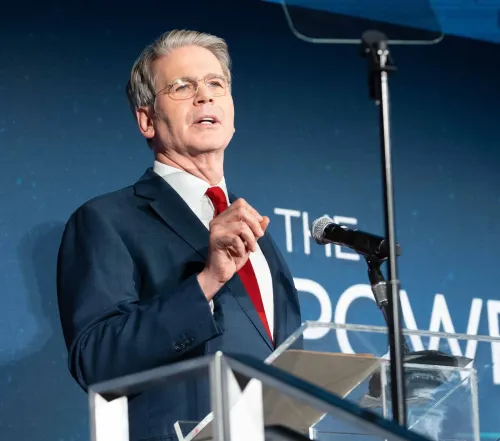
Washington, D.C., Feb 5 (NationPress) Artificial intelligence is emerging as a critical area of focus for financial regulators in the United States. Treasury Secretary Scott Bessent informed Congress that while AI has the potential to enhance market stability, it also brings certain risks that necessitate vigilant oversight.
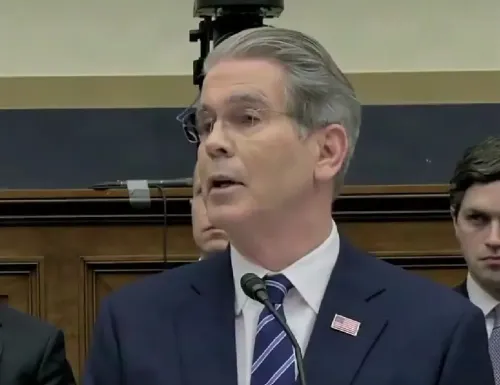
Bessent provided testimony to the House Financial Services Committee concerning the Financial Stability Oversight Council’s (FSOC) annual report for 2025. He emphasized that AI has become one of the four primary priorities aimed at safeguarding the financial system, alongside Treasury markets, cybersecurity, and regulatory modernization.
“The council is concentrating on the responsible implementation of artificial intelligence to bolster financial stability,” stated Bessent.
He mentioned that regulators are collaborating with both public and private entities to monitor risks while enhancing resilience throughout the financial system.
Bessent noted that AI is rapidly being adopted by banks and financial institutions for various functions such as risk management, compliance, and operational efficiency. However, he cautioned that improper or unchecked applications of AI could exacerbate shocks during periods of stress.
The FSOC report indicates a notable shift in regulatory strategy. Bessent explained that regulators are moving away from blanket warnings and are now concentrating on specific vulnerabilities that could lead to systemic disruptions.
“We’re filtering out the noise to focus on the issues that are most critical for the financial stability of the U.S.,” Bessent remarked.
Concerns were raised by Democratic lawmakers regarding AI-driven decision-making. They highlighted that opaque algorithms might introduce bias and discrimination, particularly in lending and credit assessments, echoing previous financial crises.
Bessent acknowledged these risks, stating that while they are valid, the FSOC's scope is limited. “It could be a concern,” he admitted in response to inquiries about AI system explainability. “However, we do not see it as a primary concern for financial stability.”
On the other hand, Republican lawmakers largely supported the administration's stance, arguing that innovation should not be stifled by premature regulations. They contended that AI can aid in fraud detection, enhance customer service, and fortify compliance.
Bessent also pointed out that regulators are monitoring concentration risks. He noted that excessive dependence on a limited number of AI vendors or systems could amplify the damage from cyberattacks or technical failures.
“Nation-state actors and criminal organizations continue to target our financial institutions and infrastructure,” he asserted.
Bessent concluded by mentioning that the FSOC is coordinating efforts with international counterparts, emphasizing that AI risks are global in nature and require cross-border cooperation to prevent regulatory gaps.
Point of View
I believe that the emergence of AI in the financial sector presents both substantial opportunities and significant risks. The FSOC's approach to focusing on specific vulnerabilities, rather than broad warnings, represents a pragmatic response to the evolving landscape. It's crucial for regulators to strike a balance between fostering innovation and ensuring systemic stability.
NationPress
1 Oct 2026
Frequently Asked Questions
What is the main focus of the FSOC report?
The FSOC report primarily focuses on the responsible use of artificial intelligence to enhance financial stability while addressing specific vulnerabilities in the system.
What concerns did lawmakers express regarding AI?
Lawmakers expressed concerns that AI-driven decisions could introduce bias and discrimination, particularly in lending and credit assessments.
How is AI being utilized in the financial sector?
AI is being utilized across banks and financial markets for various functions including risk management, compliance, and operational efficiency.
What did Bessent say about concentration risks?
Bessent highlighted that heavy reliance on a limited number of AI vendors or systems could increase the impact of cyberattacks or technical failures.
What is the FSOC's stance on AI's explainability?
While acknowledging the risks associated with AI's explainability, Bessent indicated that it is not viewed as a priority for financial stability.