Could AI Transform Global Power Dynamics Before 2030?
Synopsis
Prepare for a future where artificial intelligence could redefine global power dynamics by 2030. Dario Amodei, CEO of Anthropic, warns that nations achieving advanced AI first may gain the upper hand, significantly affecting India's strategic competition with China. Discover the implications of this technological race and the potential shifts in national security and economic landscapes.
Key Takeaways
AI could shift global power dynamics significantly by 2030.
Advanced AI capabilities may offer geopolitical leverage to early adopters.
India's strategic competition with China is critical in this context.
Economic growth from AI could be substantial, but disparities may widen.
Governance frameworks need to evolve rapidly to keep pace with AI advancements.
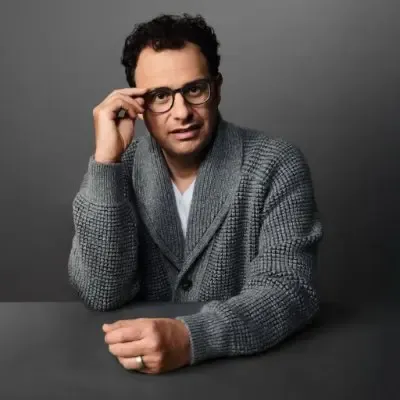
Washington, Feb 18 (NationPress) Artificial intelligence has the potential to significantly shift the global power dynamics before this decade concludes, according to Anthropic's CEO, Dario Amodei. He cautioned that nations achieving advanced AI capabilities sooner could secure pivotal geopolitical advantages, a shift that holds particular relevance for India's ongoing strategic competition with China.
“The public's lack of awareness regarding how close we are to the culmination of the exponential growth is astonishing,” Amodei shared during a discussion with podcast host Dwarkesh Patel.
He expressed “90 percent” confidence that AI systems akin to “a nation of geniuses in a data center” will be developed within a decade, predicting a “50-50” likelihood that such advancements could materialize in just one to three years.
“I find it hard to imagine that there won’t be trillions of dollars in revenue generated before 2030,” he remarked.
Amodei outlined a future where AI evolves along a steep but “soft” exponential trajectory, leading to rapid advancements in coding, reasoning, and scientific endeavors. He anticipates that end-to-end automation in software engineering could emerge within the next few years.
However, he emphasized the national security ramifications associated with these developments.
There could be “certain critical junctures on the exponential curve” where AI provides “significant advantages from a national security standpoint,” he mentioned.
If a nation or alliance achieves these capabilities first, “people are going to realize that the world has changed,” he suggested, indicating that discussions about a “post-AI global order” might ensue.
Amodei expressed concern that advanced AI in authoritarian regimes could further entrench their power. “Authoritarianism will take on a new dimension” in the era of advanced AI, he warned. He has previously indicated that these governments may become more difficult to challenge once fortified by sophisticated AI technologies.
He also supported U.S. export restrictions on advanced AI chips to China, arguing that while economic growth from AI may occur “very easily,” challenges related to “distribution of benefits, wealth, and political freedom” will be more complex to navigate.
These remarks come as India accelerates its AI initiatives amid escalating tech competition between the U.S. and China. New Delhi is enhancing incentives for semiconductor manufacturing, engaging global AI companies, and aiming to establish itself as a democratic tech ally in the Indo-Pacific region.
Amodei predicted that while the economic spread of AI will be “extremely rapid,” it will not occur “infinitely fast.” He acknowledged that while rapid adoption is likely, real-world challenges in regulatory frameworks and enterprise implementation could present obstacles.
He warned that a future where AI systems can innovate new technologies, drive scientific discoveries, and automate digital tasks could exacerbate geographical disparities. Growth may surge dramatically in regions close to AI development hubs while others may fall behind.
For India, which seeks to maintain strategic independence while strengthening technological cooperation with the U.S., the critical question is whether it can secure computing power, semiconductor supply chains, and leadership in AI research before these “critical junctures” are reached.
As one of the few leading AI companies alongside OpenAI and Google DeepMind, Anthropic is at the forefront of large-scale model development. The firm contends that governance frameworks must adapt swiftly, as “10 years is an eternity” in the realm of AI.
India has yet to establish comprehensive AI regulations, although it has introduced advisory guidelines and is investing in national AI infrastructure. With China rapidly progressing in its domestic AI capabilities and the U.S. tightening chip export restrictions, the strategic window for India may close more quickly than policymakers anticipate.
If Amodei's timelines are accurate, the global AI race could crystallize before 2030 — marking this decade as crucial for technology powers, including India.
Point of View
It's essential to recognize the profound implications this technology has on global power structures. With nations vying for technological supremacy, India's strategy must focus on securing its AI capabilities and fostering international collaborations. The insights from leaders like Dario Amodei provide critical perspectives on the urgent need for comprehensive governance frameworks and strategic foresight in a rapidly changing world.
NationPress
9 Oct 2026
Frequently Asked Questions
What is the impact of AI on global power?
AI is poised to transform global power dynamics significantly, with nations achieving advanced capabilities gaining geopolitical advantages.
How does this affect India's relationship with China?
As AI technology advances, India must navigate its strategic rivalry with China, aiming to secure its technological capabilities to remain competitive.
What are the economic implications of AI advancements?
The rapid growth of AI could result in trillions of dollars in revenue, but also risks widening economic disparities between regions.
What concerns are there regarding AI in authoritarian regimes?
Advanced AI could entrench control in authoritarian states, making it more challenging to challenge their governance.
How is India preparing for the AI race?
India is enhancing semiconductor manufacturing incentives and fostering global AI partnerships to position itself as a tech leader in the Indo-Pacific.