AQIS Red Fort attack 2025: UN flags ISI role in South Asia terror surge
Synopsis
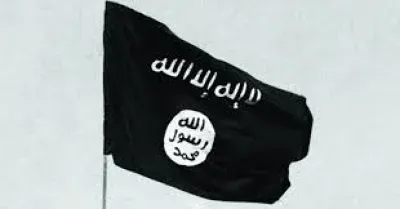
The UN Security Council has officially pinned the deadly November 2025 Red Fort bombing on AQIS — and a new analysis argues that Pakistan's ISI is the silent architect behind the group's logistics. With AQIS shifting to urban guerrilla cells and Madrassa-fed recruitment, India's security challenge is no longer just about known groups; it is about an evolving, decentralised threat that the ISI can disown while quietly sustaining.
Key Takeaways
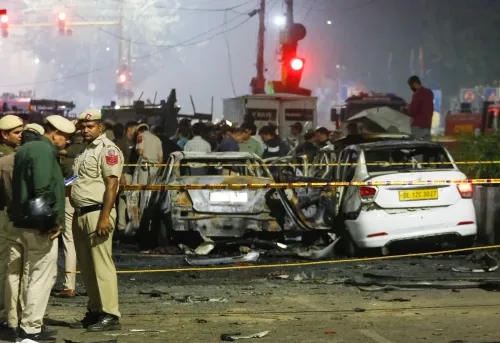
The UNSC Analytical Support and Sanctions Monitoring Team officially attributed the Red Fort suicide car bombing (November 2025) — which killed 11 people — to AQIS .
AQIS , founded in 2014 by Ayman al-Zawahiri , has evolved into a decentralised regional entity operating through scattered cells.
EFSAS Director Junaid Qureshi argues the ISI has a documented history of rotating proxy terror groups in J&K — from JKLF to HM to LeT to JeM — to evade international pressure.
Future threats include online radicalisation pipelines and Madrassa networks that could supply a new generation of recruits.
Analysts are urging Indian security agencies to monitor AQIS infrastructure — funding, propaganda, and digital recruitment — beyond traditional terror outfits.
The United Nations Security Council (UNSC) terrorism monitoring team has officially attributed the Red Fort suicide car bombing of November 2025 — which killed 11 people — to Al-Qaeda in the Indian Subcontinent (AQIS), warning that the group is rapidly evolving into a decentralised regional terror network. The finding, contained in a report by the Analytical Support and Sanctions Monitoring Team, has reignited calls for a robust counter-strategy targeting Pakistan's Inter-Services Intelligence (ISI), which analysts say is providing logistical cover to such outfits.
UNSC Report: AQIS Spreading Across the Region
The UNSC monitoring team's report states that the November 2025 Red Fort attack 'was officially attributed to AQIS,' marking one of the deadliest single incidents linked to the group in recent years. According to the report, AQIS — founded in 2014 by Al-Qaeda leader Ayman al-Zawahiri — has 'continued to evolve from a fragmented group into a regional terrorist entity,' building logistics and financial networks through 'decentralised small, scattered cells instead of large units.' In countries like India, where large-scale territorial operations are not feasible, the group is reportedly shifting toward urban guerrilla tactics.
ISI's Alleged Role: A Pattern of Proxy Management
Junaid Qureshi, Director of the European Foundation for South Asian Studies (EFSAS), writing in Rising Kashmir, argued that the operational successes of Pakistan-based terror groups — even if limited in scale — suggest a possible 'hand-in-glove understanding for logistical support' with the ISI. Qureshi outlined a documented pattern of ISI-managed proxy rotation in Jammu and Kashmir: prominence shifted from the Jammu Kashmir Liberation Front (JKLF) to Hizb-ul-Mujahideen (HM), then to Lashkar-e-Taiba (LeT), and subsequently to Jaish-e-Mohammed (JeM) following the 2008 Mumbai attacks, each transition timed to deflect international pressure. 'The ISI has mastered the art of creating new terrorist outfits which step into the shoes of other ISI-created terrorist groups,' Qureshi wrote.
Online Radicalisation and Madrassa Networks: The Next Threat Vector
Qureshi cautioned that the long-term survival of these groups in South Asia will increasingly depend on online radicalisation, recruitment pipelines, and Madrassa networks. He noted that many Madrassas function as fronts for extremist organisations, 'notorious for preaching radical interpretations of Islam and sending students to battlefronts.' This infrastructure, he warned, could yield a new generation of recruits, particularly among radicalised youth in Jammu and Kashmir.
What India's Security Apparatus Must Do
Qureshi emphasised that Indian security agencies must look beyond established groups such as LeT, HM, and JeM and closely monitor the infrastructure of newer international terror organisations — including their online presence, propaganda techniques, funding networks, and recruitment methods. 'The role of the ISI in strengthening such groups as part of a new strategy to keep violence alive in J&K in order to protect the pre-eminence of the Pakistani military establishment, especially, needs to be watched with a hawk's eye and countered promptly and robustly,' he warned. This comes amid a broader pattern of South Asian terror attacks that analysts say reflect a deliberate escalation strategy by Pakistan-backed networks ahead of any potential diplomatic engagement.
Point of View
But because it confirms a structural shift — from monolithic Pakistan-backed groups to a diffuse, cell-based model that is harder to interdict and easier for the ISI to disown. Qureshi's proxy-rotation thesis is well-documented historically, yet international accountability mechanisms have consistently failed to translate that evidence into meaningful pressure on Islamabad. The Madrassa-to-battlefield pipeline is not new intelligence; what is new is its intersection with digital radicalisation at scale. India's counter-terror doctrine, still largely calibrated to identifiable group hierarchies, may need a fundamental rethink for a threat that has deliberately shed its centre of gravity.
NationPress
17 Aug 2026
Frequently Asked Questions
What was the Red Fort attack of November 2025?
The Red Fort suicide car bombing of November 2025 killed 11 people and has been officially attributed to Al-Qaeda in the Indian Subcontinent (AQIS) by the UN Security Council's terrorism monitoring team. It is considered one of the most significant AQIS-linked attacks in recent years.
What is AQIS and when was it founded?
Al-Qaeda in the Indian Subcontinent (AQIS) is a regional terrorist organisation founded in 2014 by Al-Qaeda leader Ayman al-Zawahiri. According to the UNSC monitoring report, it has evolved from a fragmented group into a decentralised entity with logistics and financial networks operating through small, scattered cells.
What is Pakistan's ISI alleged role in supporting AQIS?
EFSAS Director Junaid Qureshi argues that the operational successes of Pakistan-based terror groups suggest a possible logistical understanding with the ISI. He points to a documented pattern in which the ISI rotated proxy groups in Jammu and Kashmir — from JKLF to Hizb-ul-Mujahideen to Lashkar-e-Taiba to Jaish-e-Mohammed — each time international pressure mounted against the existing outfit.
Why are Madrassas considered a security concern in this context?
According to Qureshi, many Madrassas in the region function as fronts for extremist organisations, preaching radical interpretations and directing students toward conflict zones. Analysts warn they could serve as a recruitment pipeline for AQIS and similar groups targeting radicalised youth in Jammu and Kashmir.
What should India's security agencies focus on going forward?
Analysts recommend that Indian security agencies monitor not just established groups like LeT, HM, and JeM, but also the broader infrastructure of emerging international terror organisations — including online propaganda, funding networks, and digital recruitment methods — to prevent AQIS from capitalising on growing radicalisation trends.