Anti-Xi protests outside White House as Tibet, Hong Kong demonstrators challenge Xi's Washington visit
Synopsis
As Chinese President Xi Jinping visited Washington, a broad coalition of Tibetan, Uyghur, Hong Kong and democracy groups staged coordinated protests — some audible from the White House itself. Tibetan organisers say hundreds were blocked from a permitted march near the Chinese Embassy, and allege protesters were being filmed by Chinese individuals, raising pointed questions about transnational repression on American soil.
Key Takeaways
Anti-Xi demonstrators gathered outside the White House on 25 September 2026 during Xi Jinping's Washington visit, chanting for free Tibet and free Hong Kong .
Protests were organised by Tibetan, Uyghur, Hong Kong, Taiwanese, Southern Mongolian and Chinese democracy groups across multiple Washington sites.
Tibetan organisers allege hundreds were blocked from a permitted march near the Chinese Embassy at International Drive , despite a Metropolitan Police Department permit for up to 2,000 participants .
Protesters demanded the release of Jimmy Lai , the 11th Panchen Lama , and other political prisoners.
Ryan Fioresi of the International Campaign for Tibet alleged Chinese individuals were recording Tibetan protesters, raising concerns about transnational repression on US soil.
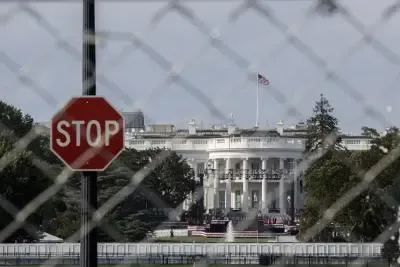
Hundreds of protesters gathered outside the White House gates on Thursday (US local time), chanting slogans for a free Tibet and free Hong Kong as Chinese President Xi Jinping continued his high-profile visit to Washington. The demonstrators were audible from the North Portico, where members of the White House press pool had assembled on a riser facing the building's steps.
What the Protesters Demanded
Chants of 'Free Hong Kong', 'Free Tibet', 'CCP, you're not welcome' and 'Xi Jinping, you're not welcome' rang out near the White House. Demonstrators also called for the release of political prisoners, including Jimmy Lai, the jailed Hong Kong media publisher and democracy advocate, and the 11th Panchen Lama. They additionally demanded renewed dialogue between Chinese authorities and Tibetan representatives, and an end to policies they say are eroding Tibet's religious, cultural and linguistic identity.
A Wider Day of Organised Protests
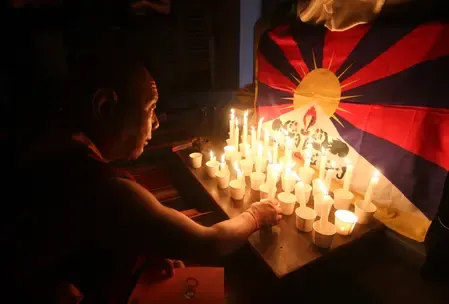
The White House demonstration was part of a broader series of actions organised by Tibetan, Uyghur, Hong Kong, Taiwanese, Southern Mongolian and Chinese democracy groups to coincide with Xi's Washington visit. Organisers planned protests outside the Chinese Embassy, marches through central Washington, a rally at the US Capitol, and an evening candlelight vigil at Franklin Park.
Tibetan Protesters Blocked Near Chinese Embassy
Tibetan organisers said hundreds of demonstrators were prevented from reaching International Drive to protest outside the Chinese Embassy, despite having secured official permits for the gathering. Protesters were reportedly stopped at Van Ness Street amid heavy security and road restrictions. The Metropolitan Police Department permit, according to the organisers, had authorised as many as 2,000 participants, amplified sound, and a march beginning at 3505 International Drive.
Tibetan Youth Congress President Tsering Chomphel said: 'We secured all the necessary permits and followed every requirement asked of us. This is a peaceful gathering. Tibetans came here today to exercise the fundamental right to peacefully protest, and we should be allowed to do so at the location for which we received permission.'
The International Campaign for Tibet noted that welcoming groups were allowed to gather freely outside the White House, while Tibetan protesters faced restrictions near the Chinese Embassy — a contrast that organisers said raised questions about selective enforcement. Capital Area Tibetan Association President Tenzin Norbu said: 'Tibetans in America should not have to wonder whether pressure, surveillance or intimidation from the Chinese government will restrict their ability to exercise rights guaranteed in this country.'
Allegations of Chinese Surveillance on US Soil
Ryan Fioresi, executive director of the International Campaign for Tibet, alleged that Chinese individuals were recording Tibetan protesters as they demonstrated. 'These are Americans. They are Tibetan Americans exercising their rights on American soil, and they have every right to peacefully protest,' Fioresi said. He added: 'Tibetans should not have to fear surveillance or intimidation for speaking out in the United States. When the reach of Chinese repression follows Tibetans here, onto US soil, that is precisely why concerns about transnational repression must be taken seriously.'
Context: Protests During High-Profile State Visits
This is not the first time Xi's US visits have drawn large-scale demonstrations. Protests by diaspora communities — Tibetan, Uyghur, and Hong Kong — have accompanied previous Xi engagements on American soil, but the scale of coordination across multiple identity groups on 25 September 2026 marks a notably unified display. The restrictions on permitted marches near the Chinese Embassy, if confirmed, would draw scrutiny over the balance between diplomatic protocols and First Amendment rights on American streets.
All eyes will now be on whether planned marches and the Capitol rally proceed as organisers intended, and whether US authorities address the permit-access questions raised by the Tibetan groups.
Point of View
And incidents like this, if substantiated, feed directly into that legislative debate. What is missing from most coverage is the coordination angle: this was not a spontaneous gathering but a multi-community, multi-venue operation, suggesting diaspora networks are becoming more organised and harder for any administration to quietly sideline.
NationPress
25 Sept 2026
Frequently Asked Questions
Why were protesters gathered outside the White House on 25 September 2026?
Protesters gathered outside the White House to demonstrate against Chinese President Xi Jinping's high-profile visit to Washington, calling for a free Tibet, a free Hong Kong, and the release of political prisoners including Jimmy Lai and the 11th Panchen Lama. The demonstration was part of a broader day of protests organised by multiple diaspora and democracy groups.
Were Tibetan protesters allowed to march near the Chinese Embassy?
No. Tibetan organisers say hundreds of demonstrators were stopped at Van Ness Street and prevented from reaching International Drive, despite holding a Metropolitan Police Department permit for up to 2,000 participants. The International Campaign for Tibet noted that pro-Xi welcoming groups outside the White House faced no comparable restrictions.
Who is Jimmy Lai and why were protesters calling for his release?
Jimmy Lai is a Hong Kong media publisher and democracy advocate who has been jailed by authorities in Hong Kong. Protesters and advocacy groups consider him a political prisoner and have long demanded his release as part of wider calls for democratic freedoms in Hong Kong.
What is transnational repression and why did it come up at these protests?
Transnational repression refers to a government's attempts to silence or monitor dissidents beyond its own borders. Ryan Fioresi of the International Campaign for Tibet alleged that Chinese individuals were filming Tibetan American protesters during the demonstration, which advocacy groups say is a direct example of Chinese transnational repression occurring on US soil.
What other protest events were planned during Xi Jinping's Washington visit?
Beyond the White House gathering, organisers planned protests outside the Chinese Embassy, marches through central Washington, a rally at the US Capitol, and an evening candlelight vigil at Franklin Park. Groups involved included Tibetan, Uyghur, Hong Kong, Taiwanese, Southern Mongolian, and Chinese democracy organisations.