Balochistan investment risks flagged by Baloch American Congress chief
Synopsis
Baloch American Congress President Tara Chand has formally warned international investors — from the US to China to Saudi Arabia — against cutting deals with Islamabad to mine Balochistan's vast mineral wealth without the consent of its people. Citing CPEC as proof that unconsented investment breeds resistance and setbacks, Chand's letter to the UN draws a direct line between resource extraction and the region's enduring poverty.
Key Takeaways
Tara Chand , President of the Baloch American Congress , issued a formal letter to the United Nations on 13 November 2026 from Washington .
The letter urges investors from the US, Canada, Saudi Arabia, China, and Europe to withhold agreements with Pakistani authorities over Balochistan's resources without local consent.
Chand cited the China–Pakistan Economic Corridor (CPEC) as evidence that unconsented projects generate resistance and investment setbacks.
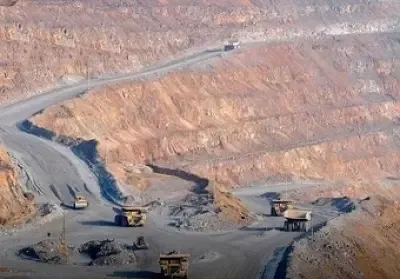
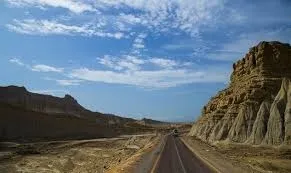
Balochistan holds significant reserves of gold, copper, and other minerals alongside a strategic coastline, yet its population faces widespread poverty and inadequate basic services.
Chand called on the UN and world governments to support Baloch self-determination , including independence aspirations, while clarifying: 'We are not against investment.
We are against exploitation.'
Tara Chand, President of the Baloch American Congress, has urged international investors worldwide to avoid signing agreements with Pakistani authorities to extract Balochistan's natural resources without first securing the meaningful consent of the region's indigenous population. The appeal, addressed to the United Nations and the broader global community, was issued from Washington on 13 November 2026.
The Core Argument
Chand's letter highlights a stark contradiction: Balochistan is rich in gold, copper, and other valuable minerals, and possesses a strategically important coastline — yet its people continue to live with poverty, unemployment, and inadequate access to clean water, schools, and hospitals.
'Balochistan is our ancestral motherland, blessed with gold, copper, valuable minerals, and a strategic coastline. Yet our people continue to suffer from poverty, unemployment, and a lack of clean water, schools, and hospitals. Our land is rich, but our people remain poor,' the letter stated.
CPEC Cited as a Cautionary Tale
Chand specifically pointed to the China–Pakistan Economic Corridor (CPEC) as a warning to prospective investors. He argued that large-scale projects pursued without local buy-in had generated organised resistance and caused serious setbacks for the initiative, undermining the very investment it was meant to advance.
'The China–Pakistan Economic Corridor (CPEC) serves as a warning to international investors. We believe that projects pursued without the consent of the Baloch people have contributed to resistance and serious setbacks. CPEC demonstrates the risks of investment without local consent,' Chand stated in the letter.
Who Is Being Addressed
The appeal is directed at investors from the United States, Canada, Saudi Arabia, China, Europe, and other regions. Chand was explicit that the Baloch leadership is not opposed to investment as a concept: 'We are not against investment. We are against exploitation,' he noted.
He added that once the Baloch people are able to determine their own future, they would welcome responsible international partnerships to generate employment and improve living standards in the region.
Call for UN Action and Self-Determination
Beyond the economic dimension, Chand called on the United Nations and world governments to support the human rights, freedom, and peaceful self-determination of the people of Balochistan, including, he said, their aspirations for independence.
His letter closed with a pointed three-part demand: 'No investment without consent. No development without justice. No lasting prosperity without freedom. Balochistan is our motherland. Its resources belong to the Baloch people, and its future must be decided by the Baloch people.'
Wider Context
This comes amid sustained international scrutiny of CPEC, which critics have long argued disproportionately benefits Chinese and Pakistani federal interests at the expense of Balochistan's local communities. Security incidents targeting CPEC infrastructure have been a recurring concern for project stakeholders. Chand's letter represents one of the more direct formal appeals by a Baloch diaspora organisation to redirect investor attention toward the question of indigenous consent.
Point of View
In effect, inserting a consent clause into that geopolitical conversation. Whether the UN or any investor body formally responds will determine whether this remains a symbolic appeal or the opening of a more structured advocacy campaign.
NationPress
14 Nov 2026
Frequently Asked Questions
Who is Tara Chand and what has he urged?
Tara Chand is the President of the Baloch American Congress, a diaspora organisation based in Washington. He has urged international investors from the US, Canada, Saudi Arabia, China, and Europe to refrain from signing agreements with Pakistani authorities to extract Balochistan's natural resources without the meaningful consent of the local Baloch population.
Why is CPEC described as a warning for investors?
Chand argues that the China–Pakistan Economic Corridor, pursued largely without the consent of Balochistan's people, has generated organised resistance and serious project setbacks. He presents it as evidence that unconsented large-scale investment in the region carries significant operational and reputational risk.
What natural resources does Balochistan hold?
According to Chand's letter, Balochistan is endowed with gold, copper, and other valuable minerals, as well as a strategically located coastline. Despite this natural wealth, the region's population continues to face poverty, unemployment, and a shortage of clean water, schools, and hospitals.
Is the Baloch American Congress opposed to all foreign investment?
No. Chand explicitly stated, 'We are not against investment. We are against exploitation.' The organisation says it would welcome responsible international investors once the Baloch people are able to determine their own future and direct development on their own terms.
What political demand did the letter make to the United Nations?
The letter called on the United Nations and world governments to support the human rights, freedom, and peaceful self-determination of the Baloch people, including their aspirations for independence from Pakistan.