Is There a Dangerous Escalation in State Violence Against Baloch Women?
Synopsis
The alarming trend of enforced disappearances of Baloch women reflects a serious escalation in state violence, indicating a systematic, gendered strategy of oppression. Mahrang Baloch from the Baloch Yakjehti Committee sheds light on this troubling issue, showcasing the broader implications for society and resistance movements.
Key Takeaways
Enforced disappearances of Baloch women signify a dangerous escalation in state violence.
The targeting of women aims to weaken resistance movements.
This issue extends beyond political affiliations, affecting marginalized groups.
Increased awareness can lead to collective solidarity and resistance.
Human rights organizations are calling for urgent action.
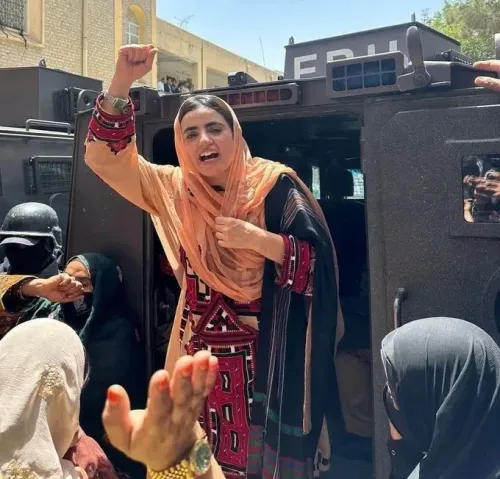
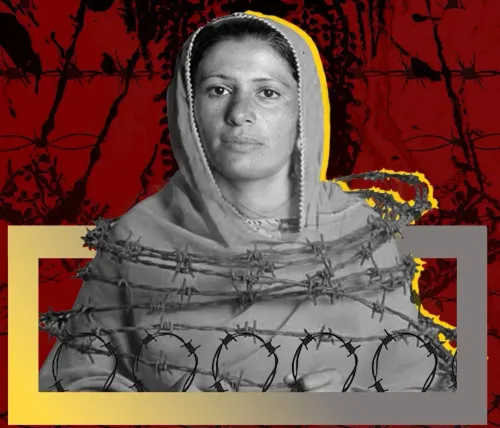
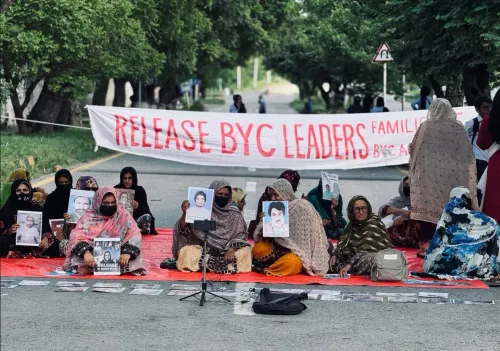
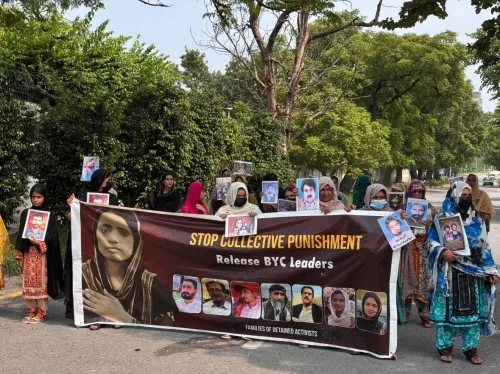
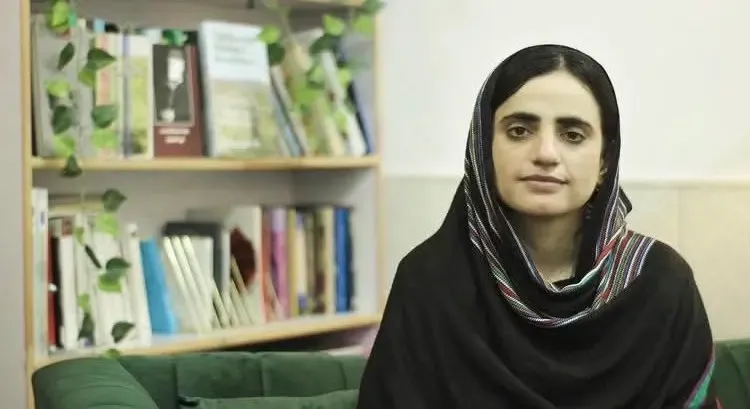
Quetta, Feb 1 (NationPress) Mahrang Baloch, the central organiser of the Baloch Yakjehti Committee (BYC), has asserted that the enforced abductions of Baloch women represent a serious escalation in state violence. This troubling trend indicates that enforced disappearance is being employed as a systematic and gendered tactic, according to local media.
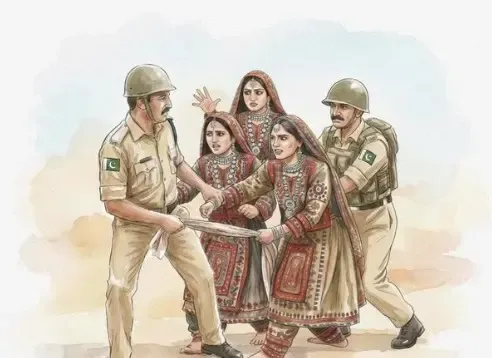
Mahrang Baloch underscored that for years, the Baloch community has been regarded as a suspect and marginalized group, with authorities resorting to intimidation, fear, and repression rather than embracing inclusion and constitutional rights. She pointed out that enforced disappearances, which were predominantly aimed at Baloch men, have now extended to encompass women and girls, as reported by The Balochistan Post.
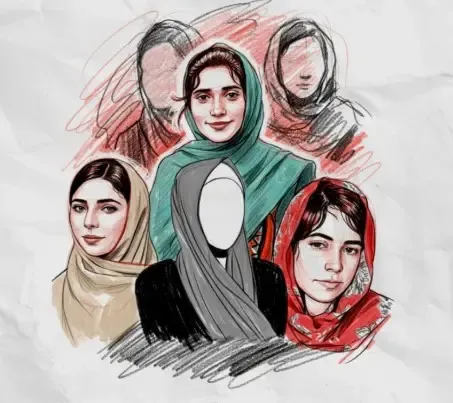
Baloch highlighted that the victims include students, young girls, expectant mothers, and individuals with disabilities, many of whom have no ties to political activities. This shift suggests that enforced disappearance, once seen merely as a security issue, now has wider social and political implications.
She remarked that Baloch women are being specifically targeted to undermine the social fabric of resistance as they begin to demand justice for their missing relatives, staging protests, and seeking accountability from courts and state institutions.
She emphasized that oppression and violence based on identity do not lead to silence or compliance; instead, they foster greater political awareness, unity, and resistance, as reported by The Balochistan Post. The enforced disappearances of Baloch women ought to be viewed as a calculated attempt to instill fear and control over society.
On January 26, a prominent human rights organization reported that at least 10 civilians were forcibly taken in Balochistan by Pakistani forces, amid a worrying rise in enforced disappearances throughout the region.
Condemning these acts, Paank, the Human Rights Department of the Baloch National Movement, revealed that Eido Bakhsh from Pir Koh in Dera Bugti district was forcibly disappeared on January 24 by personnel from Pakistan’s Frontier Corps (FC).
In another incident on the same day, 23-year-old Suleman Baloch, a student from the Tump area in Kech district, was taken from his home during a raid conducted by Pakistani forces. Residents reported that both FC and the Pakistani Army were involved in the abduction.
Additionally, the rights organization condemned the enforced disappearance of Saeedullah on January 23 from the Chatkan region of Panjgur district by the Pakistan Army. According to Paank, Hafiz Nazir Ahmed Lehri, a government employee, was taken on January 1 during a raid on his home on Sariab Road in Quetta.
Paank also highlighted the disappearances of three other civilians — Yaseen, Basheer, and Abdullah — during a raid by the Pakistan Army on January 24 in the Dasht area of Kech.
The organization brought attention to another incident involving Wajo Jan Muhammad, who was taken on the same day from the Josak area of Kech by a death squad backed by Pakistan. Local sources indicated that he was abducted at gunpoint along with his vehicle.
Paank strongly condemned the disappearance of Nako Ameer, an elderly civilian, on January 24 during a raid by Pakistani forces in the Talkan area of Tump region in Kech, with local sources stating he was taken to an undisclosed location.
Moreover, it was reported that Saleem Ahmed, another Baloch civilian, was forcibly abducted on January 9 from Main Bazar Naal in Khuzdar district by personnel of the Pakistan Army.
Point of View
It is crucial to approach this situation with a commitment to uncovering the truth while standing in solidarity with the affected communities. The plight of Baloch women is a human rights issue that demands urgent attention and action from both national and international bodies. We must ensure their voices are heard and their rights are protected.
NationPress
11 Oct 2026
Frequently Asked Questions
What are the recent developments regarding enforced disappearances in Balochistan?
Recent reports indicate a worrying increase in the enforced disappearances of Baloch women, highlighting a broader issue of state violence and repression in the region.
Who is Mahrang Baloch and what role does she play?
Mahrang Baloch is a central organiser of the Baloch Yakjehti Committee, advocating for the rights of Baloch people and raising awareness about the enforced disappearances affecting women and marginalized groups.
What types of individuals are affected by these enforced disappearances?
The victims include students, underage girls, pregnant women, and individuals with disabilities, many of whom have no political ties.
How do enforced disappearances affect Baloch society?
These actions aim to undermine social foundations of resistance and instill fear, yet they also inadvertently foster greater political awareness and collective solidarity among the community.
What can be done to address this issue?
Raising awareness, advocating for human rights protections, and holding authorities accountable are crucial steps to combat the ongoing crisis of enforced disappearances in Balochistan.