Balochistan coal mine blast kills 34 in Quetta's Spin Karez area
Synopsis
Thirty-four miners from one of Pakistan's poorest districts died in a methane blast deep inside a Balochistan coal shaft — most from the same families, none with insurance or legal protection. It is the latest chapter in a decades-long pattern of deadly accidents that Pakistan's regulatory framework has consistently failed to prevent.
Key Takeaways
A methane gas explosion at a coal mine in Spin Karez, Quetta , Balochistan , killed 34 miners on Thursday .
22 of the 34 victims were from Mian Kallay Pirabad in Shangla district, Khyber Pakhtunkhwa ; most were related to one another.
An estimated 65% of Shangla's population depends directly or indirectly on coal mining for income.
Miners reportedly had no access to social security, EOBI , health insurance, or life insurance, leaving families with little or no compensation.
Similar accidents in Balochistan have killed hundreds of Shangla workers and permanently disabled thousands over the past several decades, according to reports.
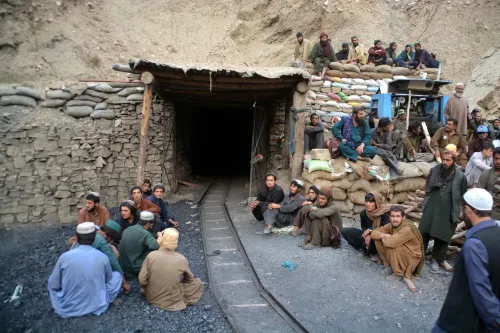
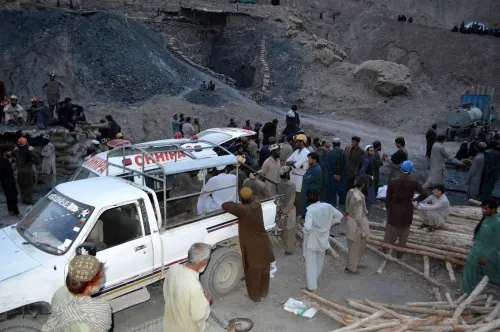
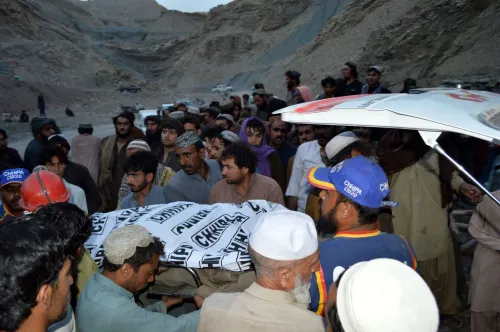
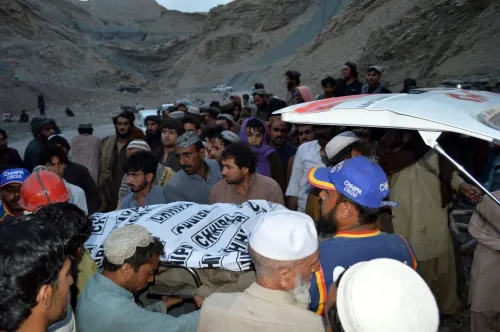
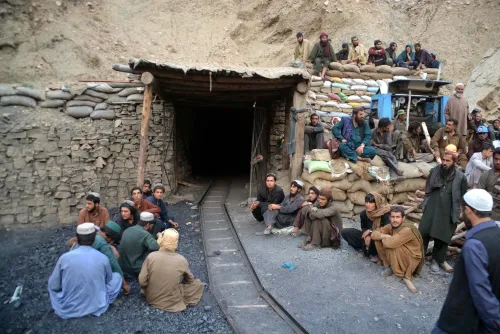
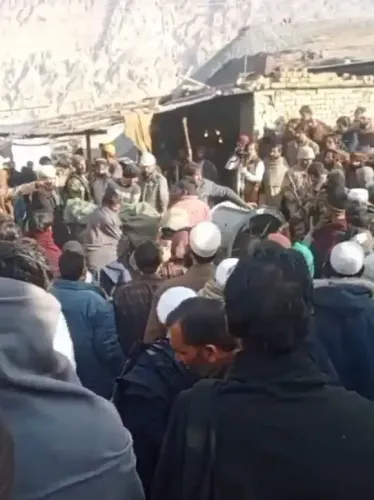
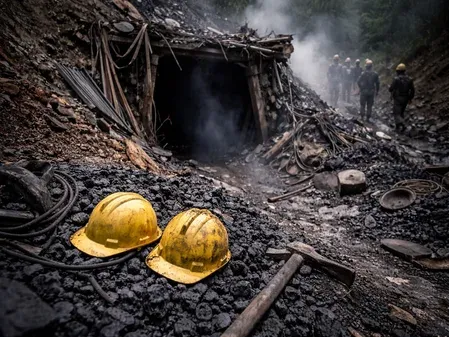
A methane gas explosion tore through a coal mine in the Spin Karez area of Quetta, Balochistan, on Thursday, killing 34 miners and triggering a partial collapse that trapped dozens underground. The tragedy has reignited urgent questions about the chronic safety failures and absent worker protections that define Pakistan's coal mining sector, according to a report in The Express Tribune.
What Happened Underground
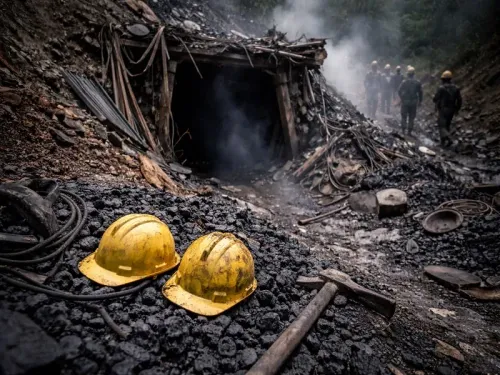
The miners were reportedly working several thousand feet below the surface, carrying out routine operations, when a powerful methane gas blast ripped through the shaft. The explosion caused a partial structural collapse, leaving dozens buried beneath debris. Rescue operations were launched to recover the trapped workers.
All 34 victims had travelled hundreds of kilometres from Shangla district in Khyber Pakhtunkhwa to find work in Balochistan's coal fields. Of those killed, 22 belonged to Mian Kallay Pirabad in Shangla, with the remaining victims hailing from neighbouring villages. Most of the deceased were related to one another or members of the same extended families, meaning several households lost more than one breadwinner. Multiple children have been left orphaned and women widowed.
Shangla's Deadly Dependence on Coal
The scale of grief in Shangla reflects a structural economic crisis that has persisted for decades. According to local estimates, nearly 65 per cent of Shangla's population depends directly or indirectly on coal mining for its livelihood. Coal work has evolved from an occupation into a profession passed down through generations, driven by the district's limited industrial base, poor agricultural productivity, and scarce formal employment.
'For decades, Shangla has remained one of Pakistan's economically disadvantaged districts. Limited industrial development, scarce employment opportunities, poor agricultural productivity and widespread unemployment have forced thousands of young men to seek work in coal mines across Balochistan, Sindh, and Punjab,' wrote journalist Aftab Hussain in The Express Tribune.
The Express Tribune further noted that similar coal mine accidents across Balochistan have claimed hundreds of Shangla workers' lives over the past several decades, while thousands more have been permanently disabled. 'On several occasions, the bodies of five or six workers have arrived in Shangla within a single week,' Hussain wrote.
No Legal Protection, No Compensation
Social activists and local residents say miners from Shangla routinely work without basic legal safeguards. Most are not formally registered with government authorities and have no access to social security, the Employees' Old-Age Benefits Institution (EOBI), health insurance, or life insurance.
'Many work through contractors and leaseholders, leaving bereaved families with little or no compensation when fatal accidents occur,' the report stated. The absence of formal employment contracts means that when a miner dies, his family is left with no legal recourse and no financial safety net.
A Pattern Pakistan Has Not Broken
This is not an isolated incident. Balochistan's coal mining sector has a long and documented history of fatal accidents, methane explosions, and inadequate safety infrastructure. Critics argue that successive governments — both federal and provincial — have failed to enforce existing mining regulations or extend basic labour protections to the hundreds of thousands who work in the sector informally.
The Spin Karez disaster underscores what analysts describe as a two-layered failure: the physical hazard of unregulated mines and the social hazard of a workforce with no institutional protection. As Balochistan's coal continues to power Pakistan's industry, the human cost is being borne almost entirely by migrant workers from the country's most economically marginalised districts.
Point of View
Insurance, or safety audits. The fact that 65% of an entire district's livelihood runs through an unregulated industry is not an economic statistic; it is an indictment of state absence. Until Balochistan's mine operators are held to enforceable safety and registration standards, and until EOBI coverage is extended to contractual and informal workers, these tragedies will keep arriving in Shangla five or six bodies at a time.
NationPress
2 Aug 2026
Frequently Asked Questions
What caused the Balochistan coal mine explosion?
A powerful methane gas explosion triggered the disaster in the Spin Karez area of Quetta, Balochistan. The blast occurred while miners were working several thousand feet underground during routine operations, causing a partial mine collapse that trapped dozens of workers.
How many miners were killed in the Spin Karez coal mine blast?
Thirty-four miners were killed in the explosion. Of these, 22 were from Mian Kallay Pirabad in Shangla district, Khyber Pakhtunkhwa, with the remaining victims from neighbouring villages in the same district.
Why were so many miners from Shangla working in Balochistan?
Shangla is one of Pakistan's most economically disadvantaged districts, with limited industry, poor agricultural output, and widespread unemployment. Local estimates indicate that nearly 65% of Shangla's population depends on coal mining for its livelihood, and the profession has been passed down through generations.
Did the miners have legal protections or insurance?
According to social activists and local residents, most miners from Shangla work without formal registration, social security, EOBI coverage, health insurance, or life insurance. Many are employed through contractors and leaseholders, leaving bereaved families with little or no legal recourse or financial compensation after fatal accidents.
Is this a recurring problem in Balochistan's coal mines?
Yes. Similar coal mine accidents in Balochistan have claimed hundreds of Shangla workers' lives and permanently disabled thousands more over several decades, according to The Express Tribune. Reports indicate that bodies of multiple workers have arrived in Shangla within a single week on several past occasions.