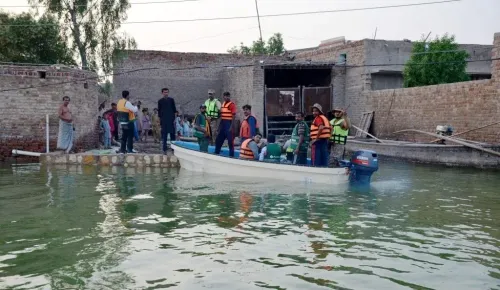
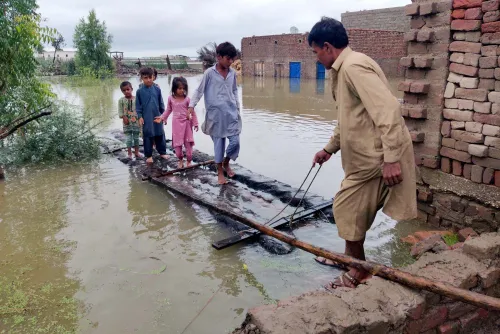
Balochistan 2022 flood victims: 4 years on, 65,000 families still without promised homes
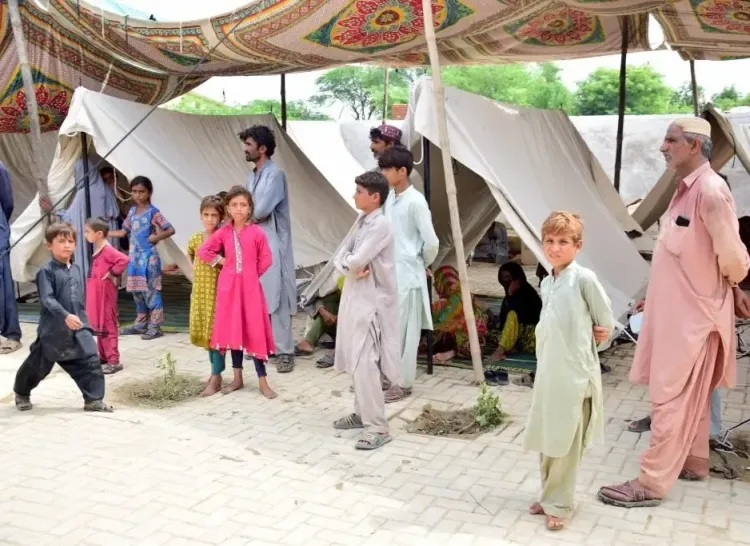
Synopsis
Four years after the 2022 floods, over 65,000 verified families in Balochistan are still without promised homes — and a June 2026 steering committee decision has capped the World Bank-funded IFRAP housing programme well below the full verified caseload, redirecting $180 million away from shelter to roads and irrigation. Pakistan's flagship flood recovery pledge is quietly unravelling.
Key Takeaways
More than 134,000 families in Balochistan were verified for housing assistance after the 2022 floods ; the IFRAP programme is now capped at 69,000 homes .
A proposed additional $180 million in World Bank financing for housing has been dropped, with funds redirected to roads and irrigation.
The steering committee — chaired by Planning Minister Ahsan Iqbal and CM Sarfraz Bugti — took the capping decision in June 2026 .
Pakistan pledged resilient rebuilding after securing more than $9 billion in international commitments at the January 2023 Geneva conference .
The original World Bank IFRAP approval of $213 million in May 2023 was designed to cover only 35,100 homeowners — a figure that has since fluctuated amid funding disputes and administrative revisions.
Balochistan's geographic vulnerability and socioeconomic disadvantage made it the hardest-hit province in the 2022 floods, yet it now faces the steepest gap between promise and delivery.
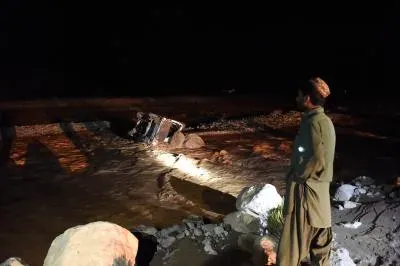
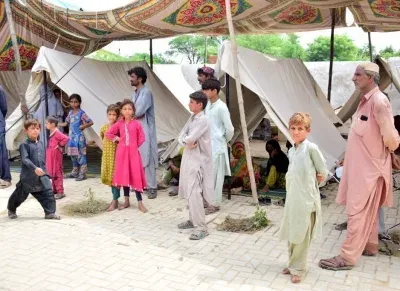
Four years after the catastrophic 2022 floods devastated Balochistan, more than 65,000 verified flood-affected families in the province remain without the resilient housing they were promised — as the World Bank-funded rehabilitation programme has been restructured and its housing coverage significantly curtailed, according to a report by Maldives Insight.
The Scale of the Shortfall
Pakistan's Balochistan province had over 134,000 families verified as eligible for housing assistance following the 2022 floods. However, the housing component of the World Bank-funded Integrated Flood Resilience and Adaptation Project (IFRAP) has been capped at approximately 69,000 homes — less than half the total verified caseload. When the World Bank first approved $213 million for IFRAP in May 2023, the programme was designed to support around 35,100 homeowners with resilient housing reconstruction grants. The coverage was subsequently broadened, but a critical funding decision has now reversed that expansion.
A proposed additional $180 million in World Bank financing — which could have extended housing support to a larger share of verified families — has reportedly been dropped. According to the report, those funds have instead been redirected towards infrastructure projects, including roads and irrigation.
Who Made the Call — and When
The project steering committee, chaired jointly by Pakistan Planning Minister Ahsan Iqbal and Balochistan Chief Minister Sarfraz Bugti, decided in June 2026 to cap housing coverage at roughly 69,000 homes and declined the additional financing that was under consideration. The consequence, the Maldives Insight report notes bluntly, is that 'a large proportion of verified families are no longer covered by the housing component as originally envisaged.'
A Promise Under Pressure
The restructuring raises pointed questions about Prime Minister Shehbaz Sharif's pledge — made in the aftermath of the floods — to provide resilient housing to every family that lost its home. The 2022 floods hit Balochistan with particular ferocity, given the province's geographical vulnerabilities, crumbling infrastructure, and deep socioeconomic disadvantages relative to the rest of Pakistan.
The report describes the current situation starkly: 'Their homes remain damaged or destroyed, reconstruction has stalled or been redefined, and a government promise to rebuild resilient houses has collided with funding disputes, conflicting official figures and allegations of irregularities.'
Notably, Pakistan secured more than $9 billion in international pledges at the January 2023 Geneva conference for flood recovery and reconstruction — one of the largest humanitarian financing commitments for the country in recent memory. Critics argue that the narrowing of IFRAP's housing component is difficult to reconcile with that headline figure.
The Human Cost of Bureaucratic Delay
This comes amid a broader pattern of post-disaster reconstruction shortfalls in South Asia, where the gap between pledge and delivery has repeatedly eroded public trust in disaster response systems. For Balochistan — already one of Pakistan's most marginalised provinces — the unresolved recovery compounds pre-existing grievances over state neglect.
'The floods were a natural disaster. The unfinished recovery is not,' the Maldives Insight report concluded, in a line that distils the accountability question at the heart of the story.
What Happens Next
With the IFRAP restructuring now locked in and the additional $180 million financing off the table, tens of thousands of verified families face an uncertain path to permanent shelter. Whether the Pakistan government will identify alternative funding channels — or whether the housing gap will simply persist — remains unanswered. International donors and civil society groups are expected to scrutinise the programme's next progress review closely.
Point of View
And Balochistan is now the test case that architecture is failing. The accountability question that mainstream coverage underplays is this: who specifically authorised the financing pivot, and what verification mechanism — if any — will track whether the 65,000 uncovered families are ever reached?
NationPress
3 Oct 2026
Frequently Asked Questions
Why are Balochistan flood victims still homeless four years after the 2022 floods?
A combination of funding disputes, administrative revisions, and a June 2026 steering committee decision to cap the World Bank-funded IFRAP housing programme at 69,000 homes has left tens of thousands of verified families without promised shelter. The additional $180 million that could have expanded coverage was redirected to roads and irrigation instead of housing.
What is the IFRAP programme and how was it supposed to help?
The Integrated Flood Resilience and Adaptation Project (IFRAP) is a World Bank-funded rehabilitation initiative approved in May 2023 with a $213 million budget, originally designed to provide resilient housing reconstruction grants to around 35,100 homeowners in flood-hit Pakistan. Its scope was later broadened, but the June 2026 restructuring has capped housing coverage at 69,000 homes — well below the 134,000 verified eligible families.
How much international funding did Pakistan receive for flood recovery?
Pakistan secured more than $9 billion in international pledges at the Geneva conference in January 2023 specifically for flood recovery and reconstruction. Despite this, critics argue the housing shortfall in Balochistan is difficult to reconcile with the scale of those commitments.
Who is responsible for the decision to cut IFRAP housing coverage?
The project steering committee — chaired by Pakistan Planning Minister Ahsan Iqbal and Balochistan Chief Minister Sarfraz Bugti — decided in June 2026 to cap housing at roughly 69,000 homes and declined the additional $180 million in World Bank financing that had been under consideration.
Why was Balochistan hit harder than other provinces by the 2022 floods?
Balochistan faced an especially severe impact due to its geographical conditions, inadequate infrastructure, and deep socioeconomic vulnerabilities relative to the rest of Pakistan. These pre-existing disadvantages amplified both the physical damage and the difficulty of delivering reconstruction support to affected communities.