World Bank flags Pakistan's misuse of Balochistan flood funds, 119,049 families left without aid
Synopsis
Pakistan's own steering committee — chaired by the planning minister and Balochistan's chief minister — halted housing grants for 119,049 verified flood victims and turned down an additional USD 180 million from the World Bank, redirecting funds to infrastructure instead. With 84 per cent of affected families classified as ultra-poor, the World Bank's public rebuke signals a serious breakdown between international climate financing and on-the-ground delivery.
Key Takeaways
The World Bank publicly criticised Pakistan for halting housing reconstruction support for 2022 Balochistan flood victims .
On 22–23 June 2026 , Pakistan's Project Steering Committee suspended housing grants and refused an additional USD 180 million offered by the World Bank.
119,049 verified and eligible households are now left without an identified source of housing financing.
Around 84 per cent of eligible families are classified as ultra-poor or vulnerable, according to the World Bank.
The EU and member states had committed over €930 million in post-flood aid; the World Bank separately approved €184 million under IFRAP in May 2023.
The 2022 floods damaged over 2.3 million homes and pushed more than 8 million people into poverty across Pakistan.
The World Bank has formally expressed dissatisfaction with Pakistan's handling of internationally provided funds meant for housing reconstruction for 2022 flood victims in Balochistan province, after authorities halted housing support and diverted resources toward infrastructure projects. The rebuke underscores a deepening accountability crisis over billions in disaster relief pledged to one of the world's worst climate emergencies in recent memory.
What Pakistan Did With the Funds
On 22–23 June 2026, the Project Steering Committee — chaired by Planning Minister Ahsan Iqbal and Balochistan Chief Minister Sarfraz Bugti — voted to suspend housing support and redirect available resources toward infrastructure. Critically, the committee also declined an additional USD 180 million offered by the World Bank for housing grants, leaving 119,049 verified and eligible households without an identified source of financing.
Scale of the Crisis and Who Is Affected
The World Bank's Country Director for Pakistan, Bolormaa Amgaabazar, warned that excluding eligible families risks deepening poverty and vulnerability across Balochistan. According to the Bank, around 84 per cent of the identified eligible families are classified as ultra-poor or vulnerable. By December 2025, 231,749 beneficiaries had been verified under the programme — yet a significant share now face an uncertain wait.
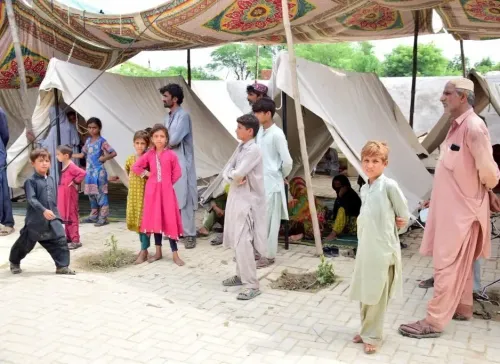
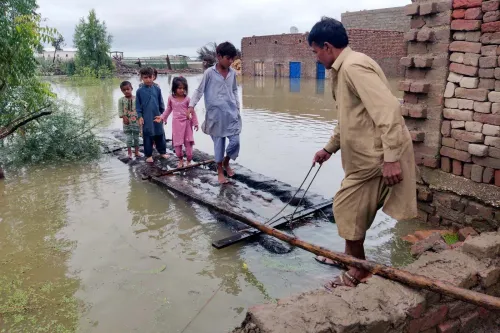
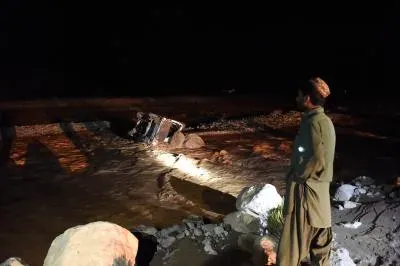
The 2022 floods in Pakistan, which struck between June and August 2022, affected an estimated 33 million people, with 20.6 million requiring life-saving assistance — half of them children, according to the UN Office for the Coordination of Humanitarian Affairs (OCHA). Some 7.9 million people were displaced, with at least 664,000 moving into relief camps and informal sites.
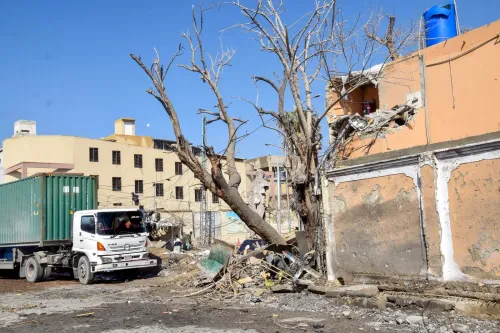
The National Disaster Management Authority (NDMA) recorded that the floods damaged or destroyed over 2.3 million homes and wiped out more than 1.7 million hectares (approximately 4.4 million acres) of crops. Over 800,000 livestock perished, and more than 8 million residents were pushed into poverty. Additionally, over 30,000 schools and 2,000 health facilities were damaged and required repair or complete rebuilding.
International Funding Committed
The international community mobilised substantial resources following the disaster. The European Union and its member states collectively provided over €930 million in the floods' aftermath, according to the EU delegation in Islamabad. In May 2023, the World Bank approved €184 million for the Integrated Flood Resilience and Adaptation Project (IFRAP), which included funds for reconstructing approximately 35,100 homes to more resilient standards, alongside rehabilitation of roads, irrigation systems, water infrastructure, and essential services.
As the programme expanded, additional funding was requested to extend housing reconstruction to more eligible households, raising the target number of housing grants from 35,100 to 102,000. The floods had damaged more than 190,000 housing units across Balochistan alone, making the original grant target a fraction of the actual need.
Expert Assessment and What Comes Next
Political analyst Dimitra Staikou, writing in Brussels Signal, described the situation as 'a test of whether Pakistan can translate internationally financed commitments into results for its most vulnerable citizens.' Staikou added that 'the longer the financing gap persists, the harder it becomes to describe it as a temporary problem rather than a failure of delivery and accountability.'
This is not the first time Pakistan's disaster fund management has drawn international scrutiny. The diversion of reconstruction funds toward infrastructure — while over a hundred thousand verified families remain unhoused — raises questions about the governance frameworks attached to future international climate financing for Pakistan. How Islamabad responds to the World Bank's concerns is likely to shape donor confidence ahead of the next monsoon season.
Point of View
049 verified families remain unhoused — is difficult to read as anything other than a governance failure. Redirecting disaster reconstruction money toward infrastructure may serve political optics, but it directly contradicts the conditionalities under which international climate financing was extended. The World Bank's unusually direct public rebuke is a signal to other donors: accountability frameworks are not being honoured. If Pakistan cannot demonstrate delivery on existing commitments, its credibility in future climate finance negotiations — where it routinely positions itself as a frontline victim state — will be materially weakened.
NationPress
9 Oct 2026
Frequently Asked Questions
Why is the World Bank criticising Pakistan over Balochistan flood funds?
The World Bank is criticising Pakistan because authorities halted housing reconstruction support for verified flood victims and redirected funds toward infrastructure projects. The Bank's Country Director warned that this decision leaves 119,049 eligible households without financing and risks deepening poverty among Balochistan's most vulnerable families.
What is the IFRAP project and how much was allocated?
The Integrated Flood Resilience and Adaptation Project (IFRAP) is a World Bank-funded initiative approved in May 2023 with €184 million to support flood-affected communities in Pakistan. It included reconstruction of approximately 35,100 homes to more resilient standards, along with rehabilitation of roads, irrigation, and water infrastructure.
How many families are affected by Pakistan's decision to halt housing support?
A total of 119,049 households that had been verified and declared eligible for housing grants are now without an identified source of financing. Around 84 per cent of these families are classified as ultra-poor or vulnerable, according to the World Bank.
Who made the decision to stop housing support in Balochistan?
The Project Steering Committee, chaired by Planning Minister Ahsan Iqbal and Balochistan Chief Minister Sarfraz Bugti, took the decision on 22–23 June 2026 to suspend housing support and redirect resources to infrastructure. The committee also declined an additional USD 180 million offered by the World Bank for housing grants.
How severe were the 2022 floods in Pakistan?
The 2022 floods, which struck between June and August, affected 33 million people and displaced 7.9 million, with 20.6 million requiring life-saving assistance. The NDMA recorded that over 2.3 million homes were damaged or destroyed and more than 8 million people were pushed into poverty.