Bangladesh custodial death: Chhatra League activist dies in Faridpur, probe sought
Synopsis
A 28-year-old Chhatra League activist died in Detective Branch custody in Faridpur, Bangladesh, with his mother alleging torture and murder by police. Rights group Ain o Salish Kendra has demanded a judicial probe and full CCTV disclosure — as the Awami League accuses the BNP government of using state machinery to systematically eliminate its members.
Key Takeaways
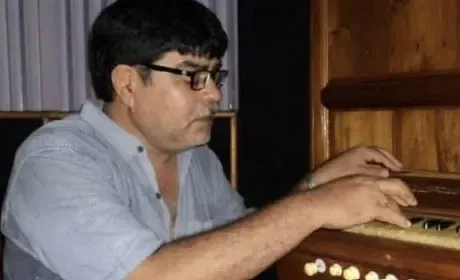
Mirza Ishtiaq Ahmed Pranto , 28 , a Chhatra League activist, died in Detective Branch police custody in Faridpur , Bangladesh on 22 June .
He was detained in Madhukhali upazila on 20 June and died at Faridpur Medical College Hospital .
His mother, Khadija Akhter , alleged he was tortured and killed in custody, demanding justice.
Rights group Ain o Salish Kendra (ASK) has called for a judicial inquiry and release of full CCTV footage .
The Awami League accused the ruling BNP government of using state machinery to target and eliminate its members.
A Chhatra League activist died in police custody in Faridpur district, Bangladesh, on 22 June, with his family alleging he was beaten to death by officers of the Detective Branch (DB) — the latest in a series of custodial deaths of Awami League members that rights groups say is becoming a pattern under the current administration.
What Happened
The deceased, Mirza Ishtiaq Ahmed Pranto, 28, was detained by the DB police in Madhukhali upazila of Faridpur on 20 June. He was subsequently admitted to Faridpur Medical College Hospital, where he died on Sunday. His family has directly accused police personnel of assault, alleging the beating caused his death.
His mother, Khadija Akhter, said: 'For what crime was my healthy, innocent son taken, tortured, and killed in DB custody? I seek justice for this murder.'
Rights Group Demands Judicial Probe
Dhaka-based human rights organisation Ain o Salish Kendra (ASK) expressed grave concern over the death and called on Bangladeshi authorities to initiate a judicial investigation. In a formal statement, ASK demanded an impartial inquiry to determine the actual cause of death and ensure accountability for those responsible.
The group also demanded the release of complete CCTV footage from the custody period to ensure transparency, alongside legal aid and security for the victim's family, according to reports in Bangladesh's Business Standard newspaper.
Awami League Accuses BNP Government
The Awami League condemned the incident, directly accusing the ruling Bangladesh Nationalist Party (BNP) government of deploying state machinery to 'target and eliminate' its leaders and activists.
'Under any government, the responsibility of law enforcement agencies is to uphold the law, not to create fear. When a citizen dies under state custody or shortly after being taken into custody under suspicious circumstances, it cannot simply be dismissed as a death. It raises serious questions of accountability and points to what appears to be a deliberate killing,' the Awami League said in a statement.
The party further warned: 'The BNP government must remember that no matter how powerful a state may be, it can never place itself above accountability.'
A Widening Pattern of Custodial Deaths
This comes amid a documented rise in custodial deaths of Awami League members and affiliates since the political transition in Bangladesh. Rights observers have flagged that the frequency of such incidents raises structural concerns beyond individual cases. The Awami League has maintained that the police and administrative apparatus must 'uphold the rule of law, not implement the agenda of any political party.'
Authorities in Faridpur have not yet issued a public response to the family's allegations. A judicial inquiry, if ordered, would be a key test of institutional accountability in what critics argue is an increasingly polarised law-enforcement environment.
Point of View
Signalling that civil society no longer considers internal police inquiries adequate. The BNP government's silence in response to the family's allegations will itself be read as a political signal. If a judicial probe is not ordered, it will likely deepen the narrative that law enforcement is being used as a partisan instrument — a charge that, left unaddressed, carries serious implications for Bangladesh's democratic credibility.
NationPress
22 Jun 2026
Frequently Asked Questions
Who was Mirza Ishtiaq Ahmed Pranto?
Mirza Ishtiaq Ahmed Pranto was a 28-year-old activist of Chhatra League, the student wing of Bangladesh's Awami League. He was detained by the Detective Branch police in Madhukhali upazila, Faridpur, on 20 June and died in hospital on 22 June.
What did Ishtiaq's family allege about his death?
His family alleged that police personnel beat him in custody, and that the assault directly caused his death. His mother, Khadija Akhter, publicly demanded justice, calling it a murder.
What has Ain o Salish Kendra demanded?
Dhaka-based rights group Ain o Salish Kendra (ASK) has demanded a judicial investigation into the death, the release of complete CCTV footage from the custody period, legal aid and security for the victim's family, and accountability for those found responsible.
How has the Awami League responded?
The Awami League condemned the death and accused the ruling BNP government of using state machinery to target and eliminate its leaders and activists. It stated that no government has the right to take a citizen's life and warned that accountability cannot be evaded regardless of political power.
Is this an isolated incident?
According to reports and rights observers, custodial deaths of Awami League members have been rising in Bangladesh. The Awami League has characterised the pattern as a deliberate campaign, while rights groups have called for systemic accountability measures beyond individual cases.