CM Dhami Vows to Protect Uttarakhand's Sanatan Heritage
Synopsis
Uttarakhand Chief Minister Pushkar Singh Dhami declared on 22 June 2026 that Devbhoomi Uttarakhand is the sacred centre of Sanatan spiritual consciousness and that any interference with its religious, cultural, or spiritual traditions will not be tolerated under any circumstances.
Key Takeaways
CM Pushkar Singh Dhami posted on 22 June 2026 warning that tampering with Uttarakhand 's Sanatan religious and cultural traditions will not be accepted under any circumstances.
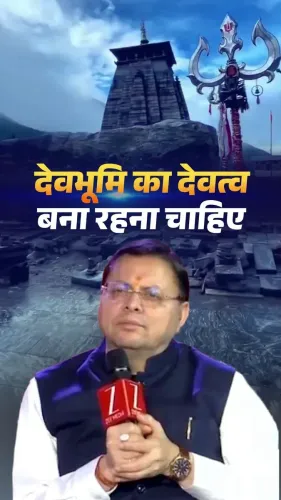
Uttarakhand , branded Devbhoomi , is home to the Char Dham pilgrimage circuit — Badrinath, Kedarnath, Gangotri , and Yamunotri — drawing millions of pilgrims annually.
The statement follows a pattern of Dhami government measures to protect the state's religious character, including being the first state to implement a Uniform Civil Code between 2022 and 2024 .
The post signals potential follow-up regulatory action affecting tourism operators , event organisers, and commercial entities near pilgrimage zones.
Key stakeholders include pilgrims , local temple committees , and tourism-dependent communities across the state.
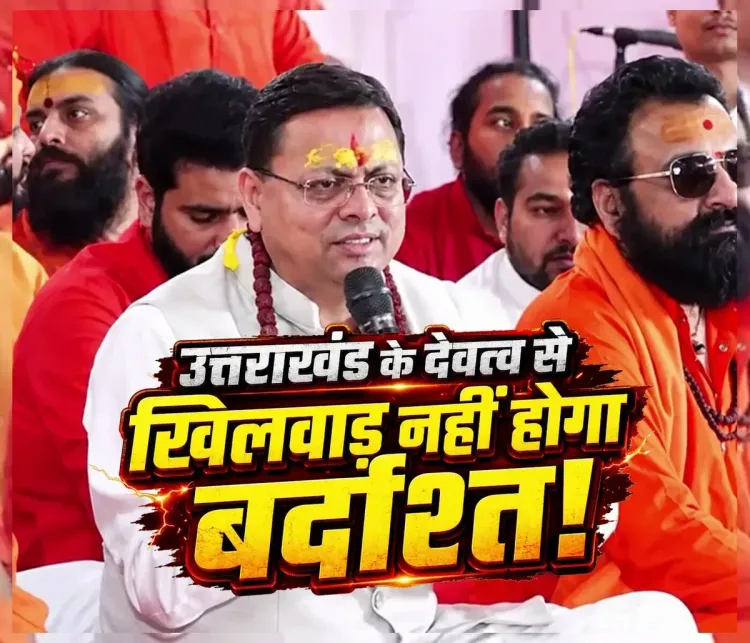
Uttarakhand Chief Minister Pushkar Singh Dhami on Monday, 22 June 2026 issued a firm public warning that any interference with the religious, cultural, and spiritual traditions of Devbhoomi Uttarakhand will not be tolerated under any circumstances, posting the statement on X to a wide audience.
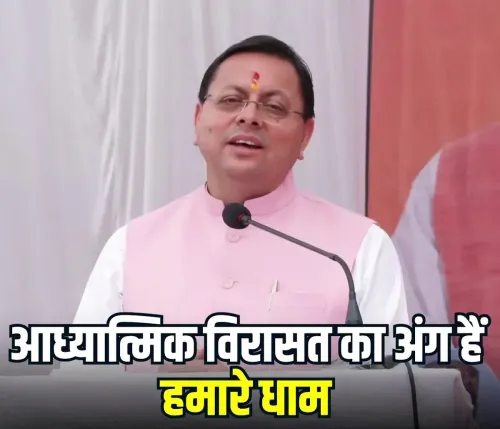
In his post, CM Dhami wrote: 'Devbhoomi Uttarakhand vishwa ki sanatan adhyatmik chetna aur aastha ka pavan kendra hai' — 'Devbhoomi Uttarakhand is the sacred centre of the world's Sanatan spiritual consciousness and faith.' He added that any tampering with the dignity of the state's religious, cultural, and spiritual traditions 'will not be accepted under any circumstances.'
Context
Uttarakhand, officially branded Devbhoomi (Land of the Gods), is home to the four major Hindu pilgrimage sites collectively known as the Char Dham — Badrinath, Kedarnath, Gangotri, and Yamunotri. These shrines draw millions of pilgrims and tourists each year, making religious identity inseparable from the state's economy and governance. CM Dhami, who has led the state since 2021, has consistently positioned his administration as a guardian of this Sanatan heritage.
The statement carries the weight of a formal policy signal rather than a ceremonial remark. The language — 'will not be accepted under any circumstances' — is a direct, unambiguous assertion of the state government's intent to act against perceived violations of religious and cultural sanctity.
Policy Backdrop
The Dhami government has pursued a series of measures framed around protecting Uttarakhand's traditional character. In 2022–2024, the state became the first in India to enact and implement a Uniform Civil Code, which the government described as safeguarding traditional social values. Separately, the central government approved the Char Dham Highway project in 2016 to ensure all-weather road connectivity to the pilgrimage circuit, reflecting the national importance attached to these sites.
Regulatory moves in recent years have also addressed land use near shrines and placed restrictions on commercial activities seen as conflicting with the sanctity of pilgrimage zones. CM Dhami's latest statement fits within this consistent pattern of public messaging and policy action.
Stakeholders and Impact
The communities most directly affected by the government's stance include pilgrims, local temple committees, and the large number of residents whose livelihoods depend on religious tourism. Any tightening of regulations around pilgrimage routes or shrine precincts would have direct commercial and social implications for tourism operators, hoteliers, and vendors across the state.
Civil society groups and cultural organisations that monitor the intersection of religion and public policy in Uttarakhand are also key stakeholders, particularly as the state's Uniform Civil Code implementation continues to attract national attention. The message is also likely to resonate with BJP's core voter base, for whom the preservation of Sanatan traditions is a central political commitment.
What's Next
The statement may foreshadow concrete administrative or legislative follow-up, potentially including new notifications tightening rules for event organisers, tourism operators, or commercial entities functioning near pilgrimage routes. Observers will watch for any references to specific incidents or proposed regulations in the next Uttarakhand Legislative Assembly session.
As pilgrim footfall at the Char Dham sites continues to grow year on year, the pressure on the state government to balance infrastructure expansion with religious preservation is likely to intensify — making CM Dhami's public posture on cultural protection an increasingly prominent feature of Uttarakhand's political landscape.
Point of View
Such messaging serves the dual purpose of consolidating the party's core cultural voter base while also setting a regulatory tone for the state's rapidly expanding pilgrimage tourism sector. The statement will be closely read by civil society, opposition parties, and the tourism industry for any hint of what specific 'interference' the Chief Minister has in mind.
NationPress
22 Jun 2026
Frequently Asked Questions
Why did CM Dhami post about Uttarakhand's Sanatan traditions?
CM Pushkar Singh Dhami posted on 22 June 2026 to reaffirm that no interference with Uttarakhand's religious, cultural, or spiritual traditions will be tolerated, continuing his government's consistent stance on protecting the state's Sanatan identity.
What is Devbhoomi Uttarakhand?
Devbhoomi, meaning 'Land of the Gods,' is the official branding of Uttarakhand, a Himalayan state that is home to the Char Dham pilgrimage circuit — Badrinath, Kedarnath, Gangotri, and Yamunotri — and is considered one of Hinduism's most sacred regions.
What is the Char Dham and why is it significant?
The Char Dham is a circuit of four high-altitude Hindu temples in Uttarakhand — Badrinath, Kedarnath, Gangotri, and Yamunotri — that draw millions of pilgrims each year and are central to both the state's religious identity and its economy.
What policies has the Dhami government introduced to protect Uttarakhand's religious character?
The Dhami government made Uttarakhand the first Indian state to enact and implement a Uniform Civil Code between 2022 and 2024, and has also pursued regulations on land use near shrines and restrictions on commercial activities near pilgrimage zones.
What could follow from CM Dhami's warning about cultural interference?
The statement may precede new administrative notifications tightening rules for tourism operators, event organisers, or commercial entities near pilgrimage routes, and could be referenced in the next Uttarakhand Legislative Assembly session.