CM Fadnavis tables Maharashtra GST Amendment Bill 2026
Synopsis
Maharashtra Chief Minister Devendra Fadnavis tabled the Maharashtra Goods and Services Tax Amendment Bill 2026 in the state assembly on 22 June 2026 during the Monsoon Session, continuing the state's practice of updating its GST law in line with GST Council decisions.
Key Takeaways
CM Devendra Fadnavis introduced the Maharashtra GST Amendment Bill 2026 in the Maharashtra Legislative Assembly on 22 June 2026 .
The bill was tabled during the Monsoon Session 2026 of the Maharashtra legislature in Mumbai .
Maharashtra first enacted its state GST law in 2017 , aligned with the national GST framework effective 1 July 2017 .
States routinely amend their GST Acts to incorporate GST Council recommendations on rates and compliance.
The bill will next face legislative debate and, if passed, will require the Governor's assent before becoming law.
Primary stakeholders include businesses and taxpayers across Maharashtra, one of India's largest GST-contributing states.
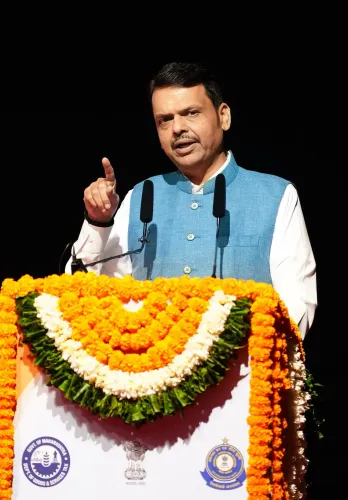
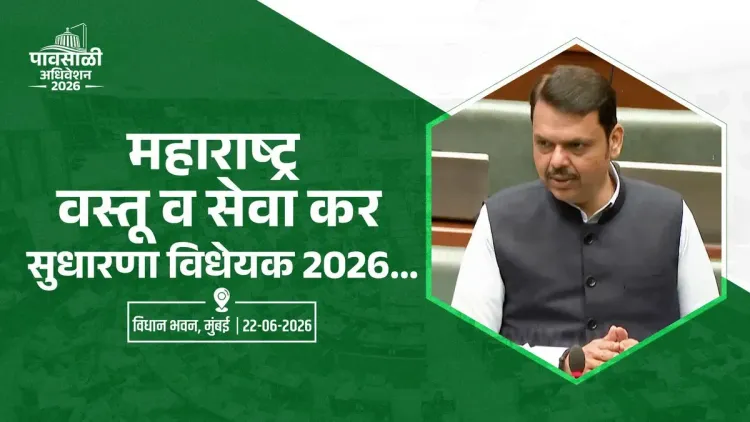
Maharashtra Chief Minister Devendra Fadnavis tabled the Maharashtra Goods and Services Tax (Amendment) Bill 2026 in the Maharashtra Legislative Assembly in Mumbai on Monday, 22 June 2026, marking a key legislative step during the ongoing Monsoon Session. The bill, introduced as महाराष्ट्र वस्तू व सेवा कर सुधारणा विधेयक 2026 ('Maharashtra Goods and Services Tax Amendment Bill 2026'), was formally placed on the floor of the house for consideration.
Context
Maharashtra first enacted its state GST legislation in 2017, aligning with the nationwide Goods and Services Tax framework that came into force on 1 July 2017 following the Constitution (One Hundred and First Amendment) Act, 2016. The state law mirrors the central GST structure while allowing Maharashtra to administer and collect state-share revenues within the unified indirect tax regime. Tabling the bill in the assembly is the procedural step that precedes debate and a vote on its passage.
Policy Backdrop
States across India routinely amend their respective GST Acts to give effect to recommendations of the GST Council, which periodically revises tax rates, exemptions, and compliance procedures. Maharashtra has followed this legislative pattern through multiple amendment bills since 2017, keeping its state law in step with evolving Council decisions. Such amendment bills are typically introduced during the Monsoon or Winter sessions of state assemblies, and the Monsoon Session 2026 of the Maharashtra legislature follows that established practice. The specific provisions of the 2026 amendment are yet to be disclosed in detail through formal legislative documents.
Stakeholders and Impact
The primary stakeholders of any GST amendment are businesses and taxpayers operating within Maharashtra, which is one of India's largest contributor states to GST revenue. Amendments that simplify compliance, adjust rates, or clarify definitions can directly affect the working capital and administrative burden of small and large enterprises alike. Consumer prices on goods and services covered by any revised provisions may also be affected once the bill is enacted and notified.
What's Next
The bill will now be taken up for debate by members of the Maharashtra Legislative Assembly during the ongoing Monsoon Session. If passed by the house, it will require the Governor's assent before becoming law, after which the state government will notify rules or effective dates for the amended provisions. Industry bodies and tax practitioners are expected to scrutinise the bill's clauses closely once the full text is formally circulated to legislators and made public.
Point of View
Steering such fiscal legislation through a sitting assembly session signals administrative continuity and legislative control, particularly valuable for a government that came to power on a strong majority. The bill's passage, when it comes, will be watched by Maharashtra's large business community for any changes to compliance timelines or rate structures. More broadly, the pattern of state-level GST amendments underlines how cooperative federalism in indirect taxation requires constant legislative upkeep at both the central and state levels.
NationPress
21 Sept 2026
Frequently Asked Questions
What is the Maharashtra GST Amendment Bill 2026?
The Maharashtra GST Amendment Bill 2026 is a legislative proposal tabled by Chief Minister Devendra Fadnavis in the Maharashtra Legislative Assembly on 22 June 2026 to amend the state's existing Goods and Services Tax Act, likely to incorporate GST Council recommendations or compliance updates.
Why do states need to amend their GST laws?
States amend their GST Acts to align with periodic GST Council decisions on tax rates, exemptions, and compliance procedures. Since GST is a concurrent tax administered jointly by the Centre and states, both levels of government must update their respective laws to reflect Council-approved changes.
When was Maharashtra's original GST Act passed?
Maharashtra passed its original state Goods and Services Tax Act in 2017, in alignment with the national GST framework that came into force on 1 July 2017 following the Constitution (One Hundred and First Amendment) Act, 2016.
What happens after the Maharashtra GST Amendment Bill is tabled?
After tabling, the bill will be debated by members of the Maharashtra Legislative Assembly during the Monsoon Session. If passed, it requires the Governor's assent before becoming law, after which the government notifies rules and effective dates for the amended provisions.
Who is affected by the Maharashtra GST Amendment Bill 2026?
Businesses and taxpayers operating in Maharashtra are the primary stakeholders. Any changes to rates, exemptions, or compliance requirements under the amended act can affect enterprise costs and potentially consumer prices on covered goods and services.