Bangladesh church bombing: 25 years on, Catholics renew justice call
Synopsis
Twenty-five years after a bombing at a Gopalganj church killed 10 Catholics during Sunday Mass, Bangladesh's Christian community is still waiting for a single conviction. With the investigation stalled by repeated officer changes and no accountability in sight, the anniversary is less a memorial and more a live indictment of institutional failure.
Key Takeaways
A bombing at a church in Gopalganj district, Bangladesh on 3 June 2001 killed 10 Catholics and injured approximately 50 worshippers .
The banned militant group Harkat-ul-Jihad (HuJI) claimed responsibility for the attack.
The investigation has remained at a standstill for 25 years , reportedly hampered by constant changes in investigating officers.
BCA President Nirmol Rozario said the community has held rallies and submitted memorandums for decades, but 'nothing has happened.' Witness Roman Baroi noted that most victims were young sole breadwinners, leaving families in severe hardship.
Italian missionary Father Mimmo Pietanza , who served at the parish during the attack, called it the 'most painful incident of his life.'
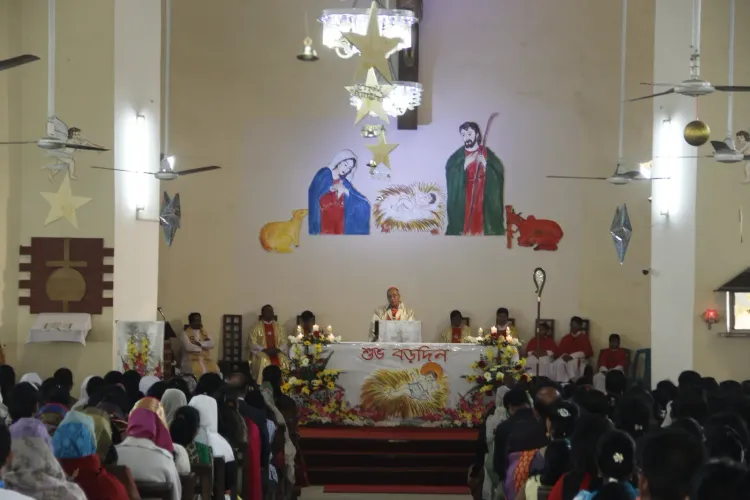
Twenty-five years after a deadly bombing tore through a packed church in Gopalganj district, Bangladesh's Catholic community gathered for special prayers on 3 June 2026, renewing demands for justice in one of the most devastating militant attacks ever carried out against the country's Christian minority. The case, according to community leaders, remains effectively unresolved.
The Attack and Its Toll
The bombing struck during Sunday Mass on 3 June 2001, killing 10 Catholics and injuring approximately 50 worshippers, the majority of them young people. The banned Islamist militant organisation Harkat-ul-Jihad (HuJI) claimed responsibility for the attack, according to reports. The assault came during a period of rising extremism in Bangladesh, when groups including HuJI and Jamaat-ul-Mujahidin Bangladesh (JMB) were targeting secular voices, cultural institutions, Sufi shrines, judicial officials, and state institutions.
A Case That Has Gone Nowhere
The investigation into the Gopalganj church bombing has remained at a standstill for a quarter-century, according to reports. Constant changes in investigating officers are said to have repeatedly disrupted progress, leaving the case in procedural limbo. In a statement marking the anniversary, the Bangladesh Christian Association (BCA), an interdenominational organisation, expressed grave concern over the prolonged delay in delivering justice to victims and their families.
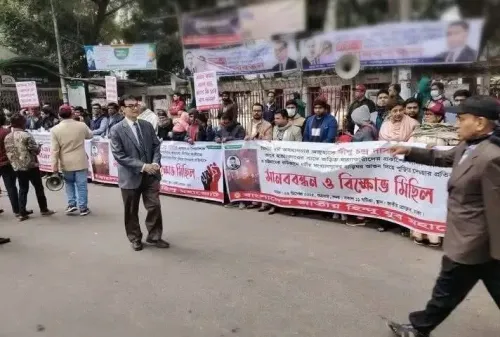
BCA President Nirmol Rozario said the community had, over the years, held rallies, candlelight processions, and submitted memorandums to authorities — yet meaningful action has remained elusive. 'For 25 years we have been making the same demands for a proper investigation and justice, but nothing has happened. Unfortunately, it appears the matter has not received the importance it deserves, which is extremely disappointing,' Rozario was quoted as saying.
Survivors and Witnesses Speak
Roman Baroi, who witnessed the aftermath of the attack, recalled that the bombing left a devastating impact on many families because several of the victims were young men who served as the sole breadwinners of their households. 'All 10 of those killed were young, and most of them were the sole earners in their families. Their deaths left their families in severe hardship. Many are surviving through farming or temporary work,' he said.
Baroi added that the prolonged delay in the judicial process has eroded public confidence in the system. 'People have lost hope for justice, and the tragedy has left lifelong scars,' he said.
Father Mimmo Pietanza, a 72-year-old Italian missionary of the Society of St. Francis Xavier for Foreign Missions who was serving at the parish at the time of the bombing, described the attack as the 'most painful incident of his life.' He said he had persistently called on Bangladeshi authorities to conduct a fair investigation and ensure justice, but without any success.
A Pattern of Impunity
This comes amid broader concerns about the protection of religious minorities in Bangladesh. The Gopalganj bombing is not an isolated case — critics argue that delayed or stalled investigations into attacks on minority communities have become a pattern, undermining institutional credibility. The 25th anniversary marks not just a moment of remembrance, but a pointed indictment of a justice system that has yet to deliver accountability for one of its most documented failures. Whether the current administration will take fresh steps to revive the investigation remains to be seen.
Point of View
Repeatedly. Twenty-five years of stalled investigation — with rotating officers cited as the excuse — is not administrative misfortune; it is a structural choice. The attack targeted a minority community at prayer, and the absence of accountability sends a signal that outlasts any single government. With Bangladesh navigating a fraught political transition, the treatment of this case will be watched closely by minority communities and international observers alike. Remembrance without accountability is not justice — it is ritual.
NationPress
26 Sept 2026
Frequently Asked Questions
What happened in the Bangladesh church bombing of 2001?
A bomb exploded during Sunday Mass at a church in Gopalganj district on 3 June 2001, killing 10 Catholics and injuring approximately 50 worshippers, most of them young people. The banned militant group Harkat-ul-Jihad (HuJI) claimed responsibility for the attack.
Has anyone been convicted for the Gopalganj church bombing?
No convictions have been reported. The investigation has remained at a standstill for 25 years, with community leaders and the Bangladesh Christian Association stating that constant changes in investigating officers have repeatedly disrupted progress.
Who is demanding justice for the church bombing victims?
The Bangladesh Christian Association (BCA), an interdenominational organisation, has been at the forefront of justice demands. BCA President Nirmol Rozario said the community has held rallies, candlelight processions, and submitted memorandums to authorities over the years without meaningful response.
Who was Harkat-ul-Jihad (HuJI) and why did it target Christians?
Harkat-ul-Jihad (HuJI) is a banned Islamist militant organisation that claimed responsibility for the 2001 Gopalganj bombing. The attack came during a period of rising extremism in Bangladesh, when HuJI and groups like Jamaat-ul-Mujahidin Bangladesh (JMB) were targeting secular voices, minority communities, cultural institutions, and state officials.
What impact did the bombing have on the victims' families?
According to witness Roman Baroi, most of the 10 killed were young men who were the sole breadwinners of their households. Their deaths left families in severe hardship; many are reportedly surviving through farming or temporary work 25 years on.