Is Bangladesh's National Heritage in Crisis Due to Vandalised Liberation War Sculptures?
Click to start listening
Synopsis
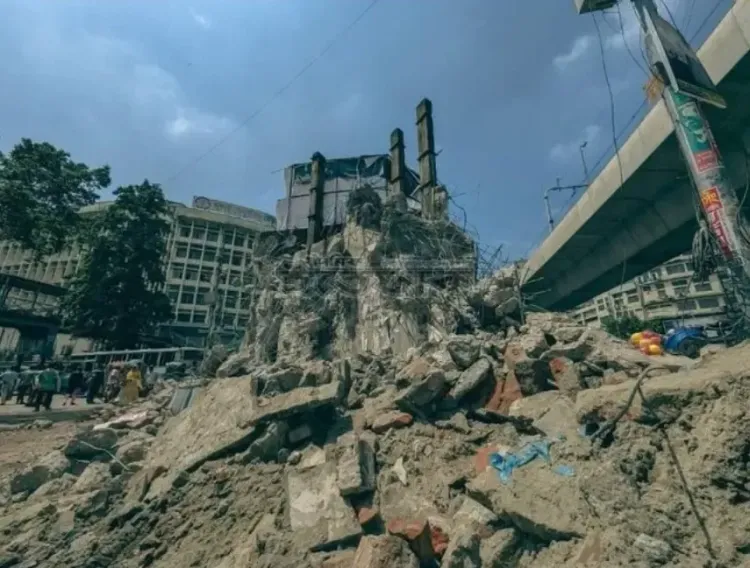
Bangladesh's national heritage is in jeopardy as numerous sculptures commemorating the 1971 Liberation War remain vandalised. This crisis follows a wave of destruction during recent political unrest, highlighting the urgent need for restoration and preservation of these essential cultural landmarks.
Key Takeaways
- Bangladesh's cultural heritage faces a crisis with many sculptures vandalised.
- Political unrest has led to widespread destruction.
- A preliminary list has documented over 450 vandalised sculptures.
- The need for immediate restoration efforts is critical.
- Vandalism undermines national identity and memory.
Dhaka, Dec 18 (NationPress) Bangladesh is currently grappling with a significant crisis concerning its national heritage, as numerous sculptures representing the nation’s 1971 Liberation War against Pakistan and other historical events stand vandalised without any clear plans for restoration. Following the student-led protests last year, which resulted in the collapse of the Awami League government, hundreds of sculptures, murals, and monuments across Dhaka and other areas were either destroyed, set ablaze, or uprooted.
In an interview with the Bangladeshi newspaper Dhaka Tribune, Nasimul Khabir, the chairman of the Department of Sculpture at Dhaka University, verified that a preliminary nationwide inventory listing 450 vandalised sculptures was created in the months following August 2024.
“Taking advantage of the political turmoil, many sculptures were targeted across the nation. Even those without political ties were attacked. A prominent case is the Venus sculpture located at the residence of Maharaja Shashikanta Acharya in Mymensingh, which was targeted by religious extremists despite its cultural significance,” Kabir explained.
The Department of Sculpture reported that over 300 documentary sculptures commemorating the Liberation War were harmed in Mujibnagar, located in Meherpur district alone.
Additional significant works, such as the bust of Bangabandhu at Jagannath Hall, the sculpture at Ansar Academy in Shafipur, and Liberation War memorials in Shibchar and Rajshahi, were also damaged. Sculptures created by artists like Ashiqur Rahman, Shyamal Chowdhury, and Mrinal Haque were among the destroyed pieces.
Reports indicate that several under-construction reliefs at Suhrawardy Udyan in Dhaka, including memorials dedicated to Independence and Liberation War events, were also damaged, as well as sculptures commemorating the surrender of the Pakistani Army on December 16, 1971, and Bangabandhu Sheikh Mujibur Rahman’s historic speech on March 7, 1971.
Earlier in July, an act of vandalism defaced the image of Bangabandhu in the Independence Memorial Mural 'Arjon' with ink.
In another incident in April, a mob of radicals destroyed the Martyred Intellectuals Memorial in Mirpur, Dhaka. This memorial was a tribute to those who sacrificed their lives for the country’s independence during the Liberation War against Pakistan.
Similarly, the mural of the Liberation War Memorial Mancha in Lalmonirhat district was demolished under the orders of the Muhammad Yunus-led interim government in March.
A report published by the leading newspaper Prothom Alo on August 21 last year highlighted that 1,500 sculptures and murals were vandalised nationwide, documenting that between August 5 and 14, 1,494 sculptures, relief sculptures, murals, and monuments were either vandalised, set ablaze, or uprooted across 59 districts after the fall of the former Prime Minister Sheikh Hasina-led Awami League government.
Earlier this month, the Awami League accused the Yunus-led interim government of attempting to rewrite or erase the history of the 1971 Liberation War against Pakistan, describing it as a deeply concerning trend.
“The attacks have not ceased during the holidays. Symbols of our nation’s founding are under siege. Portraits of Sheikh Mujibur Rahman have been removed from government offices and even currency notes, effectively erasing his significance from the daily lives of citizens. Statues and murals commemorating the Liberation War have been defaced, destroyed, or neglected, leaving public areas devoid of memory and meaning,” the party claimed.
The Awami League pointed out that this pattern is evident, suggesting that these actions replicate the old Pakistani strategy aimed at undermining national memory, downplaying the significance of 1971, and dismantling the rituals that characterize Bangladesh’s independence.
Point of View
It is crucial to acknowledge the profound implications of the vandalism of sculptures representing our national history. This crisis not only reflects the political turmoil but also highlights the urgent need for cultural preservation. The actions taken against these symbols of our heritage must be addressed with seriousness, as they represent our identity and collective memory.
NationPress
19/12/2025
Frequently Asked Questions
What happened to the sculptures in Bangladesh?
Many sculptures representing the 1971 Liberation War and other historical events have been vandalised and destroyed, particularly following a wave of political unrest.
How many sculptures have been affected?
A preliminary report lists approximately 450 vandalised sculptures, with reports suggesting nearly 1,500 sculptures, murals, and monuments have been damaged.
What is being done about the restoration?
Currently, there are no visible plans for the restoration of the vandalised sculptures, raising concerns over the preservation of Bangladesh's cultural heritage.
Who is responsible for the vandalism?
The vandalism appears to have been opportunistic, taking advantage of political unrest, with many sculptures attacked regardless of their political significance.
What does this mean for Bangladesh's heritage?
The ongoing destruction of these sculptures represents a serious threat to Bangladesh's cultural identity and collective memory, needing urgent attention from authorities.