Bangladesh ICT sentences Awami League's Hanif to death over July 2024 uprising
Synopsis
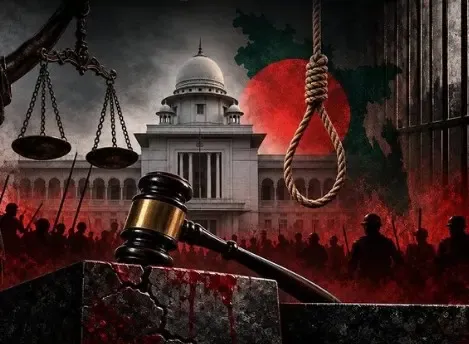
Bangladesh's ICT has handed a death sentence to Awami League Joint General Secretary Mahbubul Alam Hanif and life imprisonment to three other party leaders for crimes against humanity tied to the July 2024 mass uprising. All four remain in hiding. Coming weeks after General Secretary Obaidul Quader was similarly sentenced, the ruling deepens a sweeping judicial crackdown on Sheikh Hasina's once-ruling party — and intensifies an already sharp debate over due process and in-absentia trials.
Key Takeaways
Bangladesh's International Crimes Tribunal (ICT) sentenced Mahbubul Alam Hanif , Awami League Joint General Secretary, to death on 29 October 2026 .
Sadar Uddin Khan , Azgar Ali , and Ataur Rahman Ata received life imprisonment with hard labour in the same case.
All four convicted defendants reportedly remain in hiding .
Last month, Awami League General Secretary Obaidul Quader and six others were similarly sentenced to death by the ICT.
The Awami League has rejected all ICT verdicts since 5 August 2024 as 'one-sided, biased and fabricated,' raising concerns over in-absentia proceedings.
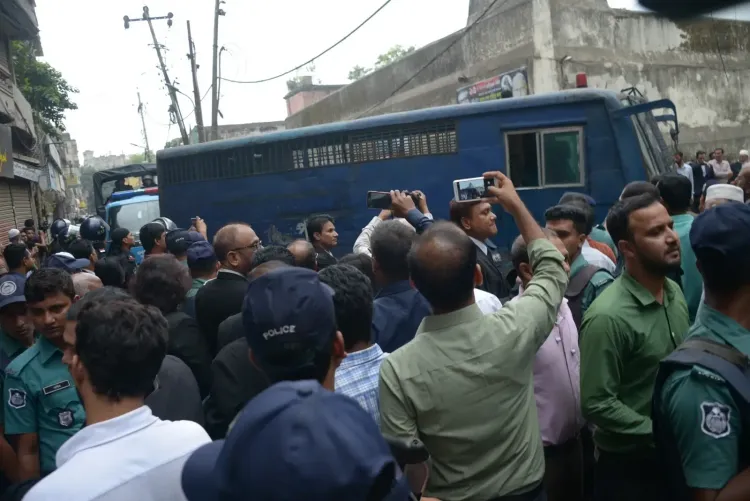
Bangladesh's International Crimes Tribunal (ICT) on Thursday, 29 October 2026, sentenced Mahbubul Alam Hanif, Joint General Secretary of the Sheikh Hasina-led Awami League, to death for crimes against humanity connected to the July 2024 mass uprising, according to local media reports. Three other senior party figures were handed life imprisonment in the same case, marking another significant escalation in the tribunal's proceedings against Awami League leadership.
The Verdict in Detail
A three-member bench led by Chairman Justice Nazrul Islam Chowdhury delivered the ruling. Hanif was convicted on counts 1 to 6 of the first charge and sentenced to death; he received an additional sentence of life imprisonment with hard labour after being found guilty on the second and third charges.
The three other accused — Sadar Uddin Khan, Azgar Ali, and Ataur Rahman Ata — were found guilty on counts 1 to 6 of the first charge and sentenced to life imprisonment with hard labour. Notably, all four defendants reportedly remain in hiding, according to the Dhaka Tribune.
A Pattern of Verdicts Against Awami League
This ruling is part of a widening crackdown on Awami League figures since the events of July 2024. Last month, the ICT sentenced Awami League General Secretary Obaidul Quader and six other senior leaders of the party and its affiliated organisations to death for 'crimes against humanity' in connection with the same uprising. The back-to-back verdicts signal an intensifying judicial campaign against the once-dominant party.
This is the latest in a series of death sentences the tribunal has handed down to Awami League leaders since 5 August 2024 — the date the party has cited as the starting point of what it describes as systematic judicial overreach.
Awami League Rejects the Ruling
The Awami League categorically rejected the verdicts, describing them as 'one-sided, biased and fabricated.' The party alleged that the proceedings represent a 'weaponisation of judiciary' designed to eliminate political opponents.
Pointing to the absence of the accused before the tribunal, the party stated: 'A fundamental standard of international criminal law is that even in trials conducted in absentia, minimum legal protections — including the right of the accused to choose counsel of their own liking — must be guaranteed. However, these guarantees have been completely ignored in the present tribunal.'
Concerns Over Due Process
The Awami League further alleged that the entire judicial process has been rushed, displaying what it characterised as 'utter disregard' for internationally recognised principles of human rights law and international criminal law, thereby promoting a 'culture of impunity and political vengeance' rather than the rule of law. The party stated that all ICT activities since 5 August 2024 constitute, in its view, a gross violation of international law and human rights. Independent legal observers have not yet issued a consolidated assessment, and the claims remain contested.
What Comes Next
With several senior Awami League figures already sentenced and the party's top leadership — including former Prime Minister Sheikh Hasina — either abroad or in hiding, Bangladesh's political and legal landscape remains deeply unsettled. The ICT's continued proceedings are expected to draw further scrutiny from international human rights bodies, particularly given the in-absentia nature of the trials.
Point of View
But only with robust minimum safeguards — including the right to choose one's own counsel — that the Awami League says were denied here. Whether that allegation is politically motivated or legally substantive, the optics of a tribunal that has convicted and sentenced multiple leaders of the same opposition party in rapid succession will invite scrutiny from international human rights bodies. The deeper issue is structural: Bangladesh's history of using the courts as an instrument of political settlement — under both Awami League and its predecessors — means this moment risks being read less as accountability and more as repetition of a cycle.
NationPress
29 Oct 2026
Frequently Asked Questions
Who is Mahbubul Alam Hanif and what was he sentenced for?
Mahbubul Alam Hanif is the Joint General Secretary of Bangladesh's Awami League, the party led by former Prime Minister Sheikh Hasina. He was sentenced to death by the International Crimes Tribunal on 29 October 2026 for crimes against humanity linked to the July 2024 mass uprising in Bangladesh.
What sentences did the other three Awami League leaders receive?
Sadar Uddin Khan, Azgar Ali, and Ataur Rahman Ata were each sentenced to life imprisonment with hard labour. They were found guilty on counts 1 to 6 of the first charge in the same ICT case.
Are the convicted leaders in custody?
No. All four defendants — Mahbubul Alam Hanif, Sadar Uddin Khan, Azgar Ali, and Ataur Rahman Ata — reportedly remain in hiding, meaning the verdicts were delivered in absentia.
How has the Awami League responded to the ICT verdicts?
The Awami League has categorically rejected the verdicts, calling them 'one-sided, biased and fabricated.' The party alleges the tribunal has been weaponised against political opponents and that minimum legal protections for in-absentia trials — including the right to choose one's own counsel — were not upheld.
Is this the first such death sentence from the ICT in this crackdown?
No. Last month the ICT sentenced Awami League General Secretary Obaidul Quader and six other senior figures to death for crimes against humanity connected to the same July 2024 uprising. The latest verdict against Hanif is part of an escalating series of proceedings targeting Awami League leadership.