Bangladesh funeral blocked by mob: Law enforcement failure laid bare
Synopsis
Three women — a daughter and sisters of a deceased 1971 tribunal witness — were left to dig his grave at night after political activists allegedly blocked the burial in Pirojpur, Bangladesh. A report in Daily Waadaa calls it a textbook governance failure: a state that ceded public order to mob pressure, rendering its own rule-of-law declarations hollow.
Key Takeaways
Political activists allegedly obstructed the burial of Manik Pashari in Pirojpur, Bangladesh , forcing family members to dig his grave in darkness.
Pashari had previously testified before the International Crimes Tribunal against Jamaat-e-Islami leader Delawar Hossain Sayeedi , convicted of crimes against humanity during the 1971 Liberation War .
The body reportedly remained in an ambulance for several hours during the political confrontation before authorities intervened.
Local party representatives denied obstruction, alleging Pashari had given false testimony — a claim the report said belongs in a courtroom, not at a funeral.
Bangladesh's Daily Waadaa described the incident as a failure of law enforcement and a surrender of public authority to street-level intimidation.
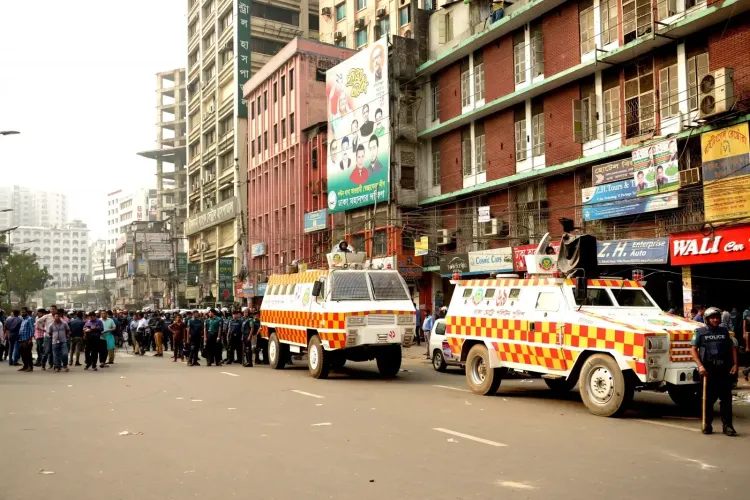
Bangladesh's law enforcement agencies face sharp criticism after political activists allegedly obstructed the burial of a witness who had testified before the International Crimes Tribunal, forcing three women — including the deceased's daughter and sisters — to dig his grave themselves in the dark, according to a report in Bangladesh's Daily Waadaa. The incident has been described as a stark illustration of systemic governance failure in the country.
What Happened in Pirojpur
The deceased, Manik Pashari, was a resident of Pirojpur who had previously testified before the International Crimes Tribunal against Delawar Hossain Sayeedi, a senior leader of Jamaat-e-Islami convicted of crimes against humanity committed during Bangladesh's 1971 Liberation War. Following his death, political activists reportedly descended on the funeral, questioning his credentials as a freedom fighter and intimidating family members.
According to the report, the body remained inside an ambulance for several hours as the confrontation continued. With no intervention from local authorities, Pashari's daughter and sisters were ultimately left to dig the grave themselves — by the dim glow of their mobile phones, under the cover of darkness.
The Image That Encapsulates a Governance Crisis
Daily Waadaa described the scene in stark terms: three women standing in darkness, one handling a spade while the others cleared displaced earth with their bare hands — not to conceal a crime, but simply to bury a family member in his ancestral home. The report called this image 'a single, harrowing' distillation of institutional decay.
Notably, local party representatives subsequently denied obstructing the burial, instead accusing the deceased of having delivered false testimony years earlier. The report firmly rejected that framing: evaluating judicial credibility is the exclusive duty of presiding judges, not local political cadres. Critics argue that if legitimate allegations of perjury existed, they belonged inside a courtroom, pursued through established procedural channels.
What the Report Said About Law Enforcement
The Daily Waadaa report stressed that Bangladesh's authorities have no obligation to endorse a deceased citizen's political affiliations, validate his personal history, or resolve historical controversies. Their sole obligation, the report stated, is to uphold the law impartially. Allowing political mobs to dictate funeral arrangements, it argued, amounts to a surrender of public authority to street-level intimidation.
'Neither historical grievance nor partisan disagreement grants private citizens or political mobs the legal authority to halt a funeral or demand political penance from a grieving household,' the report stated.
Broader Implications for Bangladesh's Democratic Claims
The report framed the incident as an 'elementary, inescapable test of governance' for Bangladesh: can an ordinary citizen die without requiring permission or absolution from political adversaries? It argued that until the answer is an unambiguous yes, the country's declarations regarding institutional reform, democratic restoration, and the rule of law remain 'fundamentally unfulfilled.'
This comes amid a broader climate of political volatility in Bangladesh, where the legacy of the 1971 Liberation War, the role of Jamaat-e-Islami, and the credibility of war crimes proceedings continue to be fiercely contested. The incident in Pirojpur is, reportedly, not an isolated occurrence — it reflects a pattern in which funeral rites become contested political terrain.
As Bangladesh navigates a critical period in its governance trajectory, observers say the state's response — or lack thereof — to incidents like this will define the credibility of its institutional reform agenda.
Point of View
It signals that the law applies selectively, only where it is politically convenient. Bangladesh's current administration has spoken extensively about institutional reform and democratic restoration; this incident tests whether those are governing commitments or rhetorical postures. The 1971 tribunal's legacy remains deeply polarising, but that polarisation cannot be a licence for mob authority over the dead. A state that cannot guarantee an uncontested burial has a credibility problem far larger than any single funeral.
NationPress
7 Nov 2026
Frequently Asked Questions
What happened at Manik Pashari's funeral in Pirojpur?
Political activists allegedly disrupted the funeral of Manik Pashari in Pirojpur, Bangladesh, questioning his credentials as a freedom fighter and intimidating his family. The body reportedly remained in an ambulance for hours before his daughter and sisters were left to dig the grave themselves in the dark.
Who was Manik Pashari?
Manik Pashari was a resident of Pirojpur, Bangladesh, who had previously testified before the International Crimes Tribunal against Delawar Hossain Sayeedi, a senior Jamaat-e-Islami leader convicted of crimes against humanity during Bangladesh's 1971 Liberation War.
Why did local political activists obstruct the burial?
Local party representatives reportedly alleged that Pashari had delivered false testimony before the International Crimes Tribunal. However, critics and the Daily Waadaa report argue that assessing judicial credibility is the role of courts, not political cadres, and that no such grievance grants authority to block a funeral.
What does this incident reveal about Bangladesh's governance?
According to a report in Daily Waadaa, the incident reflects a systemic failure of law enforcement and public authority. It argues that allowing political mobs to dictate funeral arrangements amounts to a surrender of governance to street-level intimidation, undermining Bangladesh's stated commitments to democratic reform and the rule of law.
What response did authorities give to the obstruction?
No formal intervention by local administration or law enforcement was reported during the confrontation, according to the Daily Waadaa account. The absence of a protective response is at the centre of criticism about institutional failure in the incident.