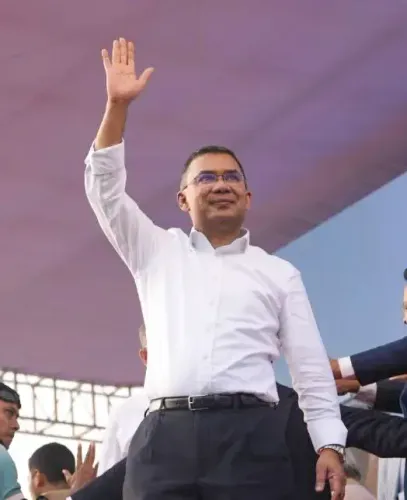
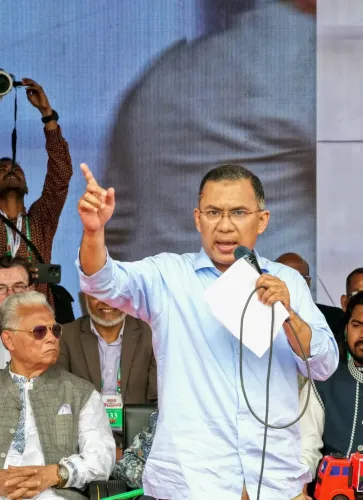
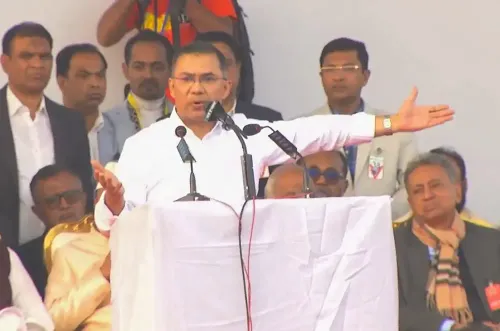
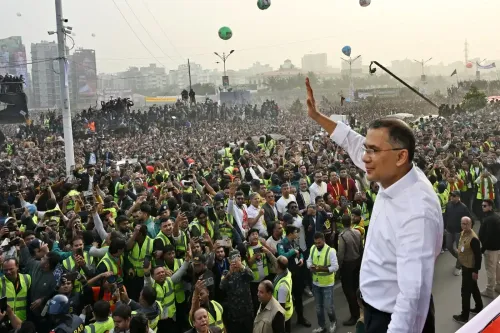
Bangladesh's PM Tariq Rahman: A Challenging Path to Stability
Synopsis
As Bangladesh's Prime Minister Tariq Rahman takes the helm, he faces daunting challenges in restoring stability and navigating political turmoil. With ambitious economic goals set by the BNP, the nation's future hangs in the balance amid rising extremism and social unrest.
Key Takeaways
Tariq Rahman faces a monumental task in stabilizing Bangladesh.
The BNP has ambitious economic goals set for 2030.
The garment sector is vital for employment and economic empowerment.
Radical groups pose challenges to gender equality and social progress.
The political environment remains volatile following recent suspensions.
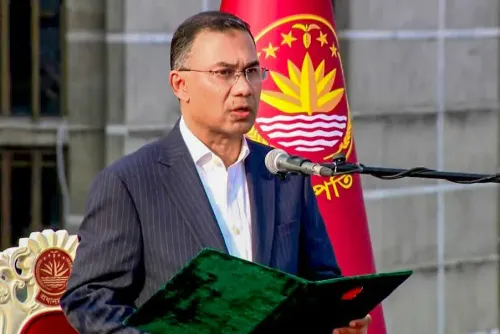
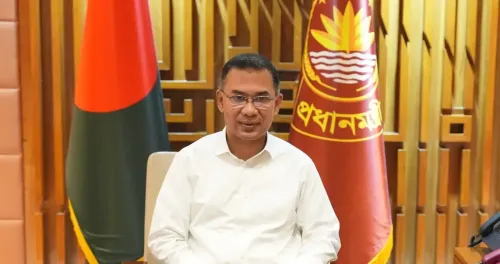
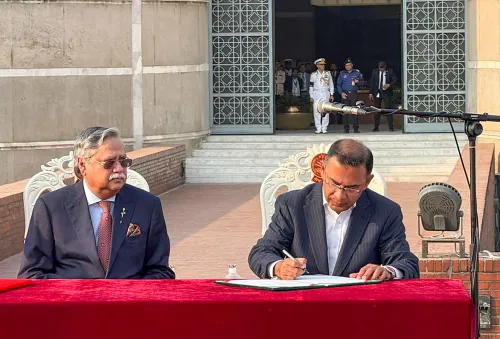
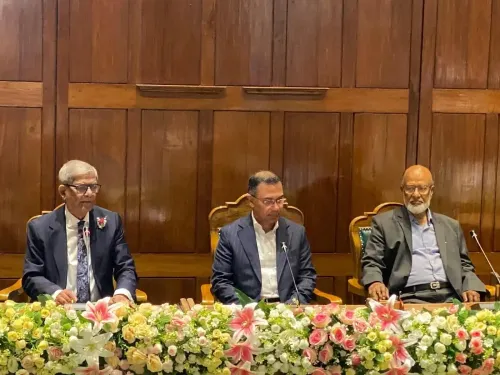
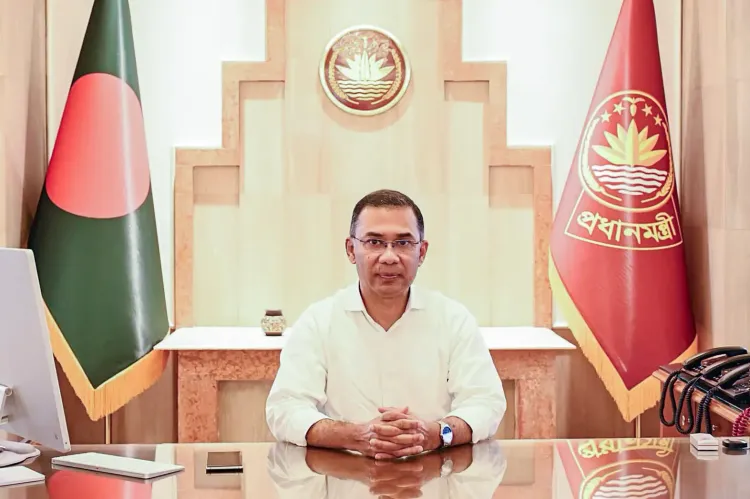
Dhaka, March 18 (NationPress) Prime Minister Tariq Rahman of Bangladesh is faced with an immense challenge as he strives to guide the nation towards stability and initiate a new prosperous chapter, all while keeping extremist factions at bay and maintaining the party's hard-earned reputation.
The Bangladesh Nationalist Party (BNP) has committed in its election manifesto to elevate the lagging economy to a trillion by 2030—a target that is contingent on ensuring "regional security, economic stability, and the restoration of societal peace," as indicated in a report.
Per the findings published in 'Fair Observer', the political unrest and economic issues facing Bangladesh are closely linked. Former Chief Advisor Muhammad Yunus, who oversaw an interim government for 18 months, encountered criticism from President Mohammed Shahabuddin concerning the dismal state of affairs during his administration.
“The President criticized Yunus for being out of touch and intentionally hindering critical decisions, such as the trade tariff discussions with the US—decisions that hold profound implications for Bangladesh,” the report stated.
“Bangladesh's garment industry, the cornerstone of its dollar-revenue generation, plays a crucial role in providing not only jobs but also empowerment, particularly for women who are integral to the vibrant Bengali cultural landscape. Any political entity that seeks to change or potentially marginalize this vital demographic faces significant risks,” it further elaborated.
The report also highlighted that the radical Islamist party Jamaat-e-Islami faced substantial backlash for its misogynistic comments aimed at working women, drawing comparisons to sex workers, suggesting reduced working hours, and hinting at the imposition of stringent Islamic laws if they gain power. Jamaat's dismissal of gender equality starkly contradicted the aspirations of students.
As the Awami League (AL) was barred from political activity by the Yunus administration, the report noted, a political void arose, leading Jamaat to anticipate a favorable outcome in the elections held in February.
“However, the voters did not align with their expectations. Not only was the AL prevented from political engagement, but the incumbent President of Bangladesh also claimed that his attendance was obstructed during a royal invitation from Qatar. The nation had plunged into a cycle of violence, arson, and assaults against minorities, alongside an almost pervasive breakdown of law and order in the past 18 months following Sheikh Hasina's exit,” it added.
The report concluded, “The impartial examination of the interim caretaker's role, in conjunction with designated student ministers, is necessary, and a comprehensive review of the entire timeline is warranted. If these assertions prove true, the so-called ‘banker of the poor’ has much to reveal about the events that unfolded in Dhaka's corridors of power.”
Point of View
The current political climate in Bangladesh is critical. With key leaders facing immense scrutiny and extremism on the rise, the nation stands at a crossroads that will determine its stability and credibility moving forward.
NationPress
30 Sept 2026
Frequently Asked Questions
What are the key challenges facing Prime Minister Tariq Rahman?
Prime Minister Tariq Rahman faces significant challenges including restoring stability, managing political unrest, and combating extremist elements while maintaining the credibility of his party.
What economic goal has the BNP set for 2030?
The BNP aims to boost the economy to a trillion dollars by 2030, which relies on achieving regional security and restoring peace within society.
What role does the garment industry play in Bangladesh's economy?
The garment industry is crucial for Bangladesh's economy as it generates significant revenue and provides employment, especially for women, contributing to their empowerment and social status.
What criticisms have been directed toward Jamaat-e-Islami?
Jamaat-e-Islami has faced criticism for its derogatory remarks about working women and proposals that threaten gender equality, reflecting a broader conflict with the aspirations of the younger generation.
How has the political landscape changed in Bangladesh recently?
The political landscape has shifted dramatically with the suspension of the Awami League, creating a vacuum that has allowed extremist factions to gain traction amid rising violence and unrest.