Is Tarique Rahman the New Prime Minister of Bangladesh?
Synopsis
Tarique Rahman has taken office as the new Prime Minister of Bangladesh following his party's substantial electoral win. As the 11th Prime Minister, he leads a cabinet of new and seasoned politicians. The elections signal a pivotal moment for Bangladesh as it navigates challenges from rising extremism and political unrest.
Key Takeaways
Tarique Rahman has been sworn in as the 11th Prime Minister of Bangladesh.
The BNP won 209 parliamentary seats in the recent elections.
Rahman's cabinet includes both new and experienced politicians.
The nation faces challenges from unrest and extremism.
This is a significant moment for Bangladesh's political future.
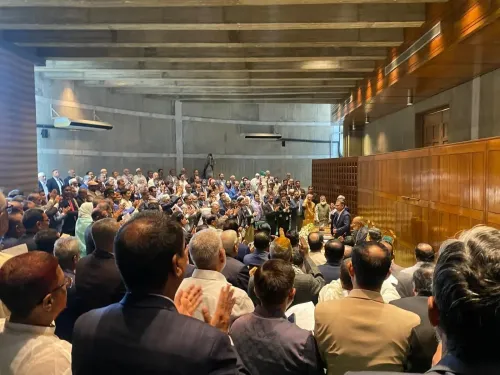
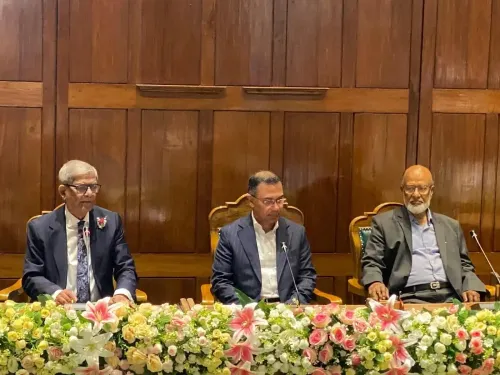
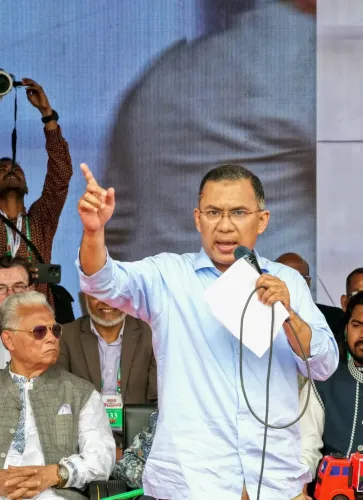
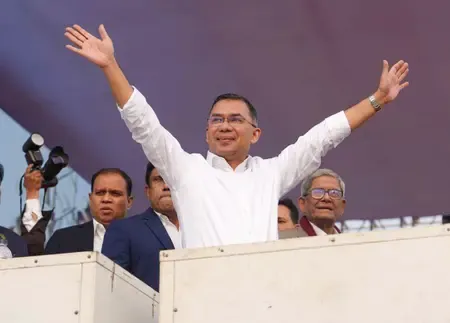
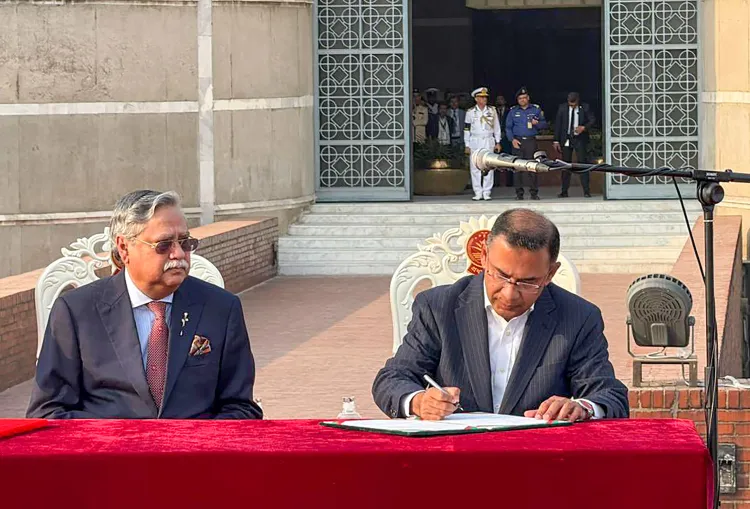
Dhaka, Feb 17 (NationPress) Tarique Rahman, the Chairman of the Bangladesh Nationalist Party (BNP), was officially sworn in as the 11th Prime Minister of Bangladesh on Tuesday, following a significant victory in the 13th Parliamentary elections.
Upon taking the oath, other cabinet members, including BNP leaders Mirza Fakhrul Islam Alamgir, Amir Khasru Mahmud Chowdhury, Salahuddin Ahmed, Iqbal Hasan Mahmud, Hafiz Uddin Ahmed, and others, were also sworn in.
President Mohammed Shahabuddin performed the oath ceremony at the South Plaza of the National Parliament in Dhaka.
The BNP has formed a 50-member cabinet, consisting of 25 ministers, 24 state ministers, and three technocrats.
This cabinet includes several newcomers, some of whom are assuming ministerial positions for the first time, according to Bangladesh's leading daily, Prothom Alo.
Earlier, all 209 victorious BNP candidates were sworn in as members of Parliament, although they declined to take the Constitution Reform Council oath.
BNP leader Salauddin Ahmed stated that, following directives from the party chief, all newly-elected BNP MPs were instructed not to sign the Constitution Reform Council form, as they were not elected as council members, reported The Daily Star.
Consequently, the 11-party alliance, including Jamaat-e-Islami, Islami Andolan, and the National Citizens' Party (NCP), also refused to take parliamentary oaths, citing BNP's rejection of the Constitution Reform Council.
However, shortly after, the Jamaat-led alliance, independent candidates, and Islami Andolan Bangladesh did take their oaths as MPs.
Later, six newly-elected NCP MPs also took the oath.
The Chief Election Commissioner, AMM Nasir Uddin, administered the oath as per the Constitution of Bangladesh, marking the first time in the nation's history that a CEC has performed this duty for newly-elected MPs.
The BNP elected Rahman as its leader, paving his way to becoming the Leader of the House and taking the oath as Prime Minister.
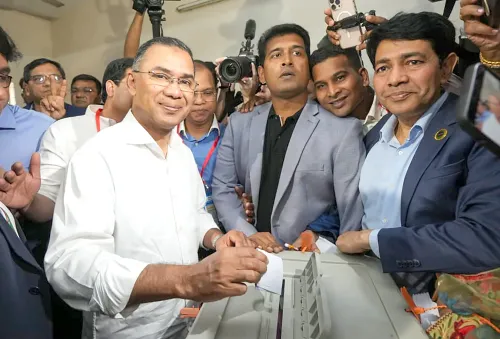
The 13th parliamentary election took place alongside the referendum on the July National Charter on February 12 across 299 of the country's 300 constituencies.
In these elections, the BNP achieved victory in 209 parliamentary seats, while the radical Islamist party Jamaat-e-Islami secured 68 seats.
The BNP chairman, who won from two constituencies, relinquished the Bogura-6 seat for a by-election and took his oath as a member of Parliament representing Dhaka-17.
It has been nearly 35 years since Bangladesh last had a male Prime Minister. Analysts believe the nation faces significant challenges in overcoming unrest and the rising tide of Islamist extremism that characterized the 18-month tenure of the Muhammad Yunus-led interim government.
Point of View
Tarique Rahman's ascension to the role of Prime Minister marks a significant chapter in Bangladesh's political landscape. His leadership will undoubtedly influence the nation’s direction amidst ongoing challenges, and it's crucial for the BNP to establish stability and address the concerns of the populace effectively.
NationPress
30 Sept 2026
Frequently Asked Questions
Who is Tarique Rahman?
Tarique Rahman is the Chairman of the Bangladesh Nationalist Party and has recently been sworn in as the 11th Prime Minister of Bangladesh.
What significant event recently took place in Bangladesh?
Tarique Rahman was sworn in as Prime Minister following a decisive victory in the 13th Parliamentary elections.
What challenges does Bangladesh face under Rahman's leadership?
Bangladesh is confronting issues of political unrest and rising Islamist extremism, which Rahman will have to address during his tenure.