Bangladesh police fire tear gas at Gazipur garment workers in Konabari protest
Synopsis
Bangladesh's garment sector unrest escalated again on 16 November as police fired tear gas and sound grenades at workers blocking a key road in Gazipur's Konabari. With 13 factories shut, one worker dead, and Human Rights Watch condemning state force, Dhaka faces mounting international pressure to meet workers' demand for a Tk 30,000 minimum monthly wage — not suppress it.
Key Takeaways
Police fired tear gas and sound grenades at garment workers outside ABM Fashion and Jamuna factories in Konabari, Gazipur on 16 November 2026 .
Workers blocked the Konabari-Kashimpur road demanding a minimum monthly wage of Tk 30,000 .
At least 13 garment factories have been closed indefinitely since Sunday amid ongoing unrest.
Garment worker Toufiq Hossain died on 3 November after being beaten during a clash in Joydebpur .
Human Rights Watch condemned the use of force on 5 November and called for accountability.
Dhaka police arrested 33 Awami League supporters for alleged sabotage; allegations also target the ruling BNP youth wing.
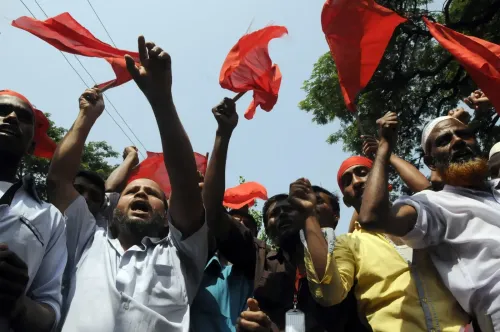
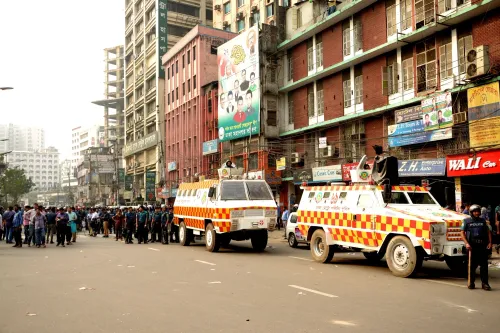
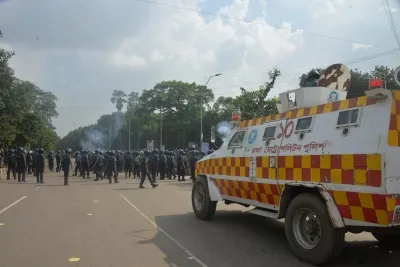
Bangladeshi police fired tear gas shells and sound grenades to disperse garment workers who had gathered outside their factories in the Konabari area of Gazipur on Monday, 16 November 2026, local media reported. Workers from ABM Fashion and Jamuna factories had blocked the Konabari-Kashimpur road in protest before security forces intervened to restore order.
What Happened in Konabari
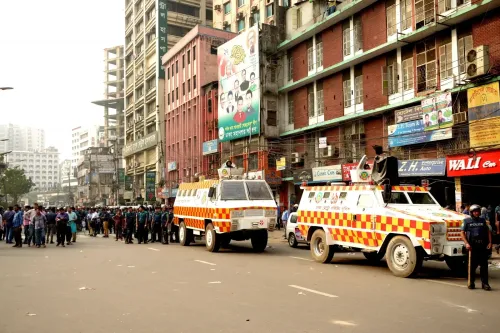
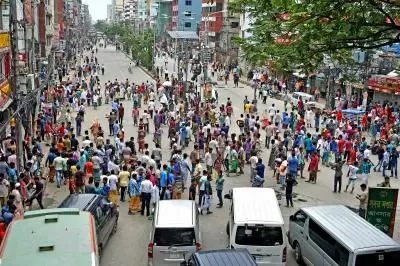
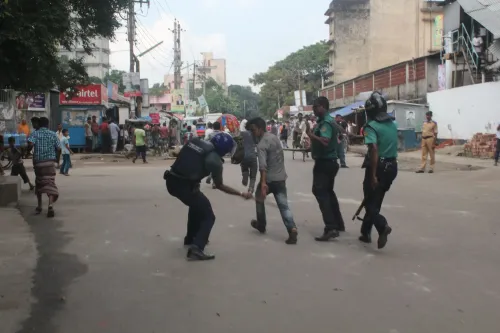
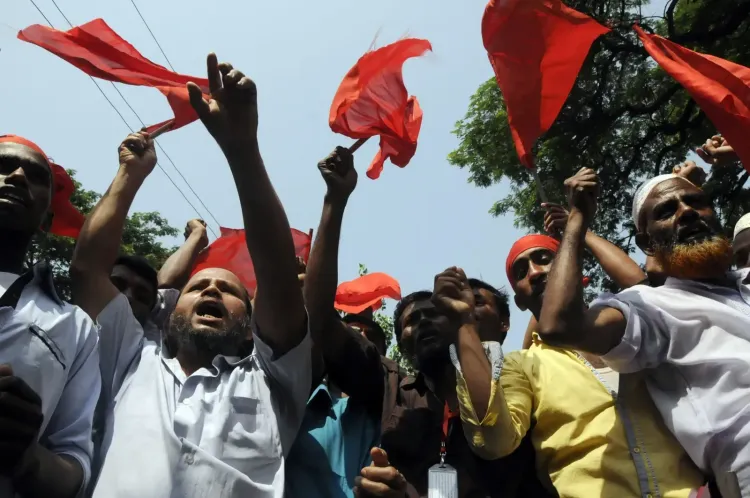
According to reports, workers from the two factories assembled outside their workplaces and obstructed a key road in the industrial zone. Police and Border Guard Bangladesh (BGB) personnel were deployed to the site after receiving information about the blockade. When workers became agitated and refused to clear the road, security forces resorted to tear gas and sound grenades. The workers subsequently dispersed and the situation was reported to have returned to normal.
Mohammad Amzad Hossain, Superintendent of Police of Gazipur Industrial Police-2, confirmed that workers from both factories had gathered for the protest, and that police used tear gas shells and sound grenades to disperse them. He added that police and BGB personnel have since been posted across the industrial zone.
Scale of the Unrest
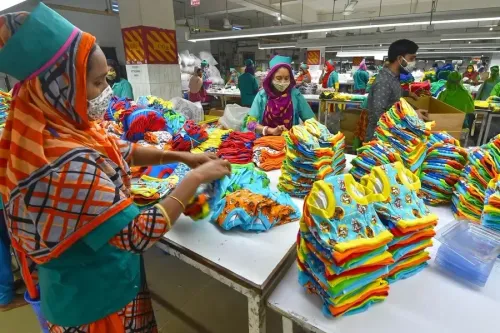
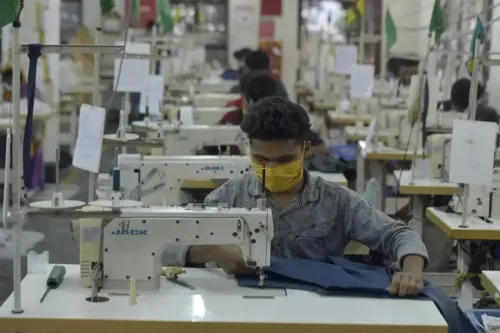
Monday's incident is part of a wider wave of labour unrest sweeping Bangladesh's garment sector. At least 13 garment factories have been closed indefinitely since Sunday amid security concerns, the Dhaka Tribune reported. Earlier, more than 200 factories in Savar and Ashulia were forced to declare holidays as protests turned violent. Workers have been demanding a minimum monthly wage of Tk 30,000.
The unrest has claimed at least one life: garment worker Toufiq Hossain died on 3 November while undergoing treatment at a hospital in Dhaka after being critically injured during a clash in Joydebpur in Gazipur district. A co-worker told Human Rights Watch (HRW): 'We were returning to the factory (after lunch) when Toufiq got caught between protesting workers and men hired to tackle the protest by another garment factory. When I looked back, I saw Toufiq lying on the ground. The hired men had beaten him brutally.'
Human Rights Watch Condemnation
On 5 November, the US-based advocacy group Human Rights Watch (HRW) condemned the violence against garment workers in Bangladesh, saying authorities had used batons and tear gas to disperse thousands of protesters demanding fair wages and basic labour rights. HRW also flagged reports of violence allegedly by individuals linked to factory owners and political parties, as well as incidents of arson, factory vandalism, and attacks on police.
'Consistent with international standards, Bangladesh authorities should ensure that police use force only when necessary and proportionate, and that those responsible for violence are held accountable,' HRW stated.
Political Dimension
The rights body alleged that instead of addressing legitimate demands for living wages, Bangladeshi authorities have been blaming the political opposition for instigating the unrest. Dhaka police reportedly arrested 33 supporters of the Awami League on 3 November for alleged sabotage. However, several others claimed that members of the ruling Bangladesh Nationalist Party (BNP) youth wing had targeted protesting workers — a charge that highlights the volatile political undercurrents running through the labour dispute.
What Comes Next
With factories shuttered across multiple industrial zones and security forces on high alert, the standoff between workers and factory management remains unresolved. The core demand — a minimum monthly wage of Tk 30,000 — has yet to be formally addressed by authorities. International scrutiny, led by organisations such as HRW, is likely to intensify pressure on Dhaka to negotiate rather than suppress the unrest.
Point of View
A Tk 30,000 minimum wage demand that remains unaddressed. With HRW watching, Western buyers auditing supply chains, and at least one worker dead, the reputational cost of continued suppression may ultimately outweigh the wage concession itself.
NationPress
16 Nov 2026
Frequently Asked Questions
Why are garment workers protesting in Bangladesh?
Bangladesh garment workers have been protesting to demand a minimum monthly wage of Tk 30,000, citing inadequate pay and lack of basic labour rights. The unrest has intensified across industrial zones including Gazipur, Savar, and Ashulia.
What happened in Konabari, Gazipur on 16 November 2026?
Workers from ABM Fashion and Jamuna factories blocked the Konabari-Kashimpur road in protest. Police and Border Guard Bangladesh personnel fired tear gas and sound grenades to disperse them, after which workers left and the situation normalised.
How many factories have shut down due to the unrest?
At least 13 garment factories have been closed indefinitely since Sunday, 15 November. Earlier, more than 200 factories in Savar and Ashulia were also forced to declare holidays as protests turned violent.
What did Human Rights Watch say about the Bangladesh garment protests?
Human Rights Watch condemned the violence on 5 November, stating that Bangladesh police had used batons and tear gas against thousands of workers protesting for higher wages. HRW called on authorities to use force only when necessary and proportionate, and to hold those responsible for violence accountable.
Has anyone died in the Bangladesh garment worker protests?
Yes. Garment worker Toufiq Hossain died on 3 November while undergoing treatment in Dhaka after being critically beaten during a clash in Joydebpur, Gazipur. A co-worker told HRW that hired men had attacked Toufiq after he was caught between protesting workers and those deployed to counter the protest.