Radha-Gobinda Temple in Bangladesh's Gaibandha faces demolition threats, minority body warns
Synopsis
A viral video threatening to attack and demolish the Radha-Gobinda Temple in Bangladesh's Gaibandha has alarmed minority communities nationwide — and it is far from an isolated case. A human rights report recorded 505 incidents targeting minorities across Bangladesh in just the first four months of 2026, pointing to a systemic protection failure that two successive governments have failed to address.
Key Takeaways
The Bangladesh Hindu Buddhist Christian Unity Council has warned of communal threats to attack and demolish the Radha-Gobinda Temple in Gaibandha district .
A threat video has been widely shared on social media, causing fear among minority communities across Bangladesh .
The temple complex also houses an old-age home and a medical service centre , serving as a broader community resource.
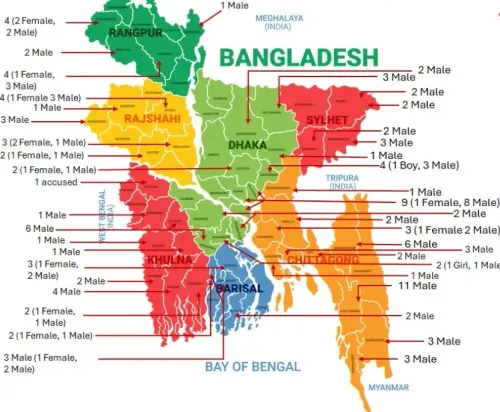
The HRCBM documented 505 incidents targeting minorities across 62 districts in January–April 2026 .
Incidents reportedly include killings, sexual violence, temple attacks, land grabbing, and arson.
Human rights groups have criticised both the former Muhammad Yunus -led interim government and the current BNP government for failing to protect minority communities.
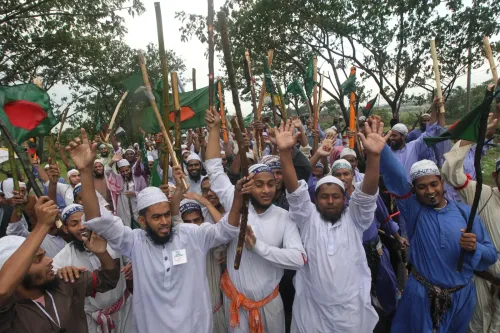
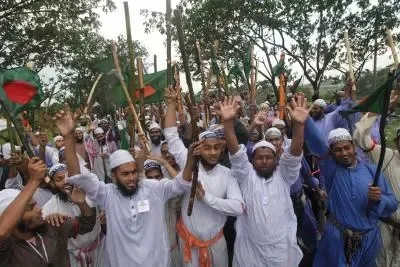
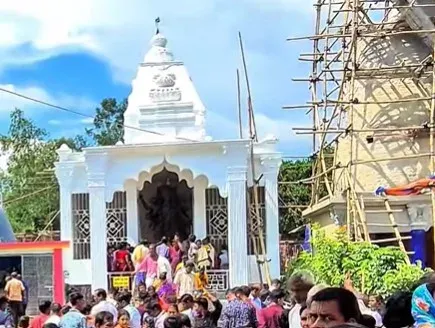
The Bangladesh Hindu Buddhist Christian Unity Council has raised grave concern over escalating communal threats by what it described as a 'vested' group to attack and demolish the Radha-Gobinda Temple in Hansbari village, Gaibandha district, Bangladesh. A video containing explicit threats against the temple has been widely circulated on social media, triggering widespread fear among local residents and minority communities across the country.
Nature of the Threat
According to the Council's statement, the video has caused deep alarm among religious and ethnic minority communities nationwide. 'As a result, local residents, along with religious and ethnic minority communities across the country, have become deeply alarmed and fearful. They apprehend that communal violence may erupt at any moment, potentially undermining the country's image and social harmony,' the organisation stated.
The Council has urged the government, administration, civil society, and political leaders to take immediate and effective measures to preserve communal harmony at both local and national levels, and has demanded that those responsible for spreading communal incitement be brought to justice and given exemplary punishment under the law.
What the Temple Complex Includes
Beyond its religious significance, the Radha-Gobinda Temple complex houses an old-age home, a medical service centre, and several other public welfare institutions. Development activities at the temple have reportedly been ongoing for a considerable period, making it a key community resource for the area's minority population.
Broader Pattern of Minority Persecution
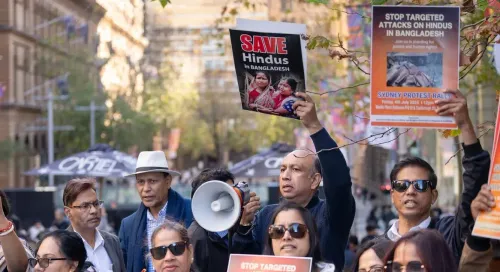
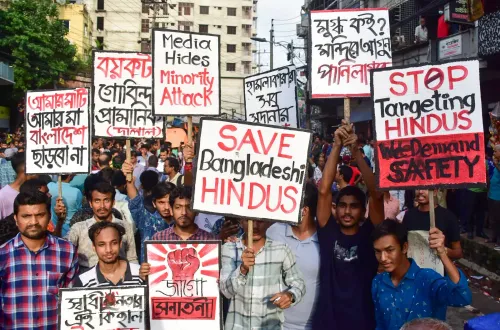
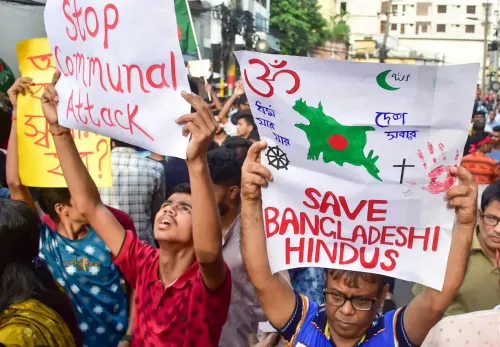
The threat to the Gaibandha temple does not stand in isolation. In its latest report titled 'The Persecution Continues: Minority Communities Under Sustained Attack in Bangladesh', the Human Rights Congress for Bangladesh Minorities (HRCBM) documented 505 incidents targeting minorities across 62 districts and all 8 divisions of Bangladesh between January and April 2026.
These incidents reportedly included killings and suspicious deaths, physical assaults, kidnappings, sexual violence, attacks on temples and religious institutions, land grabbing, arson, looting, intimidation, and blasphemy-related persecution. According to the HRCBM, the incidents reflect recurring patterns rather than isolated events, pointing to systemic failures in protection and accountability.
'The documented pattern reveals a continuing failure of protection, accountability, and equal access to justice for vulnerable minority communities. The report highlights recurring concerns involving delayed response, weak investigation, intimidation of victims or families, and lack of visible accountability in many cases,' the HRCBM said, criticising Bangladeshi authorities for persistent failures to ensure adequate protection.
Political Context and Escalation
Bangladesh witnessed escalating violence against minorities, including Hindus, during the eighteen-month tenure of the former Muhammad Yunus-led interim government, sparking outrage among human rights organisations globally. Recurring incidents under the Bangladesh Nationalist Party (BNP) government have further underscored a sharp rise in targeted attacks on minority communities, critics argue.
What Happens Next
Human rights groups are pressing the Bangladeshi government for immediate protective measures at the Gaibandha temple site and swift legal action against those issuing threats. With 505 documented incidents in just four months of 2026, advocates warn that without credible state intervention, the situation risks further deterioration ahead of upcoming religious observances.
Point of View
The HRCBM report makes it difficult for Dhaka to frame each episode as isolated. What is striking is the continuity across political transitions: the violence persisted through the Yunus interim period and has continued under the BNP, suggesting institutional failures rather than merely partisan ones. The international community's outrage has so far produced little visible accountability inside Bangladesh, and without enforceable protection mechanisms, minority communities remain structurally exposed.
NationPress
23 Oct 2026
Frequently Asked Questions
What is the Radha-Gobinda Temple in Bangladesh and why is it under threat?
The Radha-Gobinda Temple is a Hindu religious site in Hansbari village, Gaibandha district, Bangladesh. A group described as 'vested interests' has issued threats to attack and demolish it, with a threat video widely circulated on social media, prompting alarm among minority communities nationwide.
Which organisations have raised concern over the temple threats?
The Bangladesh Hindu Buddhist Christian Unity Council, a human rights body working against religious discrimination, issued a formal statement demanding government action. Separately, the Human Rights Congress for Bangladesh Minorities (HRCBM) has documented a broader pattern of 505 minority-targeting incidents in Bangladesh between January and April 2026.
How many incidents targeting minorities has Bangladesh recorded in 2026?
According to the HRCBM report titled 'The Persecution Continues', 505 incidents targeting minorities were recorded across 62 districts and all 8 divisions of Bangladesh between January and April 2026. These included killings, assaults, temple attacks, land grabbing, and sexual violence.
What action has been demanded from the Bangladeshi government?
The Bangladesh Hindu Buddhist Christian Unity Council has called on the government, administration, civil society, and political leaders to take immediate measures to preserve communal harmony and ensure that those responsible for communal incitement face exemplary punishment under the law.
Has violence against minorities in Bangladesh worsened under recent governments?
According to human rights organisations, violence against minorities, including Hindus, escalated during the eighteen-month tenure of the Muhammad Yunus-led interim government and has continued under the Bangladesh Nationalist Party (BNP) government, reflecting what critics describe as a persistent failure of institutional protection.