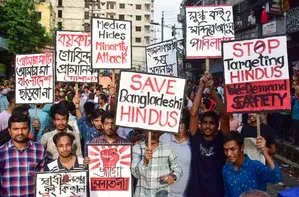
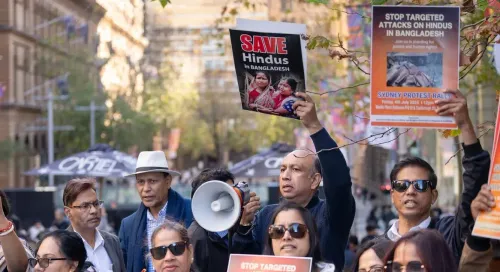
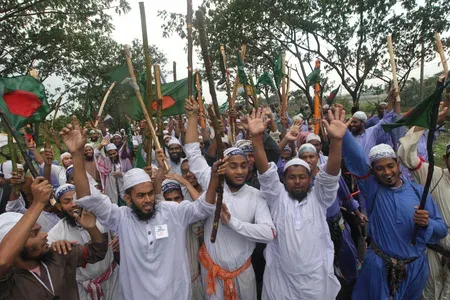
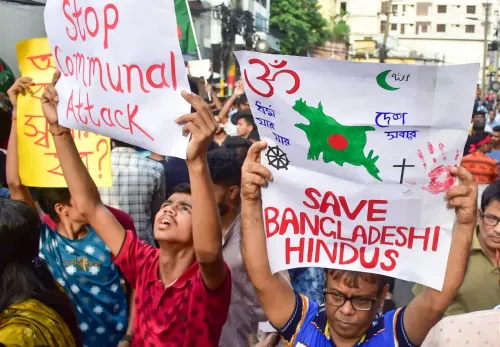
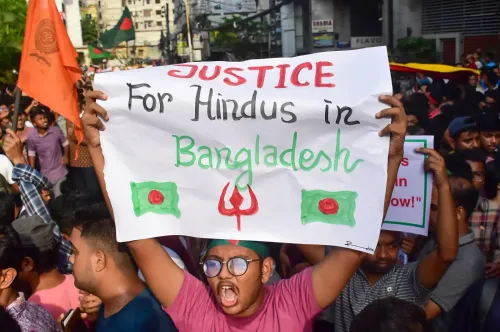
Hindus under threat in Bangladesh as Islamist extremist campaign escalates
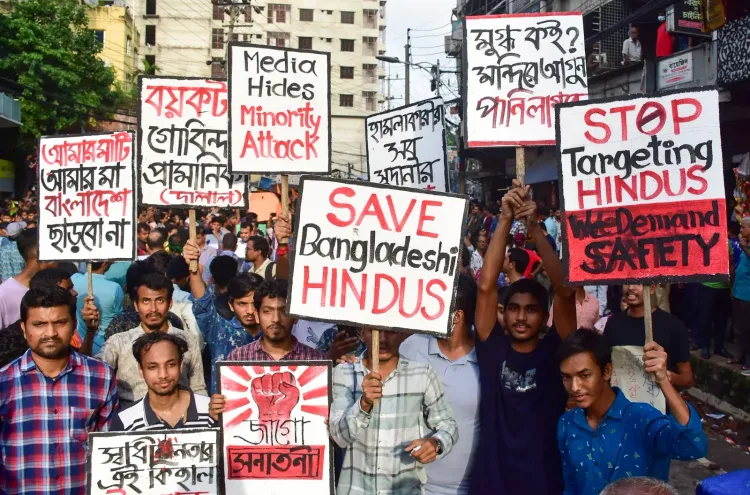
Synopsis
A coordinated Islamist campaign targeting Hindu religious sites in Bangladesh — including demands to demolish a complex in Gaibandha district — has prompted stark warnings of potential genocide, with propagandists allegedly operating from Western soil and exploiting political instability following the February 2025 elections.
Key Takeaways
Radical Islamist groups are demanding the demolition of a Hindu religious complex in Palashbari Upazila , Gaibandha district , Bangladesh.
Blitz editor Salah Uddin Shoaib Choudhury warned Bangladesh risks becoming 'a slaughterhouse for Hindus' without urgent global intervention.
Pro-Pakistan and pro-Turkey propagandists, reportedly operating from France and the United States , are accused of running coordinated disinformation campaigns against the Hindu site.
The escalation followed claims by former West Bengal CM Mamata Banerjee over the murder of Islamist leader Sharif Osman Hadi .
Minority communities had hoped for relief after February 12 elections, but analysts say extremist forces are again exploiting communal divisions.
Choudhury has called on Bangladeshi law enforcement to monitor extremist groups and take strict legal action against those inciting violence.
Bangladesh is facing intensifying concerns over the safety of its Hindu minority communities, as radical Islamist groups mount coordinated campaigns against Hindu religious sites and institutions across the country, according to a report published on 9 June. The situation has drawn urgent warnings from regional analysts and press freedom advocates about the risk of large-scale communal violence.
The Gaibandha Flashpoint
Among the most alarming developments is the sustained pressure from radical Islamist groups demanding the demolition of a prominent Hindu religious complex in Palashbari Upazila of Gaibandha district. What began as a localised dispute has, according to the report, rapidly expanded into a broader ideological campaign targeting Hindu religious symbols and institutions nationwide.
Online propagandists — reportedly operating from France and the United States — have falsely portrayed the Gaibandha complex as an extension of Indian influence, according to Salah Uddin Shoaib Choudhury, Editor of Bangladeshi newspaper Blitz. Without presenting credible evidence, these activists allegedly accused the project's caretaker, Harichandra Taroni Das, of links to Indian intelligence and claimed the site was funded by India's external intelligence organisation, R&AW.
Warning of a 'Dangerous Cycle'
Choudhury issued a stark warning, writing in Blitz that unless the global community urgently pressures Bangladeshi authorities to contain what he described as 'sinister' campaigns by Islamist extremists, the country risks sliding into 'a dangerous cycle of communal violence.'
'Failure to act in time could result in Bangladesh ultimately becoming a slaughterhouse for Hindus, and a fresh wave of violence or even genocide could begin at any time,' he wrote.
Choudhury further alleged that several pro-Pakistan and pro-Turkey propagandists have been inciting followers to 'actualise Ghazwa-e-Hind by waging jihad against India' while simultaneously calling for mass violence against Hindus in Bangladesh. He noted that one of the same propagandists had previously called for jihad against Israel and mass killings of Jews.
Post-Election Hopes Dashed, Analysts Say
Following the February 12 general elections, members of religious minorities had reportedly hoped for relief from the insecurity and political uncertainty that marked the tenure of the former Muhammad Yunus-led interim government, according to Choudhury. However, he argued that recent developments suggest extremist forces are once again exploiting religious sentiments and communal divisions to destabilise democratic institutions.
The escalation was partly triggered, Choudhury stated, by claims made by former West Bengal Chief Minister Mamata Banerjee over the murder of Bangladeshi radical Islamist leader Sharif Osman Hadi, which pro-Pakistan and pro-Turkey online activists seized upon to launch coordinated disinformation campaigns.
What Authorities Must Do
Choudhury emphasised that the Bangladeshi government now faces a 'critical test', urging authorities to ensure the protection of all citizens and religious institutions while decisively curbing attempts to incite violence or communal hatred. He called on law enforcement agencies to closely monitor extremist group activities, investigate threats against religious sites, and take strict legal action against individuals promoting violence.
The situation in Bangladesh continues to be closely watched by minority rights groups and regional observers, with the coming weeks expected to test the new government's commitment to protecting its non-Muslim citizens.
Point of View
And the post-Yunus period appears to be following the same script. What is different this time is the transnational dimension: propagandists allegedly operating from French and American soil amplifying calls for violence signals a dangerous internationalisation of what was once a domestic communal problem. The Bangladeshi government's response in the coming weeks will be the real indicator — past administrations have routinely condemned violence in statements while failing to prosecute perpetrators. If the new government repeats that pattern, the warnings from analysts like Choudhury will look less like alarmism and more like a documented forecast.
NationPress
22 Sept 2026
Frequently Asked Questions
What is the current threat facing Hindus in Bangladesh?
Radical Islamist groups are mounting campaigns against Hindu religious sites and institutions across Bangladesh, including demands for the demolition of a religious complex in Gaibandha district. Analysts warn this could escalate into large-scale communal violence if authorities do not act decisively.
What is the Gaibandha religious site controversy?
A Hindu religious complex in Palashbari Upazila of Gaibandha district has become a flashpoint, with Islamist groups demanding its demolition. Online propagandists have falsely portrayed it as an Indian-funded intelligence project without presenting credible evidence, according to Blitz editor Salah Uddin Shoaib Choudhury.
Who is Salah Uddin Shoaib Choudhury and why is his warning significant?
Salah Uddin Shoaib Choudhury is the editor of Blitz, a Bangladeshi English-language newspaper. He has written that Bangladesh risks becoming 'a slaughterhouse for Hindus' unless the global community pressures Bangladeshi authorities to contain extremist campaigns — a warning that has drawn attention given his track record of reporting on minority rights in Bangladesh.
How did the current escalation begin?
According to Choudhury, the campaign intensified following claims made by former West Bengal Chief Minister Mamata Banerjee over the murder of Bangladeshi Islamist leader Sharif Osman Hadi. Pro-Pakistan and pro-Turkey online activists subsequently launched coordinated disinformation campaigns targeting the Gaibandha Hindu complex.
What has happened to Bangladesh's Hindu minority since the February 2025 elections?
Despite hopes among minority communities that the February 12 general elections would bring relief from insecurity under the former Muhammad Yunus-led interim government, analysts say extremist forces have resumed exploiting communal divisions. The situation suggests the new government has yet to demonstrate a credible commitment to minority protection.