Bangladesh Hindu temple row: Rights body flags rising minority threats
Synopsis
A Hindu temple in Gaibandha, Bangladesh, became a flashpoint after authorities ordered the suspension of a Lord Ram idol's construction — not over any legal violation, but under pressure from public agitation. The HRCBM's warning is stark: when a minority community's act of worship inside its own premises can be framed as a national security threat, the constitutional protections Bangladesh's minorities rely on are being hollowed out in practice.
Key Takeaways
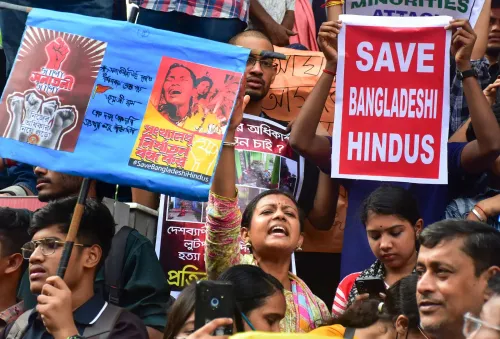
The HRCBM raised alarm on 30 June over mounting threats to Hindu minorities across Bangladesh , citing incidents from Gaibandha to Chattogram .
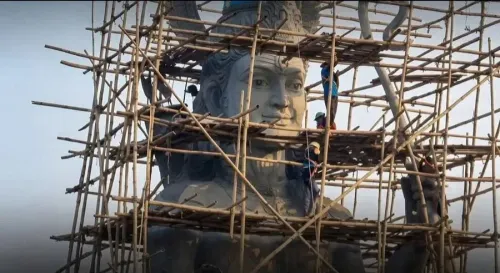
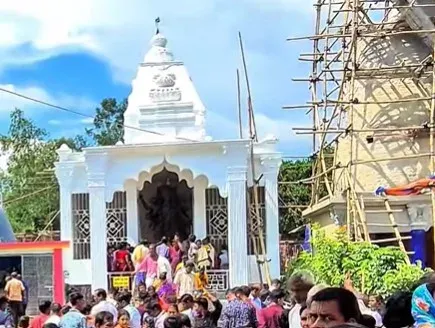
Bangladeshi authorities ordered the suspension of a Lord Ram idol's construction at the Sri Sri Radha Govinda and Kali Temple in Palashbari, Gaibandha , following public agitation.
Temple founder Haridas Chandra Tarani Das confirmed the idol was being built on temple-owned land , funded by community contributions — not on government property.
The HRCBM alleged a double standard : blasphemy accusations against minorities can lead to mob violence, while insults against Hindu deities are treated as manageable disorder.
The rights body has demanded security for the temple, protection for devotees, and investigations into threats and incitement.
The Human Rights Congress for Bangladesh Minorities (HRCBM) has raised grave concern over escalating pressure on Hindu minorities, temple builders, and minority rights defenders in Bangladesh, warning that developments spanning Gaibandha to Chattogram signal a deepening threat to religious freedom in the country. The alarm was sounded on 30 June amid a widening controversy over the construction of a Lord Ram idol at a Hindu temple complex in northern Bangladesh.
The Temple at the Centre of the Storm
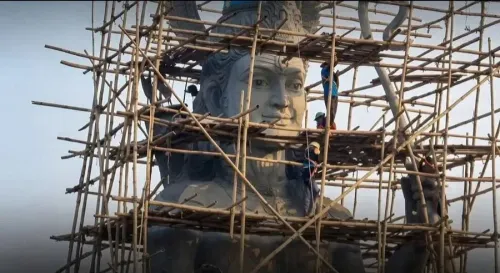
At the heart of the dispute is the Sri Sri Radha Govinda and Kali Temple complex in Palashbari, Gaibandha district, where temple authorities had begun constructing a large idol of Lord Ram. According to the HRCBM, what began as a lawful act of religious expression within a minority community's own premises rapidly escalated into public agitation, social media campaigns, demands for removal, and threats that have left local Hindus, in the rights body's words, 'fearful for their lives, worship, and future in the country.'
Bangladeshi authorities subsequently ordered the suspension of the statue's construction, according to local media reports. The HRCBM, citing a field interview with temple founder Haridas Chandra Tarani Das, maintained that the idol was being built on land owned by the temple — not on government property — and was funded entirely through Hindu devotee and community contributions.
A Communal Framing, Not a Legal One
The rights body argued that the controversy crossed a critical line when it ceased to be an administrative matter and became a communal one. 'A Hindu idol was portrayed by some as a threat to sovereignty, national security, or social order. That framing transforms a minority act of worship into a public danger. It invites collective suspicion against Hindus, not because they have committed violence, but because they dare to build, gather, worship, and exist visibly,' the HRCBM stated.
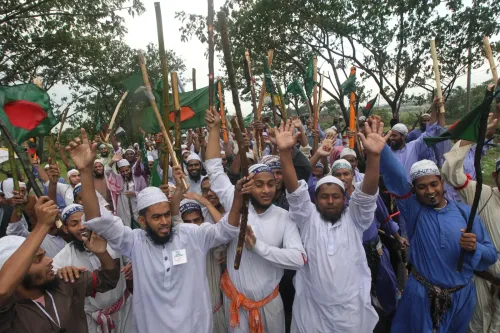
The organisation alleged that Bangladeshi authorities have been unable to fully contain what it described as 'fundamentalist mobilisation' against the temple project. Despite visible police presence and administrative engagement, it said, hardline groups have continued to exert pressure on the minority community. Separately, Bangladesh witnessed protests over the alleged desecration of a Lord Ram image by radical Islamists during demonstrations opposing the statue's construction in Gaibandha.
A Systemic Double Standard, Says HRCBM
The HRCBM went further, alleging a structural imbalance in how Bangladesh's public institutions respond to religious offences depending on who the target is. It claimed that blasphemy accusations against minorities can lead to arrest, mob violence, displacement, and even death, while public insults directed at Hindu deities and religious sentiments are frequently treated as 'politically manageable' disorder rather than violations requiring accountability.
'The Gaibandha case is now a test of whether the authorities will protect constitutional rights in practice — or merely manage unrest by asking the threatened minority to retreat,' the HRCBM noted.
What the Rights Body Is Demanding
The HRCBM has called on Bangladeshi authorities to take several concrete steps: provide effective security for the temple complex; ensure the personal protection of temple founder Haridas Chandra Tarani Das and devotees; investigate threats and incitement; prevent further communal escalation; and end pressure tactics designed to weaken the minority community. The organisation framed the Gaibandha case as a bellwether for Bangladesh's broader commitment to constitutional protections for its minorities. How authorities respond, it argued, will signal whether minority rights in the country are protected in practice or only on paper.
Point of View
And when the state's response is to ask the minority to stand down rather than to uphold their rights, the law has effectively been weaponised by inaction. The HRCBM's 'double standard' allegation deserves scrutiny beyond advocacy circles: if blasphemy accusations against Hindus routinely escalate to violence while offences against Hindu deities are managed rather than prosecuted, that asymmetry is a policy choice, not an accident. Bangladesh's international partners and regional neighbours will be watching whether Dhaka treats this as a law-and-order problem — or a minority rights one.
NationPress
29 Sept 2026
Frequently Asked Questions
What is the Gaibandha temple controversy in Bangladesh?
The controversy centres on the Sri Sri Radha Govinda and Kali Temple in Palashbari, Gaibandha , where Hindu authorities began constructing a large idol of Lord Ram on temple-owned land. Public agitation and social media pressure prompted Bangladeshi authorities to order the suspension of the construction, drawing sharp criticism from minority rights groups including the HRCBM.
Who is the HRCBM and what has it alleged?
The Human Rights Congress for Bangladesh Minorities (HRCBM) is a minority rights organisation that monitors the situation of religious minorities in Bangladesh. It has alleged that the Gaibandha case reflects a broader pattern of 'fundamentalist mobilisation' against Hindus, and that authorities have failed to adequately protect minority communities from threats and incitement.
Why did Bangladeshi authorities suspend the Ram idol's construction?
According to local media reports, Bangladeshi authorities ordered the suspension following public agitation and protests against the statue. The HRCBM contends the decision was driven by majoritarian pressure rather than any legal violation, as the construction was on private temple land funded by community contributions.
What double standard has the HRCBM highlighted?
The HRCBM alleged that in Bangladesh, blasphemy accusations against minorities can trigger arrests, mob violence, and displacement, while public insults against Hindu deities and religious sentiments are frequently treated as politically manageable disorder rather than serious offences requiring prosecution and accountability.
What has the HRCBM demanded from Bangladeshi authorities?
The HRCBM has called for effective security at the temple complex, personal protection for temple founder Haridas Chandra Tarani Das and devotees, formal investigations into threats and incitement, prevention of further communal escalation, and an end to pressure tactics targeting the minority community.