Bangladesh halts 81-ft Ram statue construction amid Islamist pressure, rights body condemns move
Synopsis
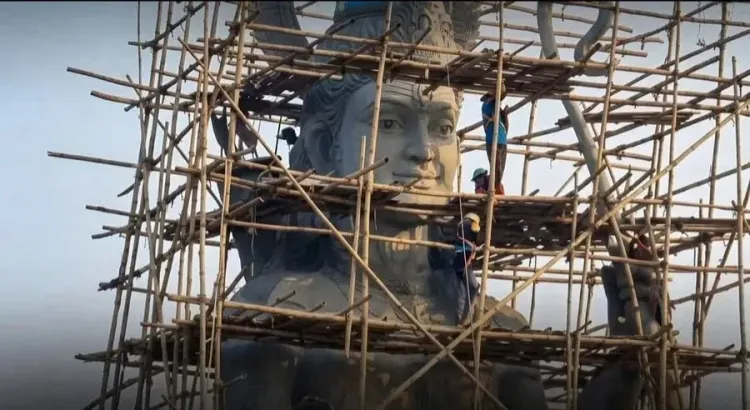
An 81-foot Ram statue in Bangladesh's Gaibandha district was halted on 12 June after Islamist groups staged protests and submitted memoranda to local authorities. A Paris-based rights body has condemned the move as a violation of Bangladesh's own constitution and international human rights law — and flagged that local media may be self-censoring the story.
Key Takeaways
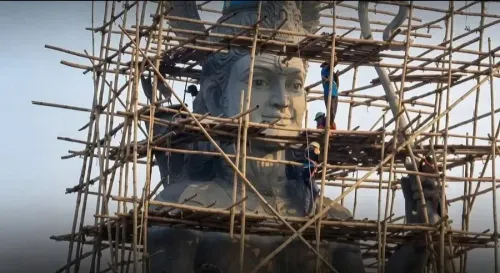
Construction of an 81-foot Lord Ram statue at the Sri Sri Radha Govinda and Kali Temple in Gaibandha, Bangladesh was officially suspended on 12 June .
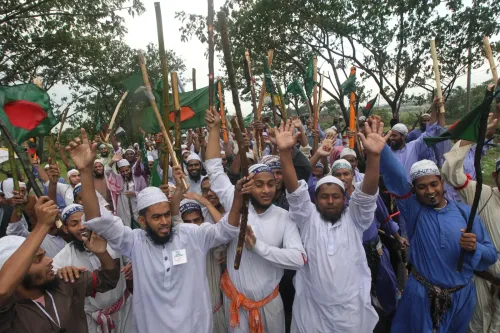
The halt followed sustained pressure from local Islamist extremist groups who organised protests, demonstrations, and submitted memoranda to the local administration.
Justice Makers Bangladesh in France (JMBF) condemned the suspension as a violation of the UDHR , ICCPR , and Bangladesh's own constitution.
JMBF founder Shahanur Islam said the current government's commitments to minority rights have 'largely remained confined to paper.' The rights body also flagged alleged media self-censorship by Bangladeshi outlets, citing fears of extremist backlash.
JMBF has demanded an independent investigation and effective security guarantees for religious minorities.
An international human rights organisation has strongly condemned the suspension of the construction of an 81-foot-tall statue of Lord Ram at the Sri Sri Radha Govinda and Kali Temple in Gaibandha district, Bangladesh, after Islamist extremist groups mounted sustained pressure against the project. The halt, officially announced by temple authorities on 12 June, has drawn sharp criticism from Justice Makers Bangladesh in France (JMBF), which cited violations of constitutional and international human rights guarantees.
How the Pressure Unfolded
According to JMBF, the initiative to construct the Ram statue became public in early June, triggering a wave of opposition from local Islamist groups. These groups organised protests, held press conferences, staged demonstrations, and submitted memoranda to the local administration demanding the project be scrapped. Facing mounting pressure — and fears of possible mob violence — the temple authorities formally suspended construction work on 12 June.
What the Rights Body Said
JMBF stated that the incident 'constitutes a clear violation of the rights to freedom of religion, freedom of expression, and the security and rights of religious minorities as guaranteed by the Constitution of Bangladesh, the Universal Declaration of Human Rights (UDHR), and the International Covenant on Civil and Political Rights (ICCPR).'
Shahanur Islam, founder President of JMBF and a prominent human rights lawyer, said: 'The Constitution of Bangladesh guarantees freedom of religion, equality before the law, and equal rights for all citizens. As a state party to the Universal Declaration of Human Rights and the International Covenant on Civil and Political Rights, Bangladesh has also undertaken international obligations to protect freedom of religion, freedom of expression, and the rights of religious minorities.'
Islam added: 'Unfortunately, under the current government, these commitments have largely remained confined to paper. At the same time, the alarming rise of Islamist extremist groups and the increasing incidents of violence, intimidation, and discrimination against religious minorities are deeply concerning.'
Media Self-Censorship Flagged
JMBF also raised alarm over what it described as selective or incomplete coverage of the incident by several mainstream Bangladeshi media outlets. The organisation said that fearing possible mob violence, extremist backlash, and risks to journalists' safety, some news organisations had reportedly resorted to self-censorship — a development it said raises 'serious concerns regarding the public's right to information and freedom of the press.'
Demands and Broader Implications
The rights body called on the Government of Bangladesh to order an independent, impartial, and credible investigation into the incident and to effectively guarantee the security and religious freedom of its minority communities. JMBF stressed that 'when a state yields to intimidation, threats of violence, or pressure from extremist groups, it undermines the rule of law, democracy, and the very foundations of human rights.'
This incident comes amid a broader pattern of reported pressure on Hindu minority communities in Bangladesh, raising questions about the state's capacity — and willingness — to enforce constitutional protections in the face of organised extremist opposition. International scrutiny of Bangladesh's minority rights record is likely to intensify in the coming weeks.
Point of View
The accountability loop is broken before it begins. Bangladesh's international obligations under the ICCPR are unambiguous, but obligations on paper have repeatedly failed to translate into protection on the ground for Hindu communities. The real question is whether diplomatic pressure from India and international rights bodies can shift that calculus.
NationPress
20 Sept 2026
Frequently Asked Questions
Why was the Ram statue construction in Bangladesh halted?
The construction of an 81-foot Lord Ram statue at the Sri Sri Radha Govinda and Kali Temple in Gaibandha district was suspended on 12 June after local Islamist extremist groups organised protests, demonstrations, and submitted memoranda opposing the project. Temple authorities halted the work amid fears of possible mob violence.
Who condemned the halt to the Ram statue project?
Justice Makers Bangladesh in France (JMBF), a Paris-based international human rights organisation, strongly condemned the suspension. JMBF founder Shahanur Islam called it a violation of Bangladesh's constitution and its obligations under the UDHR and ICCPR.
What international laws does JMBF say Bangladesh has violated?
JMBF stated that the incident violates rights guaranteed under the Universal Declaration of Human Rights (UDHR) and the International Covenant on Civil and Political Rights (ICCPR), as well as the Constitution of Bangladesh, which guarantees freedom of religion and equality before the law.
What is the concern about media coverage in Bangladesh?
JMBF flagged that several mainstream Bangladeshi media outlets published only limited or incomplete information about the incident. The organisation said some outlets reportedly resorted to self-censorship due to fears of extremist backlash and risks to journalists' safety, raising concerns about press freedom.
What has JMBF demanded from the Bangladesh government?
JMBF has called on the Government of Bangladesh to conduct an independent, impartial, and credible investigation into the incident and to ensure the security and religious freedom of religious minority communities across the country.