Bangladesh child marriage rate 47.2%, highest in South Asia
Synopsis
Nearly half of young Bangladeshi women were married as children. In Chapainawabganj the rate reaches 73.26%. A UN review says the country has 41.6 million child brides and that a 2017 law meant to protect them includes a loophole allowing underage marriage under undefined “special circumstances.”
Key Takeaways
47.2 per cent of Bangladeshi women aged 20-24 were married before 18, the highest rate in South Asia , per BBS and UNICEF data.
Rajshahi division leads at 58.16 per cent , while Sylhet is lowest at 20.95 per cent , according to the MICS 2025 District Atlas published in October 2026 .
Chapainawabganj district has the highest rate at 73.26 per cent , followed by Chuadanga ( 67.94 per cent ) and Bhola ( 64.96 per cent ).
A UN review found Bangladesh has around 41.6 million child brides, 22.3 million of whom were married before 15 .
UNFPA and UNICEF want 18 set as the minimum marriage age for both sexes and Section 19 of the CMRA, 2017 scrapped.
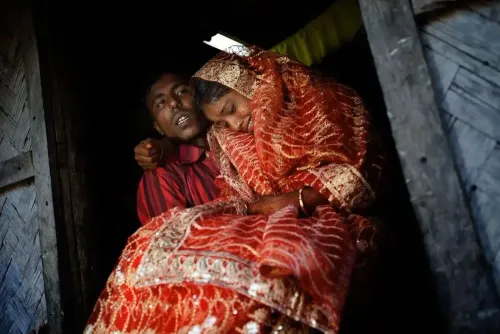
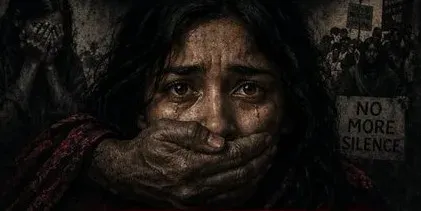
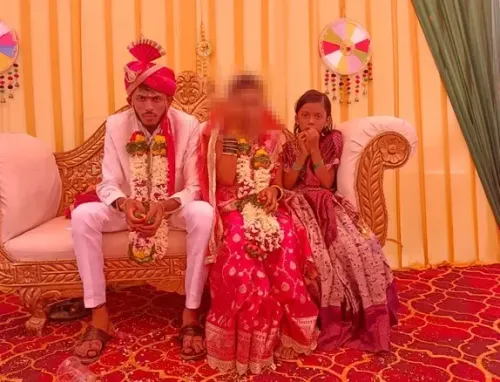
Bangladesh has the highest child marriage rate in South Asia, with 47.2 per cent of women aged 20-24 years married before turning 18, according to data from the Bangladesh Bureau of Statistics (BBS) and the United Nations Children's Fund (UNICEF). Local media reported the figures on Friday, 27 November 2026. The data comes weeks after a separate United Nations review warned that the country's child marriage law is undermined by legal loopholes and weak enforcement.
Globally, around 12 million girls are married before the age of 18 every year. Around 650 million women and girls alive today were married as children, the Bangladesh-based daily Dhaka Tribune reported.
Who Is Most at Risk
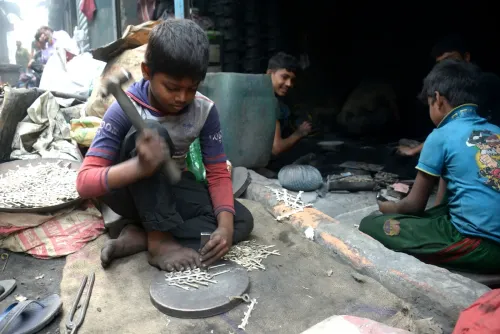
According to UNICEF data, most cases involve girls from poor households, girls with less education, and girls living in rural areas. This pattern matches what development agencies have documented across the region, where economic vulnerability and limited schooling tend to go together.
Regional Breakdown: Rajshahi Leads Divisions
Child marriage rates vary widely across Bangladesh. The MICS 2025 District Atlas, published in October 2026 by BBS and UNICEF, puts Rajshahi at the top, where 58.16 per cent of women aged 20-24 were married before 18.
Rajshahi is followed by Khulna at 55.57 per cent, Rangpur at 54.57 per cent, and Barisal at 51.97 per cent. Next come Mymensingh at 50.35 per cent, Dhaka at 47.29 per cent, and Chittagong at 40.69 per cent. Sylhet division has the lowest rate at 20.95 per cent.
The district-level figures are higher still. Chapainawabganj recorded the highest rate at 73.26 per cent, followed by Chuadanga at 67.94 per cent and Bhola at 64.96 per cent. Sirajganj (63.10 per cent), Kushtia (62.90 per cent), Satkhira (62.28 per cent), and Magura (61.09 per cent) complete the list, according to the Dhaka Tribune.
UN Review Flags 41.6 Million Child Brides
The latest data follows a review by United Nations agencies last month. It found that Bangladesh is home to around 41.6 million child brides, including 22.3 million who were married before the age of 15. The review described the crisis as one of the most severe in the world.
The United Nations Population Fund (UNFPA) and UNICEF identified two main problems: flaws in the legal framework and failures in implementation.
The review found that child marriage prevention committees often do not carry out their duties, and that officials lack adequate training and logistical support. Survivors struggle to access shelters and legal aid, which leaves the girls most at risk without real protection under the law.
Why Families Still Choose Early Marriage
The UN agencies listed the main drivers of high child marriage rates:
- poverty
- poor-quality education and unequal access to schooling
- harmful social and gender norms
- safety concerns
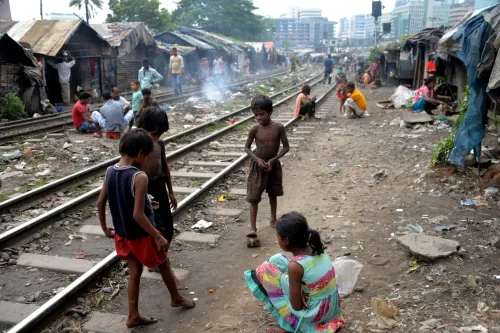
The review also pointed to entrenched social attitudes, fears about elopement, and economic insecurity. These pressures are strongest in climate-affected and remote regions and in urban slums. In these settings, many families see early marriage as a way to ease financial strain and secure a better future for their daughters.
Loopholes in the Child Marriage Restraint Act, 2017
Nearly a decade after it was enacted, Bangladesh's Child Marriage Restraint Act (CMRA), 2017 still faces serious problems, The Daily Star reported, citing the UN review.
The review singled out Section 19 as a major weakness. The provision allows marriage before 18 with court approval under “special circumstances.” However, it does not define what those circumstances are, “leaving the term dangerously open to misinterpretation and misuse,” the daily reported.
UNFPA and UNICEF recommended two reforms:
- setting 18 as the minimum marriage age for both men and women
- scrapping Section 19 entirely
The new district-level data adds pressure on lawmakers in Dhaka to act on these recommendations.
Point of View
Which shares similar drivers along its eastern borderlands, the lesson is that a law without enforcement capacity and economic alternatives for families achieves little. Bangladesh's next move on Section 19 will show whether the political will to close the loophole exists.
NationPress
27 Nov 2026
Frequently Asked Questions
What is Bangladesh's child marriage rate?
According to BBS and UNICEF data, 47.2 per cent of women in Bangladesh aged 20-24 were married before turning 18. This is the highest child marriage rate in South Asia.
Which district in Bangladesh has the highest child marriage rate?
Chapainawabganj has the highest rate at 73.26 per cent, according to the MICS 2025 District Atlas. It is followed by Chuadanga at 67.94 per cent and Bhola at 64.96 per cent.
How many child brides are there in Bangladesh?
A review by United Nations agencies estimated that Bangladesh is home to around 41.6 million child brides. Of these, 22.3 million were married before the age of 15.
What is Section 19 of Bangladesh's Child Marriage Restraint Act?
Section 19 of the Child Marriage Restraint Act, 2017 allows marriage before 18 with court approval under “special circumstances,” but it does not define what those circumstances are. UNFPA and UNICEF have recommended scrapping the provision entirely.
What drives child marriage in Bangladesh?
The UN review cites poverty, poor-quality education, unequal access to schooling, harmful social and gender norms, and safety concerns. Economic insecurity in climate-affected and remote regions and in urban slums leads many families to see early marriage as a way to ease financial pressure.