Bangladesh has 41.6 million child brides; UN flags legal gaps in 2017 marriage law
Synopsis
Bangladesh has the highest child marriage rate in South Asia — and it is not a relic. A new UNFPA-UNICEF review reveals 41.6 million child brides, a 2017 law that does not void underage marriages, and a dangerous 'special circumstances' loophole with no legal definition. Punishment alone, experts warn, cannot fix what is fundamentally a social and structural failure.
Key Takeaways
Bangladesh has approximately 41.6 million child brides , of whom 22.3 million were married before age 15 , according to a UNFPA-UNICEF review.
Bangladesh has the highest child marriage prevalence in South Asia and ranks in the global top 10 .
The Child Marriage Restraint Act (CMRA), 2017 penalises those involved in child marriages but does not declare such marriages void.
Section 19 allows underage marriage under undefined 'special circumstances' with court approval — a loophole the UN review calls dangerously open to misuse.
UNFPA and UNICEF recommend setting 18 as the minimum marriage age without exception and scrapping Section 19 .
Poverty, climate vulnerability, gender norms, and poor education access are identified as the primary structural drivers.
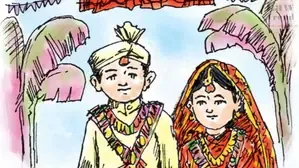
Bangladesh is home to approximately 41.6 million child brides, including 22.3 million who were married before the age of 15, according to a review by United Nations Population Fund (UNFPA) and United Nations Children's Fund (UNICEF). The findings place Bangladesh among the top ten countries globally for child marriage prevalence — and the highest in South Asia — underscoring a crisis that laws enacted nearly a decade ago have failed to adequately contain.
Scale of the Crisis
The UN agencies' review highlights that Bangladesh's child marriage burden is not merely a legacy problem but a persistent, structural one. With over 41.6 million women and girls affected, the numbers dwarf those of many countries with far larger populations. The fact that more than half of that cohort — 22.3 million — were wed before age 15 points to a pattern of extremely early marriage that carries severe consequences for health, education, and economic outcomes.
Researchers and advocates note that poverty, poor-quality education, disparities in schooling access, harmful gender norms, and safety concerns are the primary drivers. In climate-affected regions, remote areas, and urban slums, families reportedly view early marriage as a strategy to reduce financial burdens and secure perceived protection for daughters.
Flaws in the Legal Framework
Bangladesh enacted the Child Marriage Restraint Act (CMRA), 2017, nearly a decade ago, but the UNFPA-UNICEF review identifies critical weaknesses that allow the practice to persist with relative impunity. Most significantly, the law penalises individuals involved in child marriages but does not declare such unions void — meaning girls who are married underage have no automatic legal remedy to have their marriage annulled.
The review singles out Section 19 as a particularly dangerous loophole. The provision permits marriage below the age of 18 with court approval under 'special circumstances' — a term the law leaves entirely undefined, reportedly leaving it open to widespread misinterpretation and misuse. The CMRA also contains provisions that are inconsistent with other domestic legislation and with children's rights conventions to which Bangladesh is a signatory.
Failures in Implementation
Beyond legal text, the review flags serious enforcement failures. Child marriage prevention committees frequently fail to fulfil their mandated responsibilities, while officials on the ground lack adequate training and logistical support. Survivors, meanwhile, face significant barriers in accessing shelters and legal aid, leaving the most vulnerable girls without meaningful protection.
Taslima Yasmin, an associate professor in the Department of Law at Dhaka University, acknowledged the structural weaknesses the review identified. Child marriage is a social custom, and punishment alone cannot end it. We need social measures, policy interventions and community-level initiatives and amend the act accordingly,
she said, stressing the need for reforms that prioritise social protection for victims alongside punitive measures.
UN Recommendations for Reform
The UNFPA and UNICEF are calling for comprehensive legislative and policy reform. Their primary recommendations include setting 18 years as the minimum marriage age for both males and females without exception, and scrapping Section 19 altogether to close the 'special circumstances' loophole. The agencies have further proposed that the CMRA take explicit precedence over any contradictory personal laws or customary practices in Bangladesh.
Notably, this review comes at a moment when international attention on South Asia's gender protection frameworks is intensifying. Bangladesh's child marriage rate — the highest in the region — has drawn repeated scrutiny from global rights bodies, yet legislative momentum for reform has stalled.
What Happens Next
The onus now falls on Bangladeshi authorities to respond to the UN agencies' findings with concrete legislative action. Advocates argue that without amending the CMRA to eliminate loopholes, strengthen enforcement mechanisms, and ensure survivor support, the law will continue to function more as symbolic policy than effective protection. Whether the government moves to act on the UNFPA-UNICEF recommendations in the near term will be closely watched by rights organisations and international bodies alike.
Point of View
And permits exceptions under a term it never defines, is less a safeguard than a legal fig leaf. The Section 19 loophole is the most damning detail — courts asked to approve 'special circumstance' marriages have no statutory guidance, which in practice means community pressure and patriarchal norms fill the interpretive vacuum. With the highest child marriage rate in South Asia despite years of international attention and donor funding, Bangladesh's challenge is not information deficit — it is political will to confront entrenched custom with binding legal change.
NationPress
14 Oct 2026
Frequently Asked Questions
How many child brides are there in Bangladesh?
According to a review by UNFPA and UNICEF, Bangladesh is home to approximately 41.6 million child brides, including 22.3 million who were married before the age of 15. This gives Bangladesh the highest child marriage prevalence in South Asia and places it among the top 10 countries worldwide.
What is Bangladesh's Child Marriage Restraint Act (CMRA) 2017?
The CMRA 2017 is Bangladesh's primary law aimed at preventing child marriage. It penalises individuals involved in underage marriages but, critically, does not declare such marriages void. It also contains a contested provision — Section 19 — that allows underage marriage in undefined 'special circumstances' with court approval.
What is the Section 19 loophole in Bangladesh's child marriage law?
Section 19 of the CMRA 2017 permits marriage below the age of 18 if a court approves it under 'special circumstances' — a term the law does not define. The UNFPA-UNICEF review warns this ambiguity leaves the provision dangerously open to misinterpretation and misuse, effectively creating a legal gateway for child marriages.
What do the UN agencies recommend to fix Bangladesh's child marriage laws?
UNFPA and UNICEF recommend setting 18 as the minimum marriage age for both males and females with no exceptions, and scrapping Section 19 entirely. They also propose that the CMRA take explicit precedence over any contradictory personal laws or customary practices in Bangladesh.
Why does child marriage remain high in Bangladesh despite the 2017 law?
The UN review identifies multiple drivers: poverty, poor-quality education, gender norms, climate-related insecurity, and remote geography lead families to see early marriage as financial relief or protection for daughters. On the enforcement side, prevention committees reportedly fail to act, officials lack training, and survivors struggle to access shelters or legal aid.